
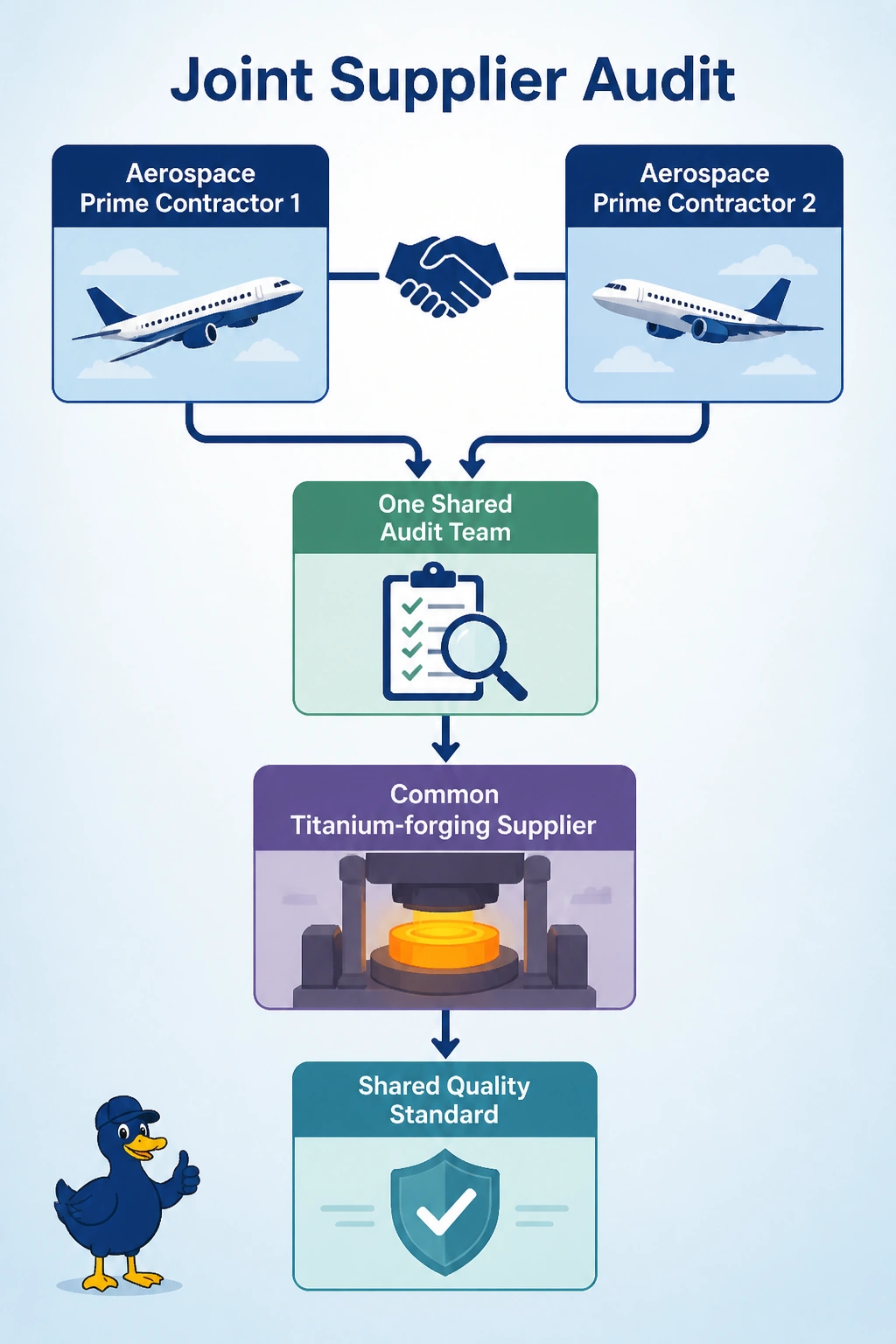
Two aerospace prime contractors agree to pool their audit resources and send one shared audit team to evaluate a common titanium-forging supplier against a shared quality standard. How is this assessment classified?
Select an answer to reveal the explanation.
Short Explanation
Think of two neighbors sharing one lawnmower to trim a shared fence line—that is the heart of a joint audit. The trap is confusing multiple auditing organizations with multiple standards, which describes a combined audit instead. Remember that when two or more organizations cooperate to audit one auditee, you are looking at a joint audit.
Full Explanation
A joint audit conducted by cooperating organizations occurs when two or more auditing entities—such as two customers with a shared supplier—form a single audit team to evaluate one auditee against agreed criteria, reducing duplicate disruption and travel cost. A combined audit covering multiple management standards differs because one auditing organization evaluates a single auditee against two or more standards simultaneously, such as quality and environmental requirements. A first-party internal audit of a corporate division is conducted by or on behalf of the organization itself on its own operations, not by external customers pooling resources. A third-party surveillance audit for certification is a periodic follow-up visit performed by an accredited registrar to maintain an existing certificate, rather than a shared customer assessment. As a caveat, even in a joint audit, each participating organization must agree in advance on confidentiality boundaries, finding ownership, and report distribution. As an operational check, review the audit charter and opening-meeting attendance record to verify that both sponsoring clients formally authorized the shared team and scope.
Prefer to study offline? Printable PDF study book + test engine ($7.50, unofficial). These questions stay free here.