
Before an internal audit of a cloud logistics platform, the audit client specifies that the team must determine whether the change-management process meets contractual security commitments and supports readiness for a major customer onboarding. What does this statement represent?
Select an answer to reveal the explanation.
Short Explanation
Think of an audit like a road trip: before you pack or pick a highway, you need to know why you are making the drive. The trap is confusing the goal of the engagement with the rulebook you check against or the map boundaries you draw around it.
Full Explanation
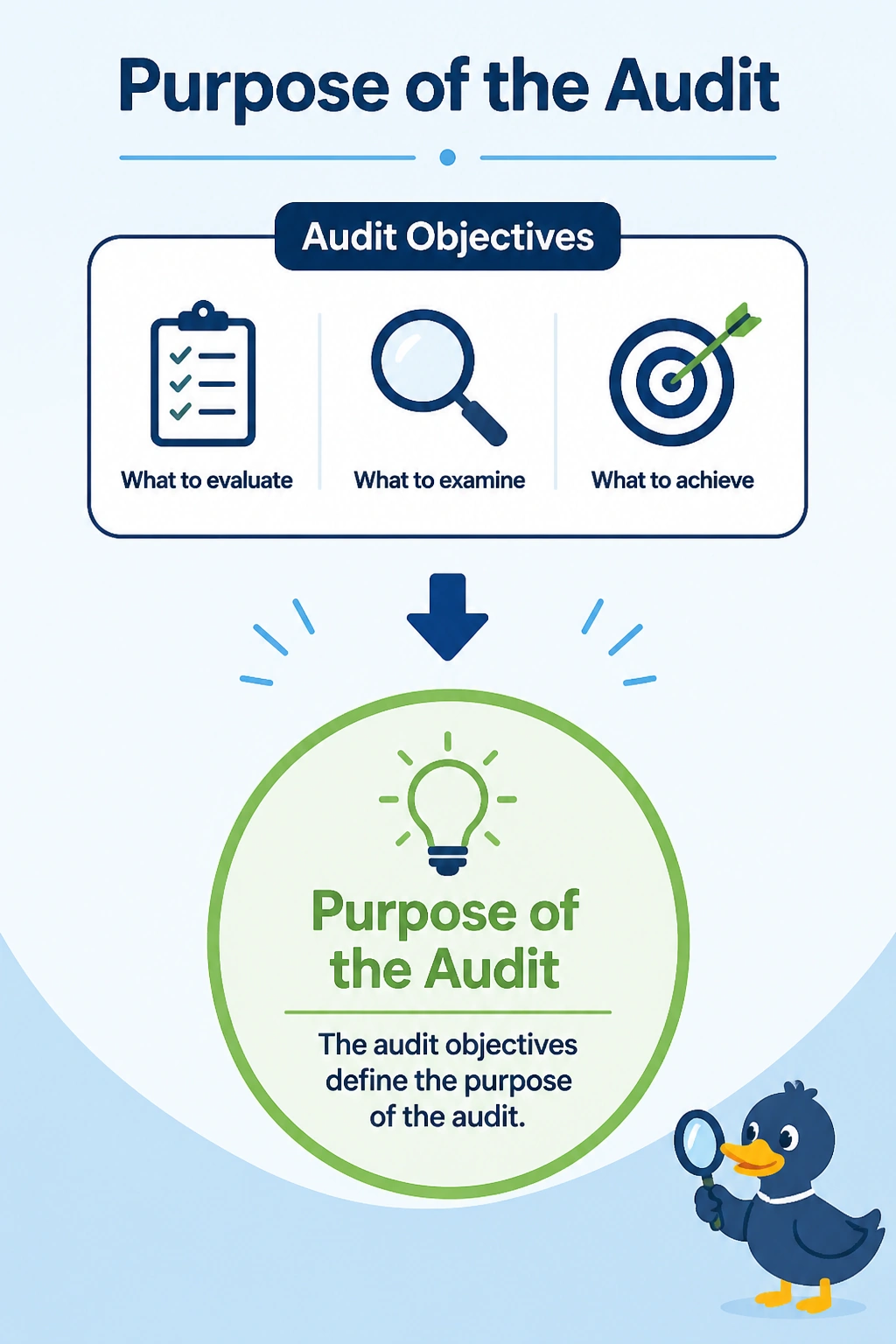
Because the audit client is stating what the engagement must accomplish—evaluating contractual security readiness for a major onboarding—this statement represents "The audit objectives defining the purpose of the audit". Objectives answer why the audit is being conducted and what decision or assurance the client needs at the end. By contrast, "The audit criteria used as the benchmark for evaluating evidence" refers to the specific policies, contracts, standards, or work instructions against which collected facts are compared, not the overarching goal. Similarly, "The audit scope establishing physical, functional, and time boundaries" defines which departments, systems, locations, and date ranges are included or excluded, while "The audit plan detailing daily schedules and assigned team routes" translates those boundaries into a time-blocked itinerary for fieldwork. Keep in mind as a key caveat that vague or shifting objectives can cause an audit team to gather irrelevant evidence even when criteria and boundaries look clear. As an operational check, confirm during audit initiation that the written objectives, criteria, and boundaries align with each other and are formally approved by the audit client before fieldwork begins.
Prefer to study offline? Printable PDF study book + test engine ($7.50, unofficial). These questions stay free here.