
After an external quality audit concludes with zero nonconformities, a company president tells the board that the audit proves every product shipped that year is 100% defect-free. Which fundamental audit principle explains why this claim is inaccurate?
Select an answer to reveal the explanation.
Short Explanation
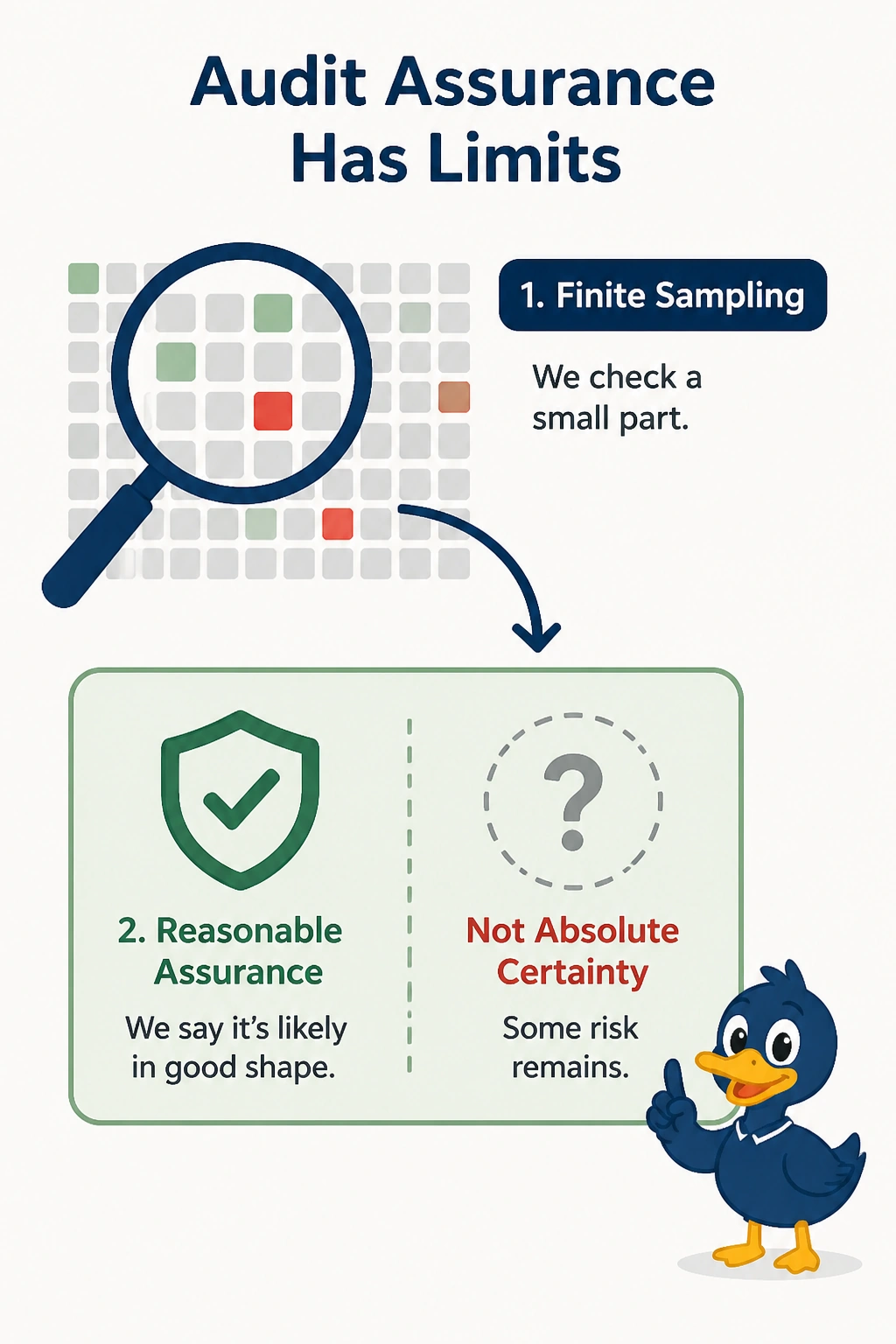
Passing an audit with zero findings is great news, but it is not a magic force field against defects. Because you inspect a finite slice of records and activities, an audit gives reasonable confidence—not a 100% guarantee.
Full Explanation
The president's claim overstates what an audit can prove because Audits rely on finite sampling and provide reasonable assurance, not absolute certainty. Because auditors examine representative samples of records, interviews, and observations within limited time, an audit evaluates system conformity with reasonable confidence rather than inspecting every unit ever produced. Claiming that Auditors are legally prohibited from examining finished goods during a system audit is false, as auditors can inspect product records or finished goods whenever relevant to system effectiveness. Claiming that A zero-finding system audit means the sample included every lot shipped that year is incorrect, because full-population coverage is not what a zero-finding sample proves; a clean result reflects only the sample examined, not every lot. Stating that Zero nonconformities automatically indicate that the audit sample size was statistically invalid is incorrect, because a well-controlled process can legitimately pass a properly designed sample without findings. As a caveat, audit conclusions apply only to the defined scope, criteria, and time window actually examined. When briefing executives, state clearly in the audit report summary that conclusions are based on sampling and carry inherent sampling uncertainty.
Prefer to study offline? Printable PDF study book + test engine ($7.50, unofficial). These questions stay free here.