
A food-service distribution network wants to verify whether its regional warehouses consistently follow cold-chain receiving and sanitation rules during normal daily operations rather than only during scheduled inspection weeks. Which audit approach best serves this objective?
Select an answer to reveal the explanation.
Short Explanation
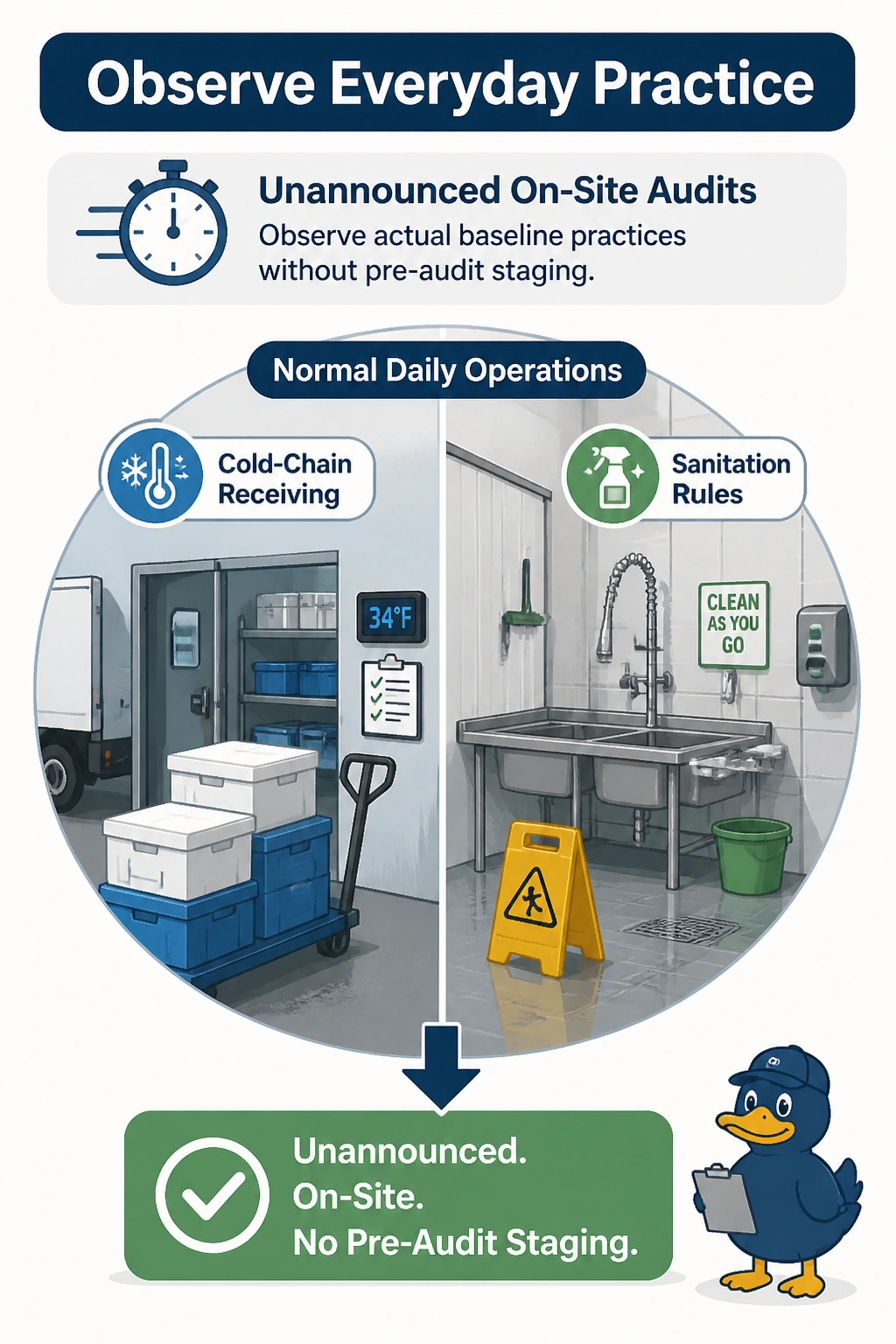
Everyone cleans the house when they know company is coming! If you want to see how a warehouse truly runs on an ordinary Tuesday, announced visits give staff time to stage records and tidy up. Unannounced on-site audits show you real baseline habits, warts and all.
Full Explanation
When an audit objective focuses on verifying day-to-day operational discipline rather than prepared documentation, audit timing directly affects evidence validity. Choosing Conducting unannounced on-site audits to observe actual baseline practices without pre-audit staging prevents facilities from temporarily boosting staffing, catching up on overdue logs, or staging clean areas just before an auditor arrives. By contrast, Sending a self-assessment questionnaire to each warehouse manager every quarter relies on self-reported claims that lack independent verification and often reflect ideal rather than actual habits. Similarly, Performing a remote desk review of annual corporate sanitation policies only confirms that written procedures exist on paper, revealing nothing about live cold-chain execution on the loading dock. Finally, Scheduling announced audits six months ahead with detailed checklists invites extensive pre-audit preparation that can mask chronic routine shortcuts. As a caveat, unannounced audits carry logistical risks: key personnel may be absent, or security protocols may delay site entry, so management authorization must be pre-established. As an operational check, coordinate arrival protocols with corporate security and carry official audit authorization credentials.
Prefer to study offline? Printable PDF study book + test engine ($7.50, unofficial). These questions stay free here.