
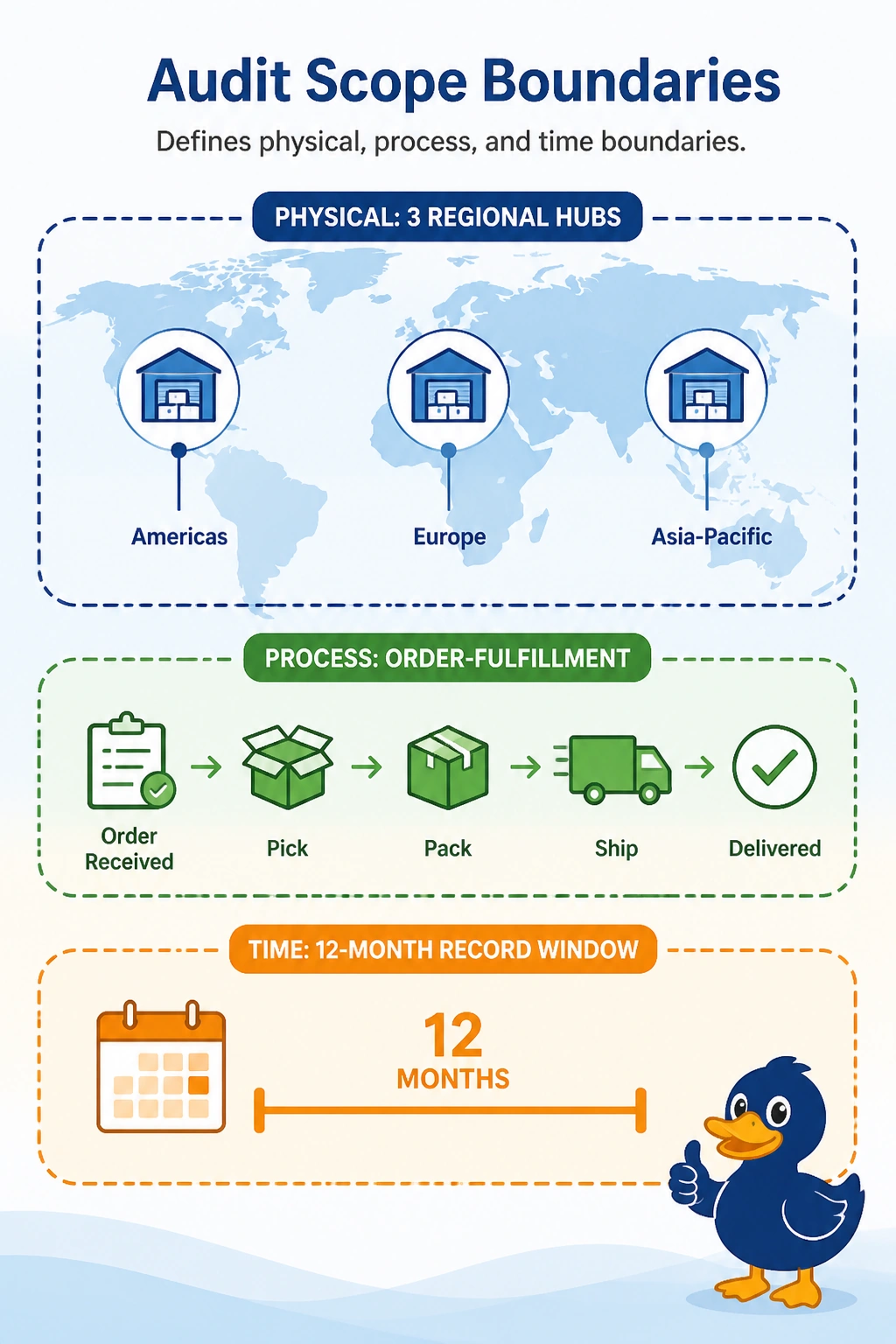
Before launching an internal quality audit of a multi-site logistics provider, the audit team and client agree in writing on which three regional hubs, which order-fulfillment processes, and which twelve-month record window will be examined. What element of the audit are they establishing?
Select an answer to reveal the explanation.
Short Explanation
Think of audit scope as the fence around the yard you agreed to mow—it tells everyone what is inside the job and what is outside. Do not confuse the boundaries of where and when you will look with the rules you will judge against.
Full Explanation
Specifying which facilities, workflows, and date ranges an assessment covers establishes The audit scope defining physical, process, and time boundaries. Clear scope boundaries prevent misunderstandings during fieldwork, keep sampling aligned with client expectations, and ensure adequate time is allocated to the right locations. Choosing The audit criteria used to judge whether observed practices are compliant confuses boundaries with the benchmark—criteria are the policies, standards, and procedures against which evidence is evaluated, not the locations or dates. Choosing The corrective action plan for closing any findings discovered later refers to post-audit remediation owned by the auditee, which cannot be drafted before the audit even begins. Choosing The sampling confidence level required for final statistical testing describes a sampling design parameter rather than the overarching physical, functional, and temporal limits of the engagement. As a caveat, if an auditor uncovers a critical safety or regulatory issue just outside the agreed scope, document the concern and escalate it to the audit client rather than silently expanding fieldwork. As an operational check, confirm the written scope statement with the auditee during the opening meeting so no department is surprised.
Prefer to study offline? Printable PDF study book + test engine ($7.50, unofficial). These questions stay free here.