
During an audit of an aerospace composite layup room, a technician tells the auditor that the cleanroom's relative humidity always stays within specification because the HVAC unit was upgraded last year. How should the auditor treat this statement?
Select an answer to reveal the explanation.
Short Explanation
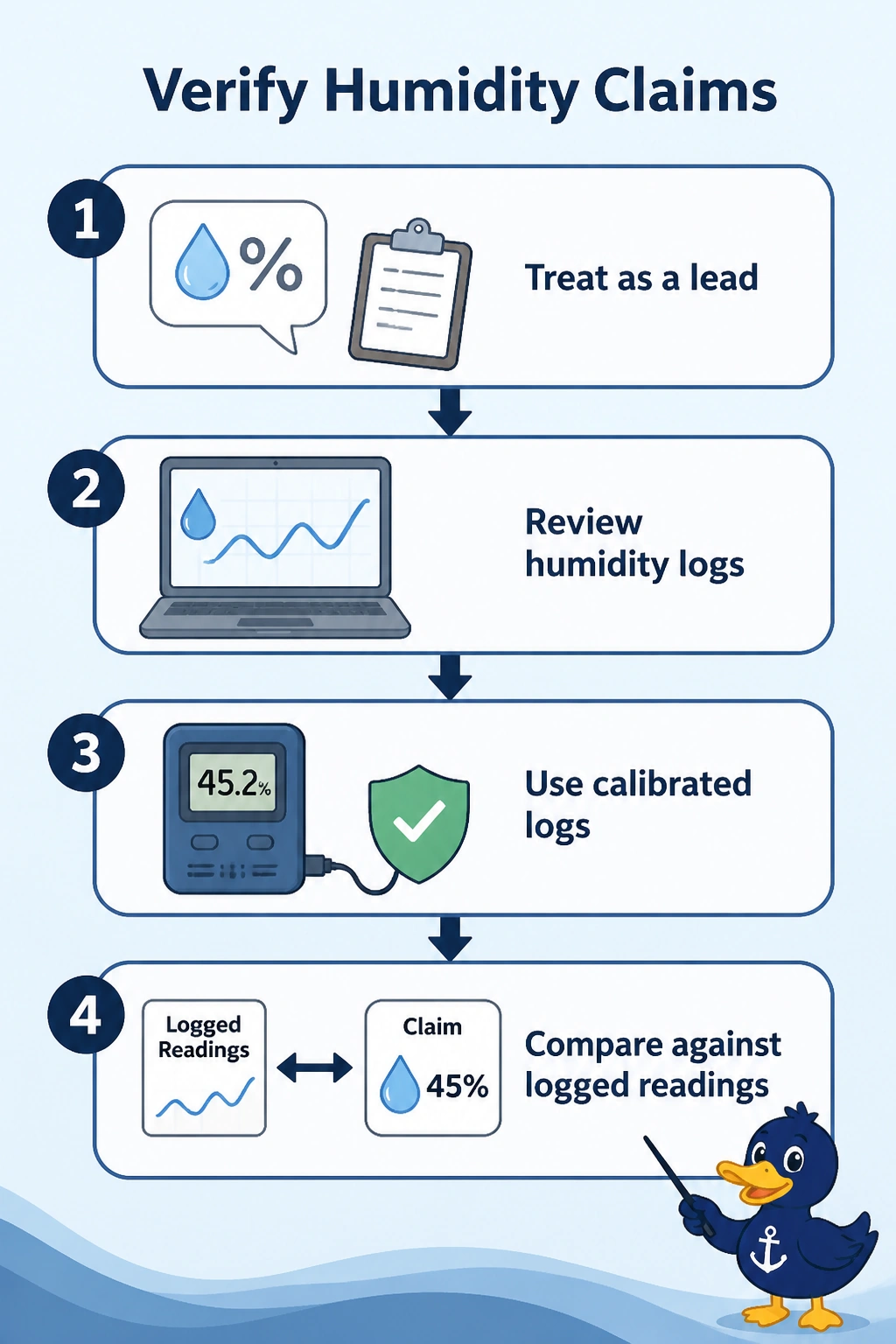
Think of a confident verbal claim like a promising trailhead: it points you in a direction, but it is not the destination. Treat the technician's comment as a lead and verify it against the calibrated humidity logs before you draw any conclusion. The trap is either accepting hearsay as proof or jumping straight to a nonconformity without checking the records.
Full Explanation
Deciding to "Treat the claim as a lead and verify it against calibrated humidity logs" follows the core auditing principle that verbal statements are leads requiring corroboration through verifiable, objective records. Checking continuous monitoring trends, alarm histories, and sensor calibration certificates confirms whether the upgraded HVAC system actually maintains humidity within specification across shifts and seasonal swings. By contrast, "Record the statement as sufficient objective evidence of control" mistakes an unverified opinion for factual proof, leaving potential excursions undetected. Choosing to "Issue a major nonconformity immediately based on the verbal claim" is equally flawed because no requirement has yet been shown to be violated. Meanwhile, "Accept the claim after matching the HVAC upgrade purchase order to the humidity specification, without opening the logs" confuses purchasing with performance, since a purchase order shows what equipment was ordered, not that humidity remained within limits during production. As a caveat, even electronic humidity logs are only trustworthy if the underlying sensors are within their calibration window. Ask to view both the recent environmental trend records and the calibration status of the cleanroom sensors before concluding compliance.
Prefer to study offline? Printable PDF study book + test engine ($7.50, unofficial). These questions stay free here.