
During a process audit of an injection-molding facility, an operator presents digital caliper printouts showing that every molded housing meets critical wall-thickness tolerances. Before accepting these measurements as objective audit evidence of product conformity, what must the auditor verify?
Select an answer to reveal the explanation.
Short Explanation
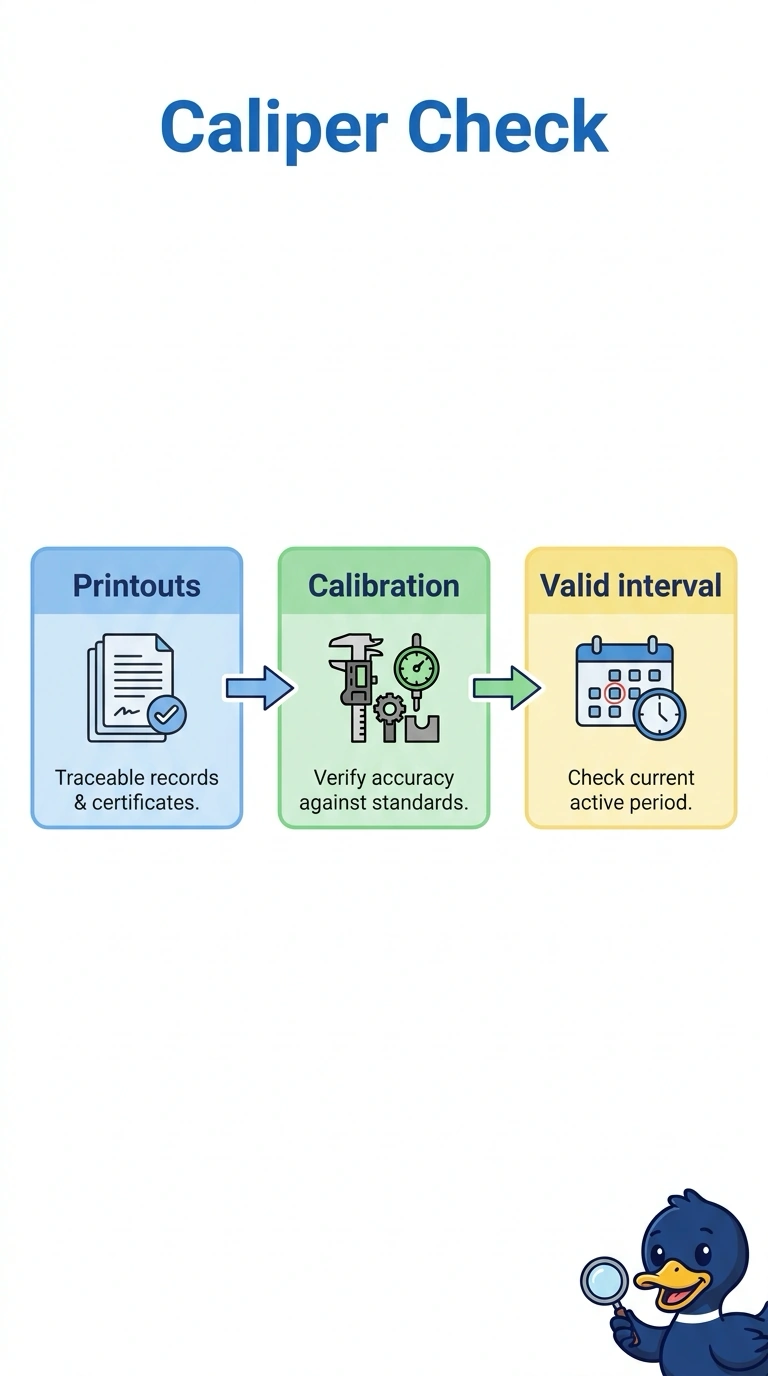
A crisp digital printout looks convincing, but a ruler that is out of true only gives you precise-looking wrong answers. The trap is trusting inspection data at face value without checking whether the gauge itself is trustworthy. Always confirm current, traceable calibration on the measuring tool before you accept its readings as audit evidence.
Full Explanation
Audit evidence is only as reliable as the measurement system that produced it. Selecting "Confirm that the digital calipers have current, traceable calibration within their valid interval." ensures the dimensional readings are backed by a valid, unbroken calibration chain rather than an unverified or overdue instrument. By contrast, "Accept the printouts immediately at face value because digital measuring instruments do not experience mechanical wear or calibration drift." is false; digital calipers suffer jaw wear, zero-shift, and damage just like analog gauges. Choosing "Ask the molding supervisor to sign a handwritten statement certifying that the operator used the calipers carefully during the shift." substitutes a subjective opinion for metrological validity. Selecting "Compare the printouts against last year's customer complaint log rather than checking the status of the measurement device." uses lagging historical data that cannot prove whether today's calipers are accurate. Caveat: even when a sticker shows a valid calibration date, inspect the tool physically for damage, loose jaws, or zeroing errors during live observation. Operational check: record the caliper's unique asset ID and calibration due date in your working papers alongside the sampled dimensional printout.
Prefer to study offline? Printable PDF study book + test engine ($7.50, unofficial). These questions stay free here.