
During a one-day process audit of a pharmaceutical packaging line, an auditor checks five batch records and finds that all five lack required line-clearance verification signatures. Four other departments remain on the schedule before the closing meeting. What should the auditor do next?
Select an answer to reveal the explanation.
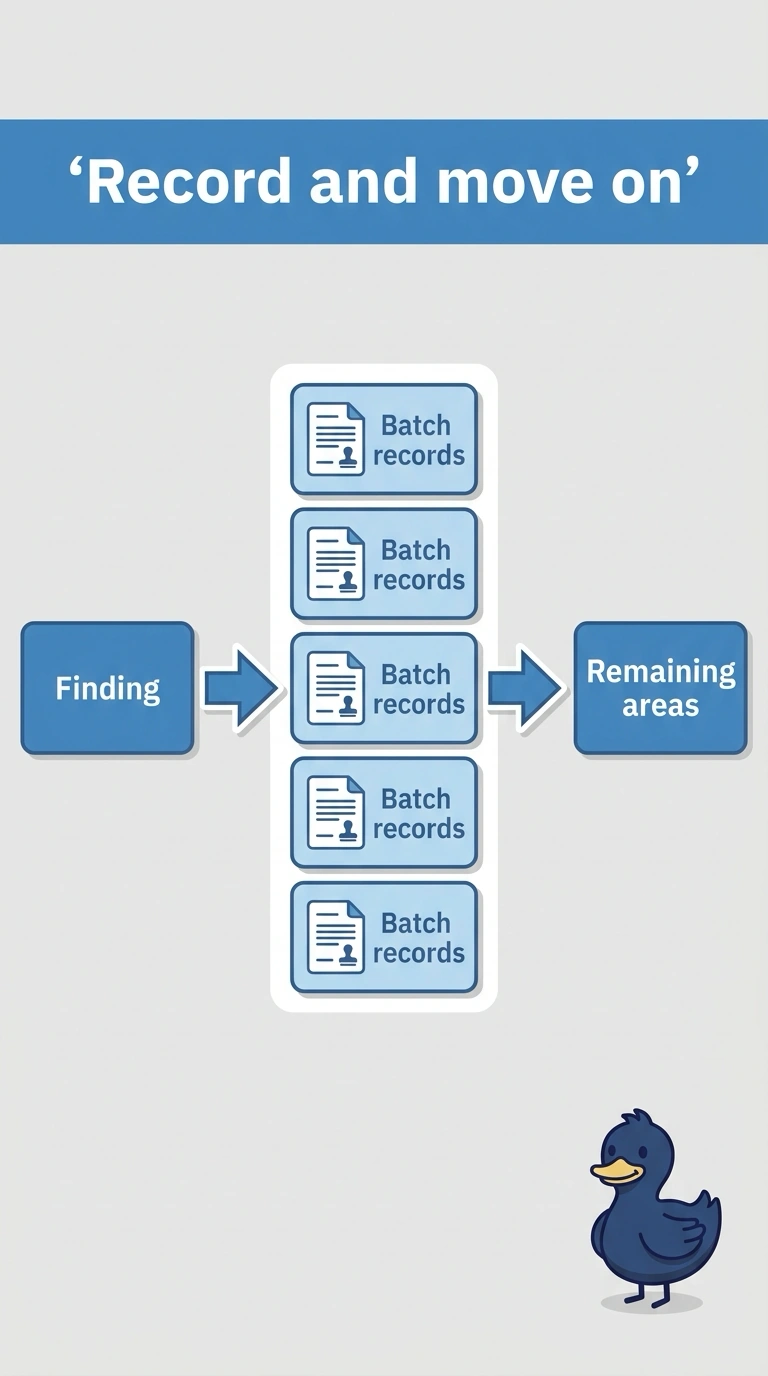
Short Explanation
Once you see smoke pouring out of the kitchen, you don't need to test every burner to know there's a fire! The trap is spending your whole day proving the same finding fifty more times while leaving the rest of your audit schedule uncovered.
Full Explanation
Audit time is finite, and once objective evidence clearly demonstrates a systemic breakdown, the right move is to Document the verified nonconformity with the five references and move to the remaining areas. Five consecutive missing sign-offs already substantiate the nonconformity; the auditee's own root-cause investigation will determine the full extent of condition across other batches. Choosing to Inspect every remaining batch record from the past twelve months to calculate the exact failure rate turns the auditor into a quality-control clerk and jeopardizes coverage of the four remaining departments. Deciding to Suspend the rest of the audit immediately and convene an emergency closing meeting now overreacts to a documentation gap that can be addressed through normal reporting unless an immediate safety hazard exists. Asking to Ask the line supervisor to sign the five missing records retroactively before moving on would compromise record integrity and create falsified evidence. Exam caveat: auditors sample to evaluate system compliance, not to perform 100% cleanup for the auditee. Operational check: log the five exact batch IDs in your working papers, notify the area lead of the potential finding, and stick to your time-blocked schedule.
Prefer to study offline? Printable PDF study book + test engine ($7.50, unofficial). These questions stay free here.