
During the opening meeting of a scheduled two-day internal quality system audit at a medical-device assembly plant, the operations director asks the lead auditor to exclude the incoming-inspection warehouse because a new supervisor started two weeks ago. What should the lead auditor do?
Select an answer to reveal the explanation.
Short Explanation
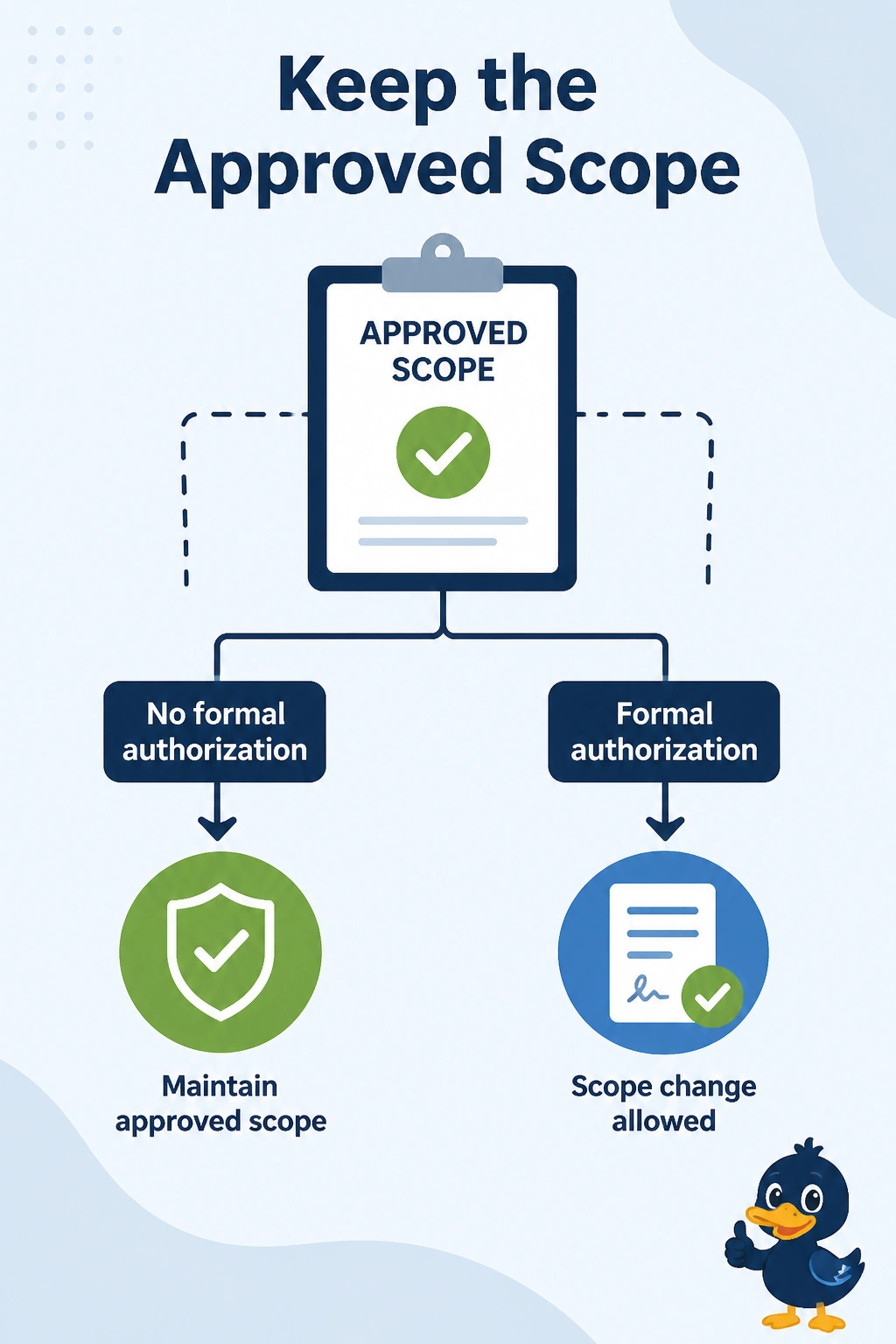
When operations asks you to exclude the incoming-inspection warehouse, you should keep the approved scope rather than agree for goodwill or reassign the hours yourself. A new supervisor does not change the audit client’s authority to approve a scope change, so maintain independence and seek formal authorization.
Full Explanation
The audit scope is established with the audit client before fieldwork so that planned processes receive independent verification. Maintaining the approved scope unless the audit client formally authorizes a change preserves your independence and ensures that any reduction is approved by the responsible authority and documented. Agreeing immediately to drop the incoming-inspection warehouse to maintain goodwill with operations compromises impartiality and leaves a newly supervised, potentially vulnerable process unexamined. Canceling the entire facility audit and rescheduling it for the following quarter wastes planned resources and delays evaluation of the remaining scope without justification. Dropping the warehouse unilaterally and reassigning those hours to final assembly bypasses the audit client’s authority and distorts planned coverage. An exam caveat is that the audit client may approve an exclusion for an extenuating circumstance; if so, the final audit report should explicitly record the scope limitation and its reason. As a practical check, confirm the daily schedule at the opening meeting and document any client-authorized adjustment in the audit plan.
Prefer to study offline? Printable PDF study book + test engine ($7.50, unofficial). These questions stay free here.