
After an internal audit cited a food-packaging plant for slow metal-detector reject verification, the maintenance team sped up the reject-pusher air cylinder to close the finding. During CAPA verification, what must the auditor check beyond confirming faster pusher actuation?
Select an answer to reveal the explanation.
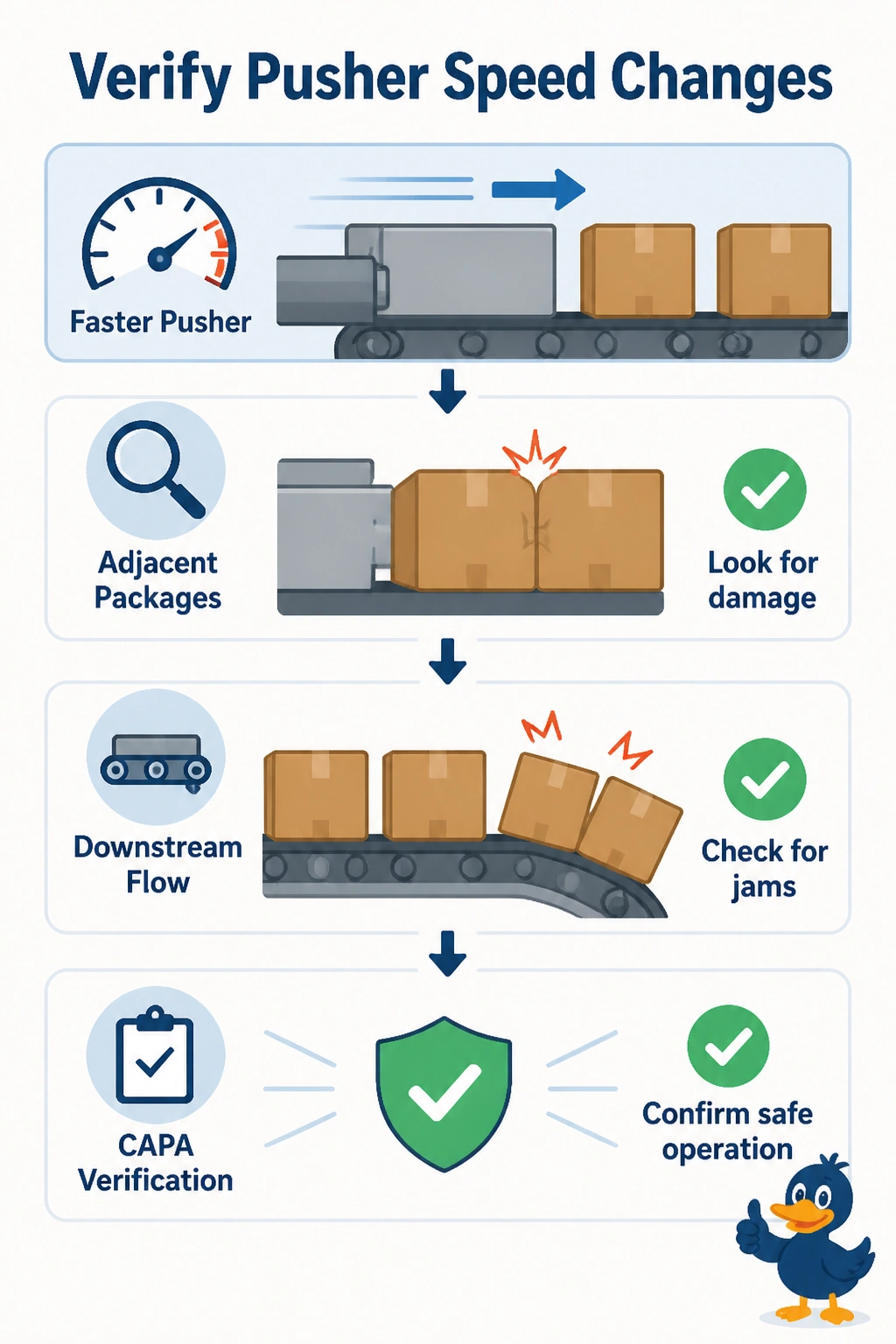
Short Explanation
Fixing one bottleneck without checking the next station is how you trade one problem for another. During CAPA verification, you must confirm the fix works without introducing new defects, jams, or safety hazards nearby. Always check adjacent process impacts before closing a finding.
Full Explanation
Effective corrective action verification goes beyond confirming that a fix was implemented; it also confirms that the change did not create new risks elsewhere in the operation. Checking Whether the higher pusher speed damages adjacent packages or causes jams downstream verifies that faster rejection neither compromises package integrity nor triggers secondary line stoppages. By contrast, checking Whether the line's OEE target was raised to match the faster reject cycle adjusts a performance goal rather than providing evidence that the actuation works safely without side effects. Noting Whether the new cylinder speed was added to the preventive-maintenance checklist concerns documentation and sustainment rather than evidence that the faster actuation works safely without side effects. Verifying Whether the customer-complaint log lists the pusher change as a product improvement focuses on how the change is described to customers rather than whether the corrective action works safely. Keep in mind that unintended side effects can also include increased operator safety hazards, higher scrap, or bypassed inspection gates. During every CAPA verification, observe the modified step running under normal production speed and inspect immediately adjacent downstream stations.
Prefer to study offline? Printable PDF study book + test engine ($7.50, unofficial). These questions stay free here.