
An audit team must evaluate a regional diagnostic clinic network that operates twelve outpatient branches under one centralized quality management system. How should the lead auditor structure the multi-site audit plan to achieve reliable coverage within a fixed two-week schedule?
Select an answer to reveal the explanation.
Short Explanation
Auditing twelve branches under one quality system does not mean visiting every door for the same number of hours—nor does it mean skipping the field altogether. Your trap is either trusting headquarters paperwork alone or letting the auditee handpick your sample.
Full Explanation
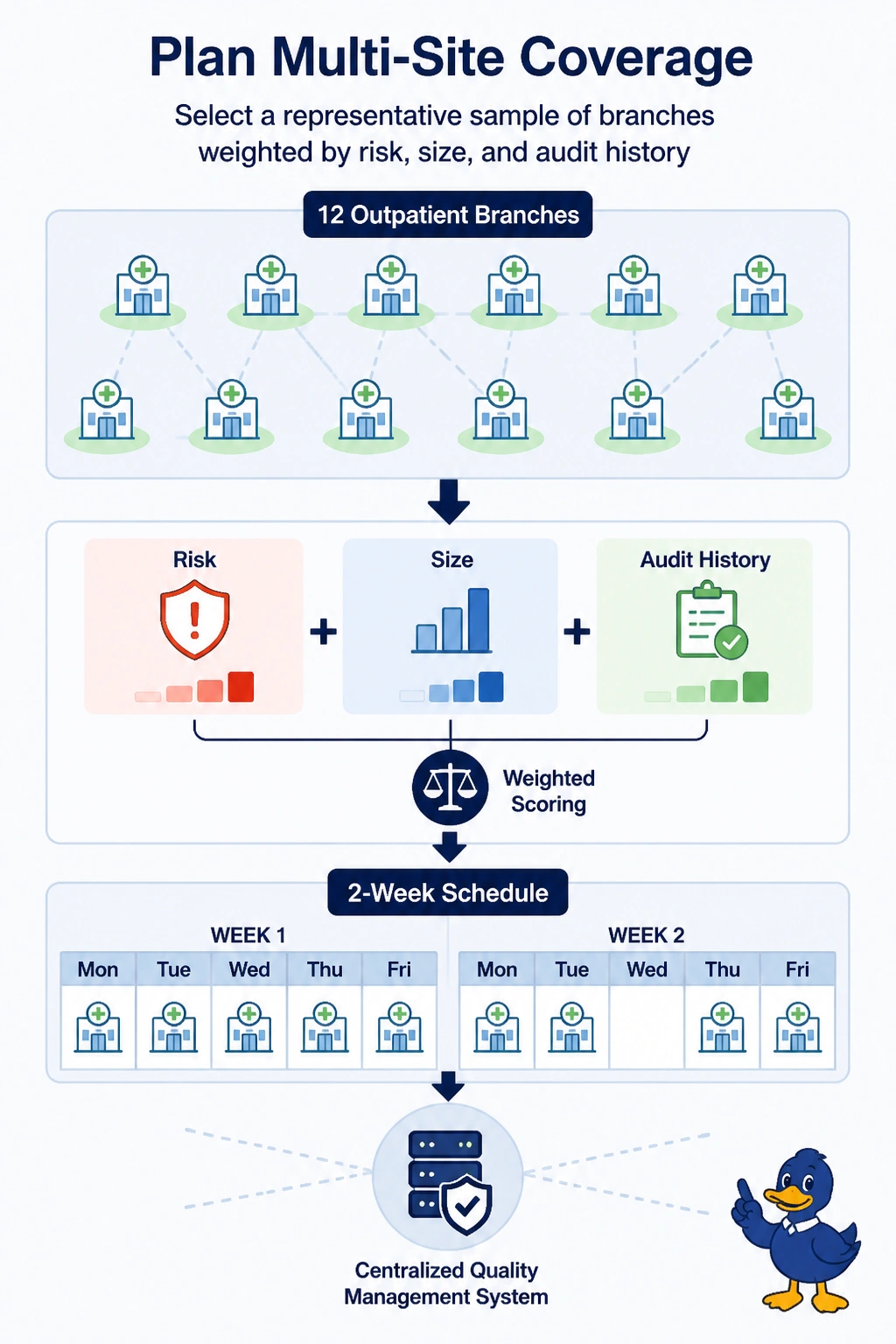
Choosing to Select a representative sample of branches weighted by risk, size, and audit history applies risk-based multi-site planning to allocate limited audit time where variation and impact are highest. When branches operate under a common quality system, sampling a subset that reflects differences in service volume, complexity, and past nonconformities provides credible system-wide assurance while still verifying central governance. Choosing to Audit only the headquarters clinic and apply its results to all branches fails because central procedures often diverge from local execution at satellite sites. Choosing to Inspect every single branch clinic equally regardless of risk or headcount dilutes fieldwork across low-risk locations and leaves insufficient time for high-risk clinics. Letting the auditee Allow the corporate quality director to choose which two branches are audited surrenders auditor independence and invites cherry-picking of top-performing sites. As a caveat, central functions such as management review and document control should still be audited directly alongside the sampled branches. As an operational check, document your site-selection rationale in the audit plan using branch headcount, test volume, and prior CAPA history.
Prefer to study offline? Printable PDF study book + test engine ($7.50, unofficial). These questions stay free here.