
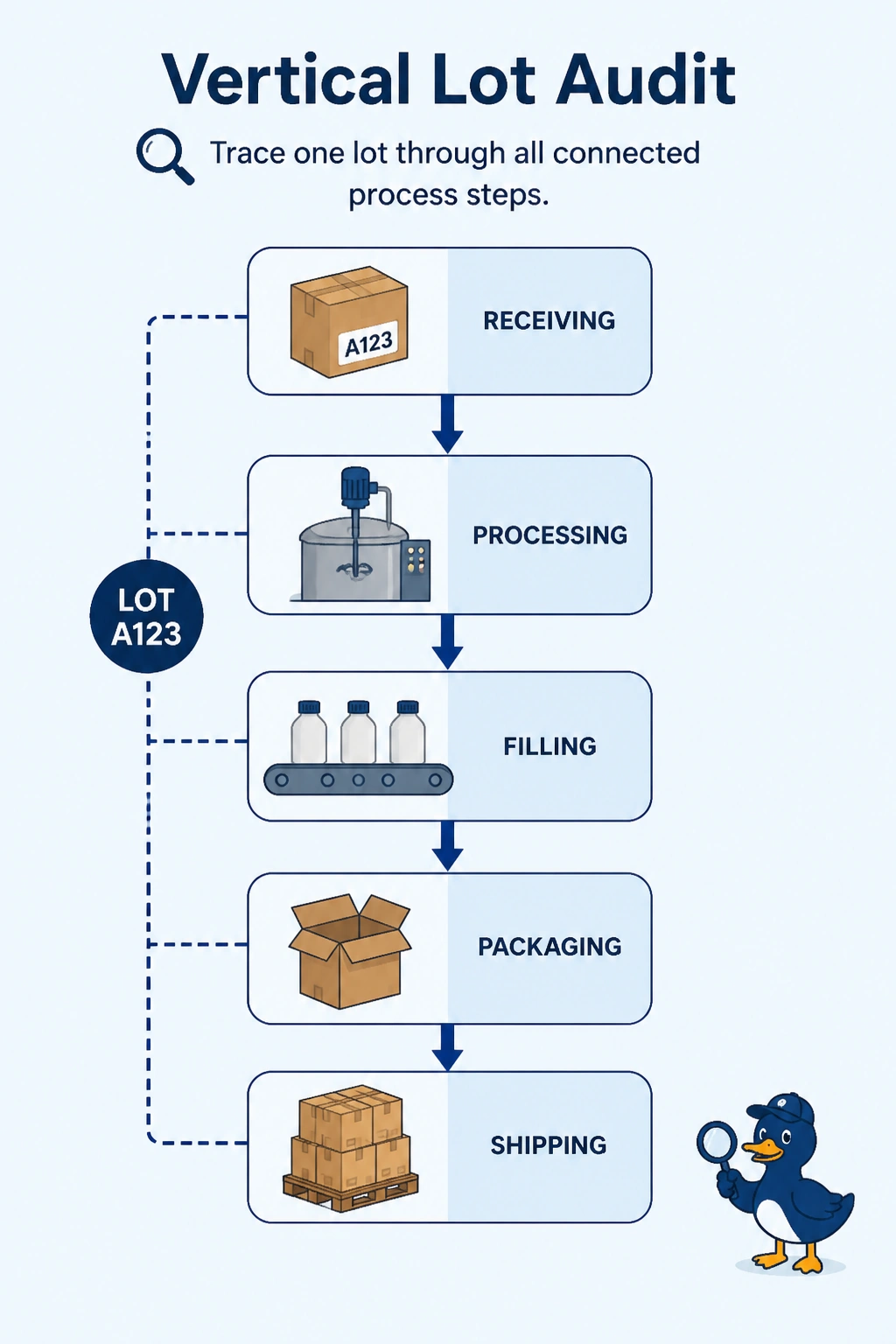
During a quality system audit of a medical-device manufacturer, a lead auditor selects a single finished catheter lot and traces its documentation backward and forward through receiving, sterilization, assembly, and final release across multiple departments. Which audit approach is the auditor using?
Select an answer to reveal the explanation.
Short Explanation
Think of this like following one package from the loading dock all the way to a customer's doorstep to see every handoff in action. You might get tripped up by thinking any multi-department check is horizontal, but tracing one specific lot end to end across departments is a vertical audit.
Full Explanation
Selecting A vertical audit focused on tracing a single lot through all connected process steps works because it follows one specific item, order, or batch through every department it touches to verify that handoffs, records, and controls align end to end. In contrast, A horizontal audit focused on verifying one system requirement across every department examines a single policy or control—such as document control or calibration—across multiple areas rather than following one lot through its lifecycle. A desk audit focused on reviewing controlled procedures before any on-site fieldwork evaluates written documentation adequacy off-site rather than tracing live lot execution across departments. A product audit focused solely on inspecting finished catheter dimensions and packaging checks finished-good characteristics against specifications at final release without tracing upstream receiving, assembly, and sterilization records. Caveat: vertical tracing can miss systemic gaps in departments that did not touch the sampled lot, so auditors often pair it with targeted horizontal checks. As an operational check, verify that lot numbers, timestamps, and sign-offs match cleanly across each departmental record in the chain.
Prefer to study offline? Printable PDF study book + test engine ($7.50, unofficial). These questions stay free here.