
During the closing meeting of an internal quality audit at a precision-casting plant, the foundry manager insists that a documented nonconformity on furnace calibration logs is invalid, even after reviewing the objective evidence. How should the lead auditor handle this unresolved disagreement?
Select an answer to reveal the explanation.
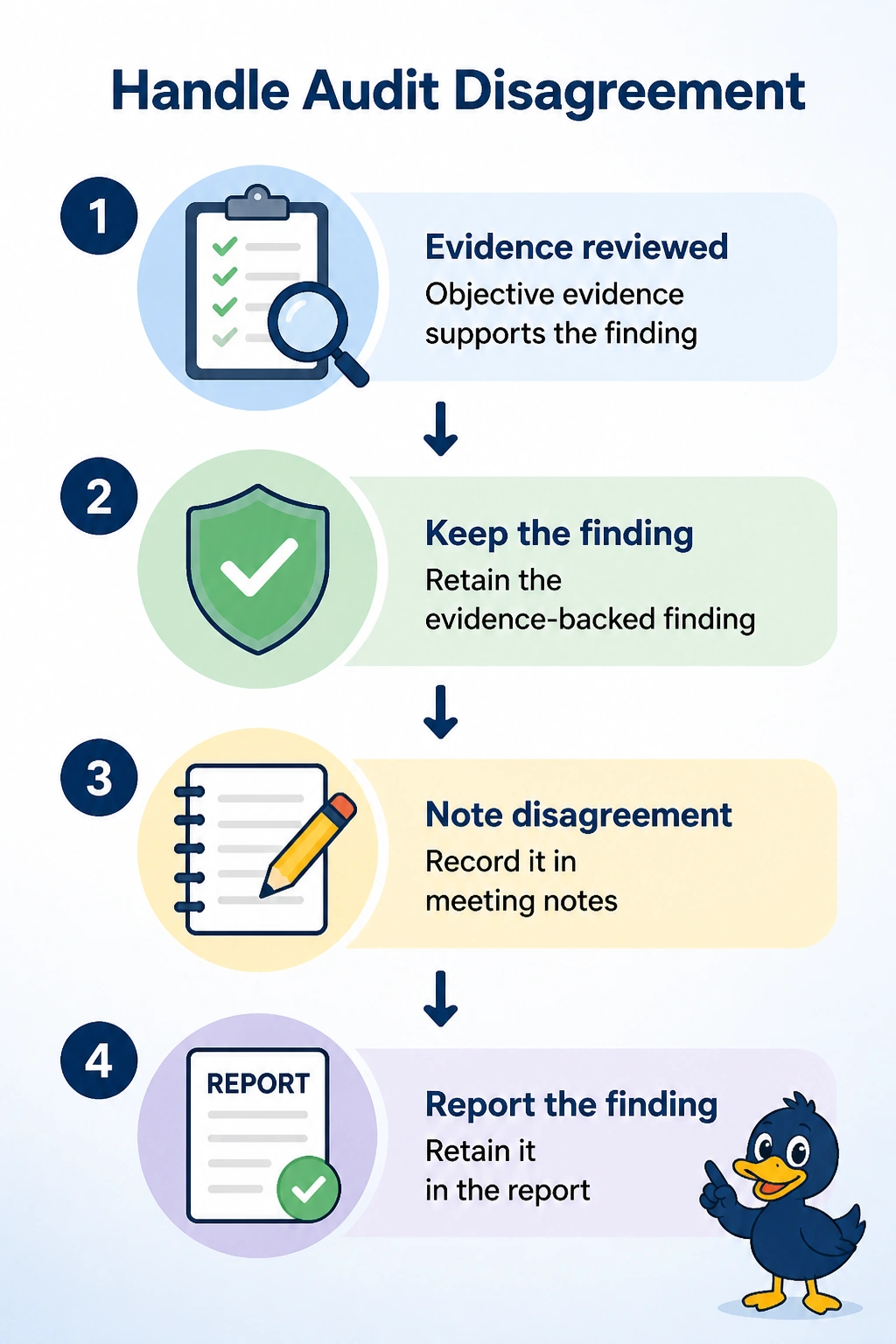
Short Explanation
When an auditee digs in their heels at the closing meeting, your job is to stay calm, document the dispute, and let the evidence speak. The trap is erasing a valid finding just to keep the meeting polite or stalling the entire report until everyone agrees.
Full Explanation
Audit findings rest on objective evidence measured against audit criteria rather than auditee approval, so the lead auditor should Record the unresolved disagreement in the meeting notes while retaining the evidence-backed finding in the report. Documenting both the verified evidence and the manager's objection preserves transparency and routes the dispute through the organization's established appeal or escalation channel without compromising objectivity. Choosing to Withdraw the nonconformity from the final report until the foundry manager agrees in writing hands editorial control to the auditee and hides a verified compliance gap. Opting to Ask the audit team to vote on whether to downgrade the finding to an observation to keep peace abandons objective grading standards in favor of social pressure. Deciding to Delay the report for five business days and drop the finding if the manager still disagrees delays timely risk communication and allows auditee disagreement to erase verified evidence. Caveat: ensure the evidence cited in the finding was genuinely verified and accurately stated before finalizing. As an operational check, log the specific calibration record identifiers and the manager's stated objection in the closing meeting attendance record.
Prefer to study offline? Printable PDF study book + test engine ($7.50, unofficial). These questions stay free here.