
A food-processing plant recently switched to a new allergen-cleaning chemical on Packaging Line 3. During a targeted process audit of allergen control, which sampling strategy should the auditor use to verify the change?
Select an answer to reveal the explanation.
Short Explanation
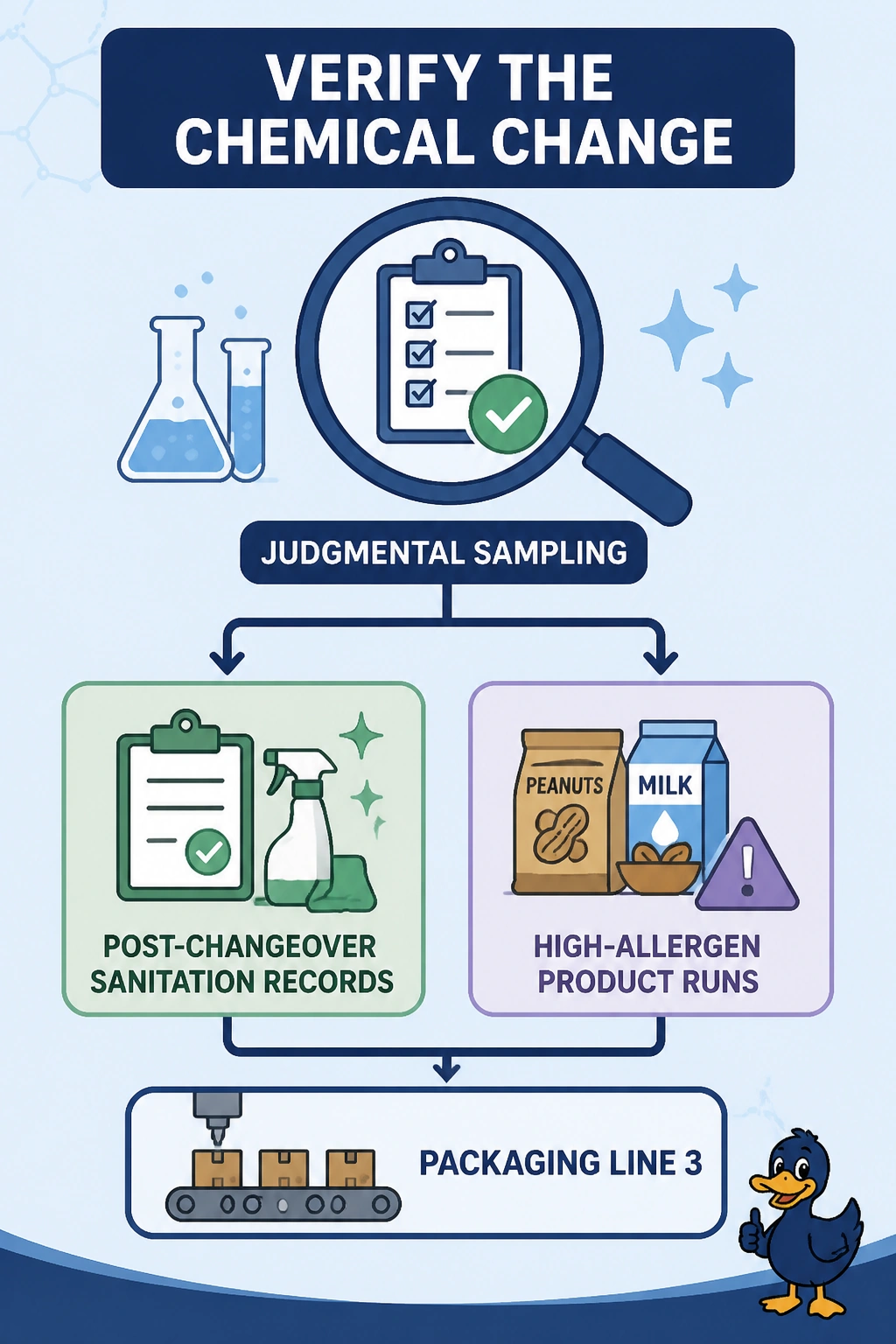
When a high-risk process changes, casting a blind net across old records wastes your limited audit time. You want to aim directly at the risk by applying judgmental sampling to the new changeover records and high-allergen runs on Line 3. Don't fall into the trap of relying on broad random sampling or unrelated lines when a known process change demands focused scrutiny.
Full Explanation
When an organization introduces a new cleaning agent on an allergen-controlled line, risk concentrates around the transition and the highest-hazard runs. Applying judgmental sampling focused on post-changeover sanitation records and high-allergen product runs works because it directs audit effort toward the exact conditions where validation gaps, residue, or operator confusion are most likely to appear. Using simple random sampling across all twelve months of general facility records fails because most selected records would predate the chemical switch and dilute attention from the active change. Reviewing only Line 3 batch records from the month before the chemical switch fails because the pre-switch sample misses the new chemical and provides no evidence about current cleaning effectiveness. Auditing every sanitation record from the past three years regardless of product risk fails because exhaustive historical review is impractical within audit time limits and ignores risk prioritization. As a caveat, judgmental sampling does not support statistical extrapolation across the entire plant, so findings must be framed around the targeted scope. For an operational check, verify chemical concentration logs, swab results, and operator training records specifically dated after the Line 3 switchover.
Prefer to study offline? Printable PDF study book + test engine ($7.50, unofficial). These questions stay free here.