
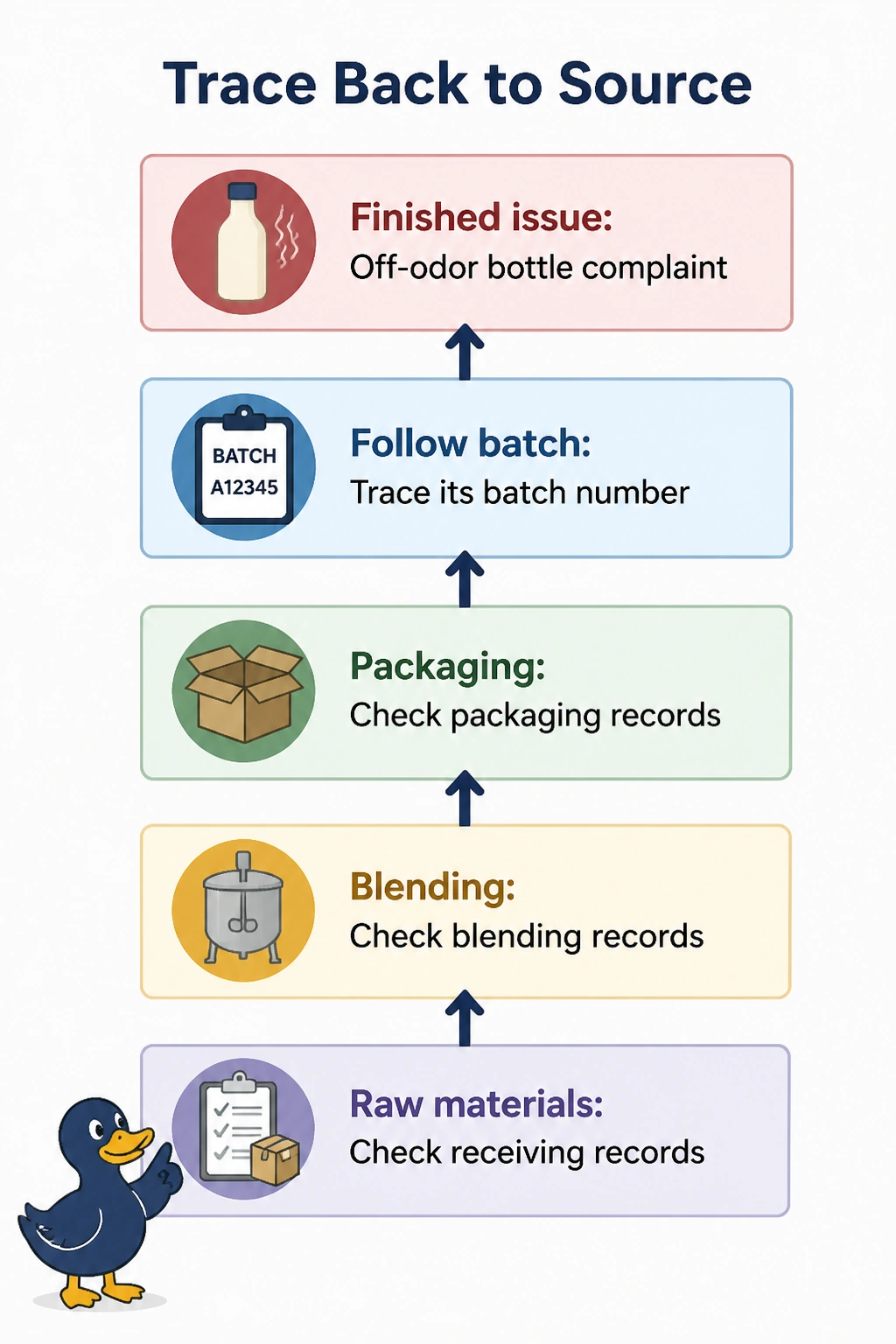
During a process audit of a dietary-supplement manufacturer, an auditor selects a recent customer complaint about an off-odor bottle and traces its batch number back through packaging, blending, and raw-material receiving records. What audit technique is the auditor using?
Select an answer to reveal the explanation.
Short Explanation
Starting at the finished bottle and walking upstream to raw ingredients is like rewinding a security video to see where things went wrong—you are using backward tracing. The trap is confusing the direction of the trail with forward tracing.
Full Explanation
Starting with an output such as a shipped lot or customer complaint and following lot identifiers back to their origin is Backward tracing from a finished-product issue to upstream process records. This technique tests whether the organization can isolate affected raw materials, equipment runs, and inspection decisions when a field issue occurs. Forward tracing from incoming supplier shipments through final warehouse dispatch moves in the opposite direction, starting with an input lot and following it downstream to finished goods and customers. Random lot sampling across unrelated product families in finished-goods storage checks general compliance across inventory rather than verifying the end-to-end traceability chain of a specific event. Static desk review of the quality manual prior to arriving at the facility evaluates whether documented procedures exist on paper, not whether live production records link together. As a caveat, backward tracing should verify actual timestamps, quantities reconciled, and release signatures rather than merely confirming that lot numbers appear on forms. As an operational check, test whether the auditee can retrieve all linked upstream records within a reasonable timeframe during live fieldwork.
Prefer to study offline? Printable PDF study book + test engine ($7.50, unofficial). These questions stay free here.