
During an audit of a high-volume surgical-glove dipping line, an auditor wants to ensure every production lot has an equal, unbiased chance of selection when estimating overall batch-record compliance across the past quarter. Which sampling approach should the auditor use?
Select an answer to reveal the explanation.
Short Explanation
If you want a fair snapshot of the whole quarter, you cannot just grab the folders sitting closest to your elbow. Giving every lot an equal shot at being picked keeps your estimate honest. The trap is choosing judgmental or convenience methods that skew the compliance picture.
Full Explanation
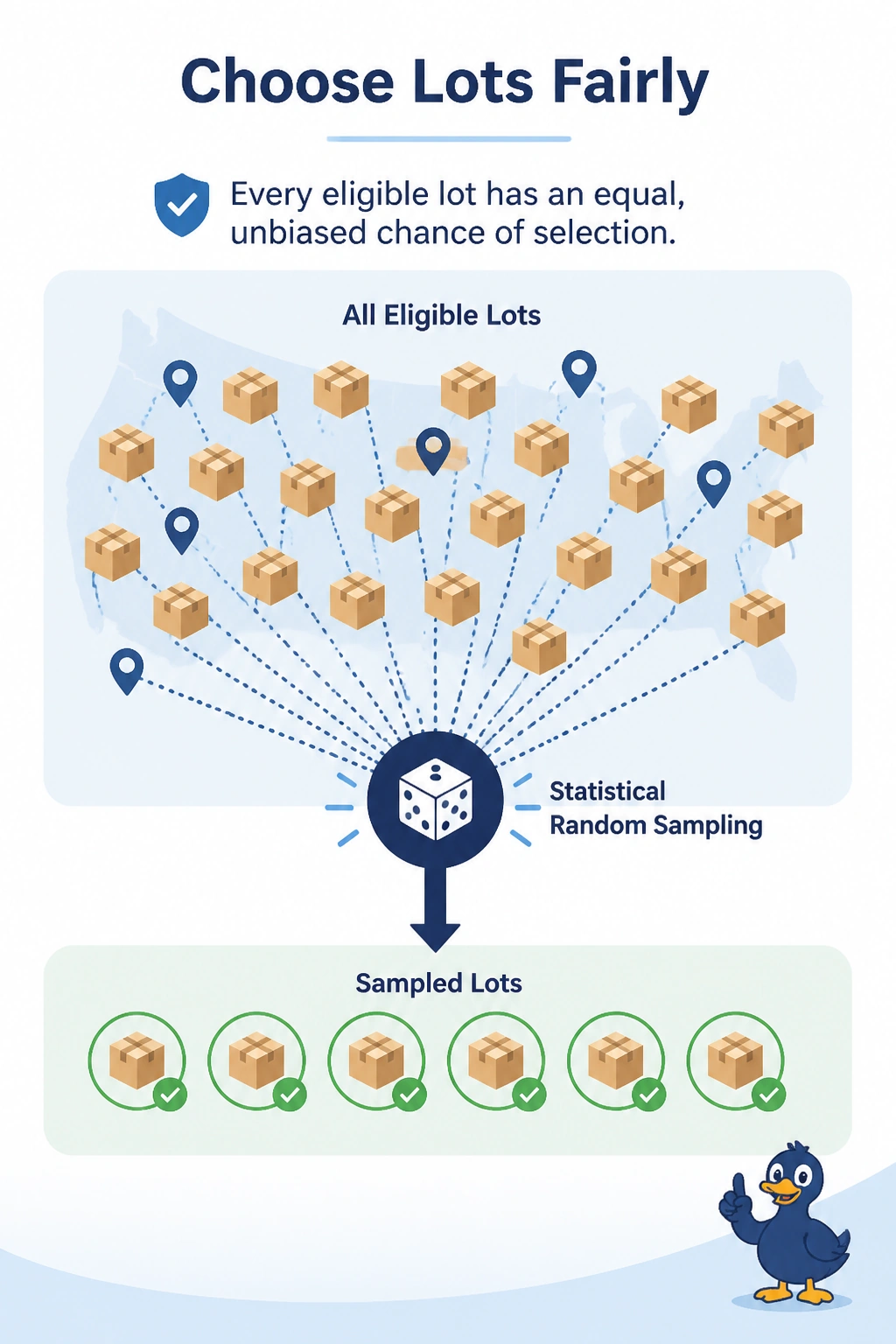
Statistical random sampling across all eligible lots uses a randomized selection method—such as a random-number generator applied to the complete lot population—so every batch has an identical probability of being chosen, allowing valid conclusions about overall compliance. Systematic sampling that uses a fixed interval but starts at the first lot the supervisor offers fails the equal-chance requirement because the starting point is not randomized; a supervisor-selected start can steer selection toward accessible or favorable records and breaks randomness. Judgmental sampling of lots the auditor expects will match the plant's usual compliance rate relies on auditor expectation rather than chance, so it confirms preconceptions and cannot support an unbiased estimate of batch-record compliance. Cluster sampling of every lot from the shift with the median weekly volume limits selection to a single cluster, so lots outside that shift have zero chance of selection and quarter-wide variation is missed, even if that shift looks typical. Keep in mind that random sampling requires an accurate, complete population list first; if lots are missing from the master log, your random draw will still be skewed. As an operational check, reconcile the total count of production lots in the ERP or batch log against the numbering sequence before generating your random sample list.
Prefer to study offline? Printable PDF study book + test engine ($7.50, unofficial). These questions stay free here.