
At bedside for a 58-year-old with barrel chest and suspected pneumonia, the portable image looks noisy, the exposure indicator shows underexposure, and the supervisor asks how grid choice, detector efficiency and latitude affect dose and repeats for dose documentation. Which strategy should the radiographer use to minimize patient exposure while ensuring diagnostic quality?
Select an answer to reveal the explanation.
Short Explanation
You're balancing scatter, signal and honesty in one portable shot. Hitting the indicator sweet spot with a grid protects DQE without dose creep.
Full Explanation
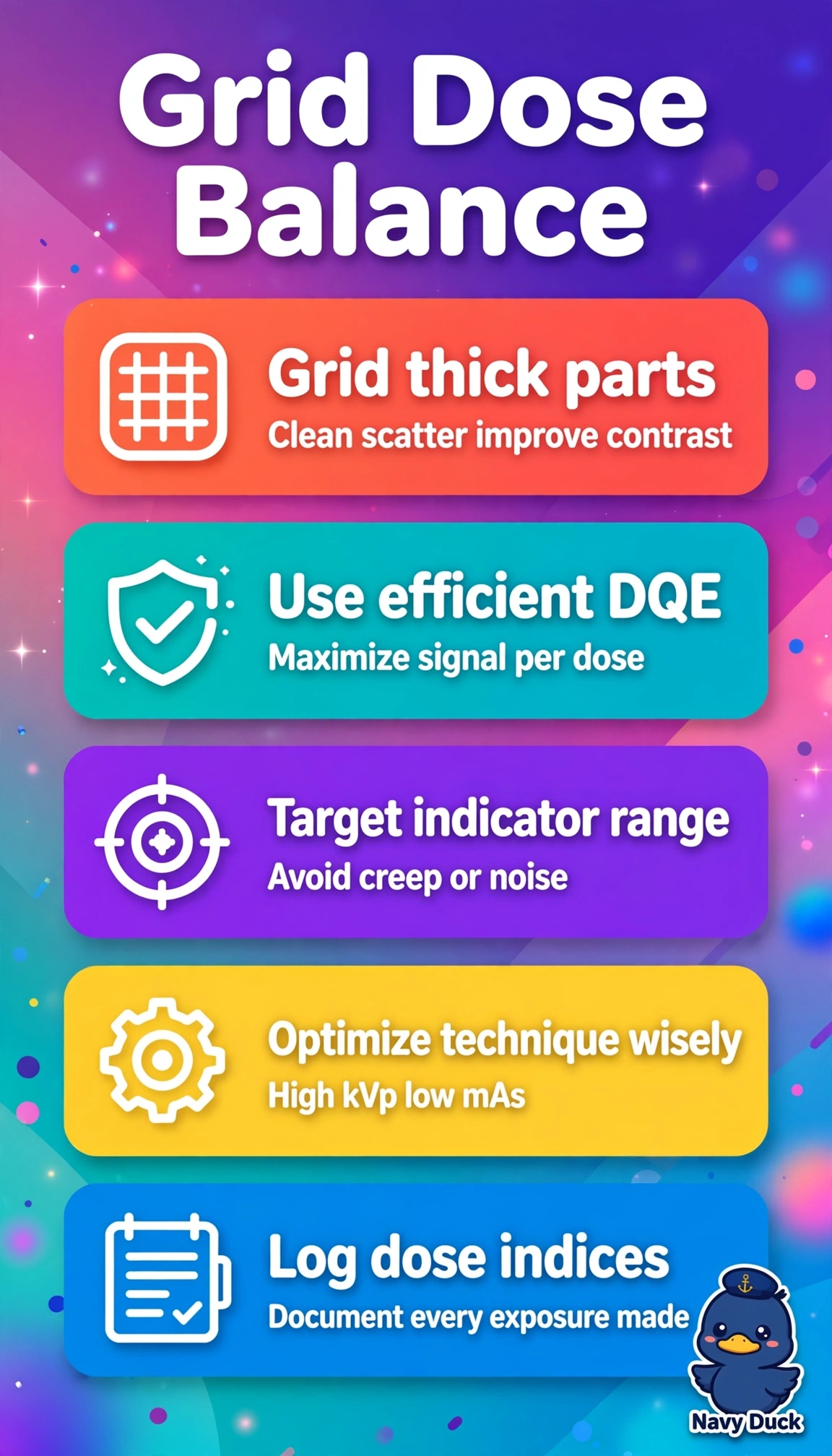
The correct strategy succeeds because barrel chest implies increased tissue thickness and scatter that degrades the contrast needed to detect pneumonia, so a grid remains indicated despite portable bedside use, while optimizing kVp and mAs to achieve the manufacturer target exposure indicator range ensures adequate signal to noise with the detector detective quantum efficiency rather than simply overexposing, and logging dose indices satisfies dose documentation and repeat analysis for minimizing total exposure while ensuring diagnostic quality. The grid-omitting approach fails on scatter control because although removing the grid and optimizing to the indicator is a valid dose-saving method for thin parts, in a thick barrel chest scatter fog reduces lung contrast and can force a repeat, increasing total dose. Relying on wide digital latitude fails on exposure recognition because latitude can rescale brightness but cannot restore information lost to quantum mottle in an underexposed noisy image, so ignoring the underexposed indicator leaves noise that obscures infection and risks repeats. Omitting logging of dose indices fails on documentation and optimization because even perfectly exposed diagnostic images require recorded indices to track cumulative dose, audit repeats, and meet supervisory and regulatory expectations. Exam caveat: do not equate acceptable brightness after postprocessing with acceptable exposure, since overreliance on latitude masks both underexposure noise and creeping overexposure; practical check at bedside is to verify thickness and grid alignment, expose to center the indicator within target range, then confirm noise, lung markings, and recorded dose indices before leaving the bedside.