
A high-volume trauma unit handles unconscious patients, portable chest exams, and frequent repeat exposures with students placing markers. Risk management reports mislabeled sides and missing markers on digital images. Which image identification practice best satisfies legal and professional requirements for digital radiography?
Select an answer to reveal the explanation.
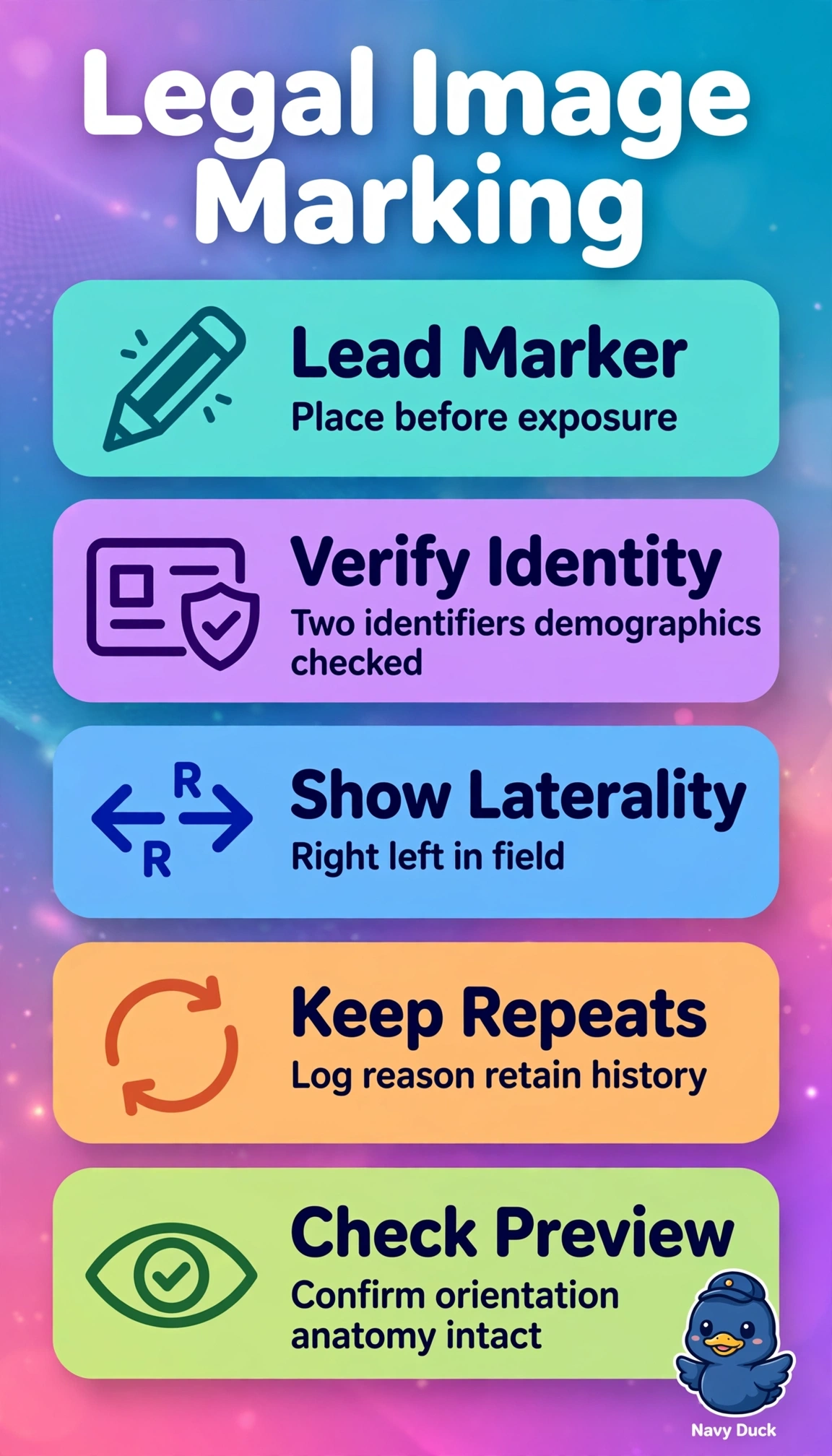
Short Explanation
You’re making every image court-ready from the start. A lead marker placed pre-exposure locks in laterality, like signing a document before filing it.
Full Explanation
Correct practice combines pre-exposure lead laterality, active demographic and laterality verification, and electronic repeat annotation because lead provides permanent tamper-resistant evidence of side that post-exposure text cannot legally replace, verification protects unconscious patients who cannot self-identify during portable trauma work, and system annotation preserves dose, reason, and supervision history for students. Logging repeats only in a personal logbook fails retrievability and accountability since professional standards require repeats to remain in the imaging record for audit, dose tracking, and discovery. Applying lead markers only when anatomy looks unclear fails prevention since routine pre-exposure marking is required for all images, and selective marking invites mislabeling especially in portable chest exams where anatomy is symmetric. Clearing rejected images after review to save archive space fails retention because rejected exposures are part of the legal record and must be kept with annotation. Exam caveat is that electronic laterality annotation supplements but never substitutes for irradiated lead anatomy. Practical check is to see lead marker on preview, match armband and order with two identifiers and stated laterality, then flag any repeat electronically before sending to PACS.