
A 54-year-old patient waiting for a barium enema suddenly develops hives, wheezing, and dizziness after latex glove contact, then becomes unresponsive without normal breathing or a palpable pulse. The crash cart with an AED is in the hallway. Which emergency response for non-contrast allergy with cardiac and respiratory arrest best follows CPR and AED use?
Select an answer to reveal the explanation.
Short Explanation
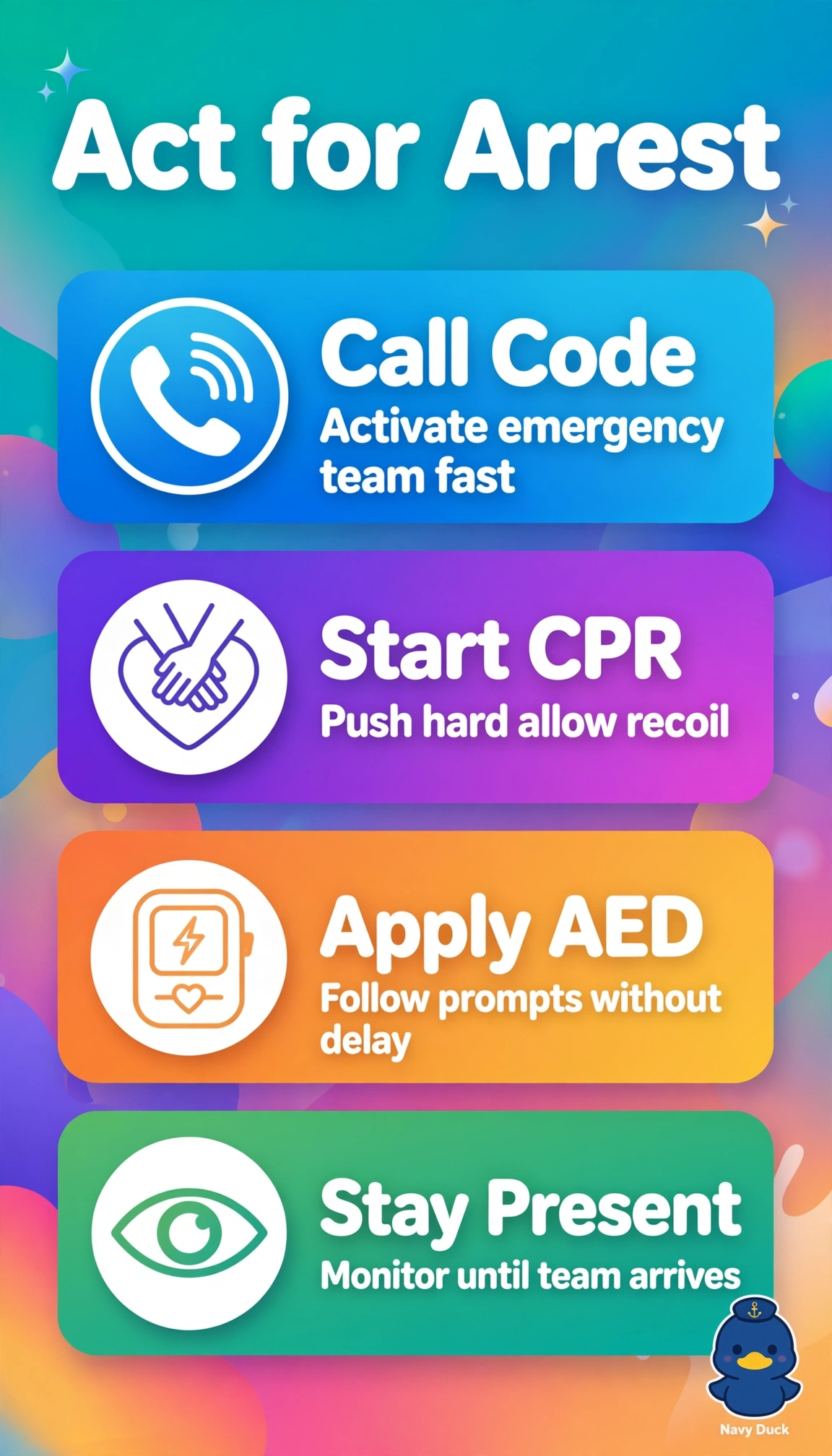
You're facing a full shutdown, not just an itch. Jumping to compressions and the AED keeps blood moving with rapid-response.
Full Explanation
The patient meets criteria for cardiac and respiratory arrest with unresponsiveness, absent normal breathing, and absent palpable pulse after a latex-triggered anaphylactic prodrome, so standard basic life support takes precedence over cause-specific therapy and requires simultaneous activation, perfusion, and rhythm assessment, which the correct response provides by combining calling for help and activating emergency response with immediate high-quality CPR and prompt AED application. Giving intramuscular epinephrine first while postponing AED application fails by time-sensitive defibrillation, because epinephrine is appropriate for anaphylaxis but must not delay rhythm analysis and shock when indicated in a pulseless patient. Providing rescue breathing without chest compressions fails by systemic perfusion, because wheezing and apnea do not substitute for pulselessness and ventilation alone cannot generate cardiac output in arrest. Delegating the emergency call until after the first AED analysis fails by resuscitation systems, because early activation mobilizes additional personnel, advanced airway and medication support, and documentation even when bedside CPR and AED use have begun. An exam caveat is that details such as waiting for barium enema, latex exposure, hives, and wheezing point to anaphylaxis as the trigger but do not alter the arrest algorithm and do not justify withholding defibrillation for a presumed noncardiac cause. A practical check is to confirm arrest by assessing responsiveness, breathing, and carotid pulse together, shout for help, begin compressions with minimal interruption, have a specific person bring the hallway crash cart and AED, and continue protocol-driven care without leaving the patient.