
A 68-year-old inpatient with abdominal pain has an ordered two-view acute abdomen series. The radiologist phones to change the order to a single supine view due to instability, and during transfer the patient vomits and briefly loses consciousness before recovering. Which documentation practice best records the order change and the medical event?
Select an answer to reveal the explanation.
Short Explanation
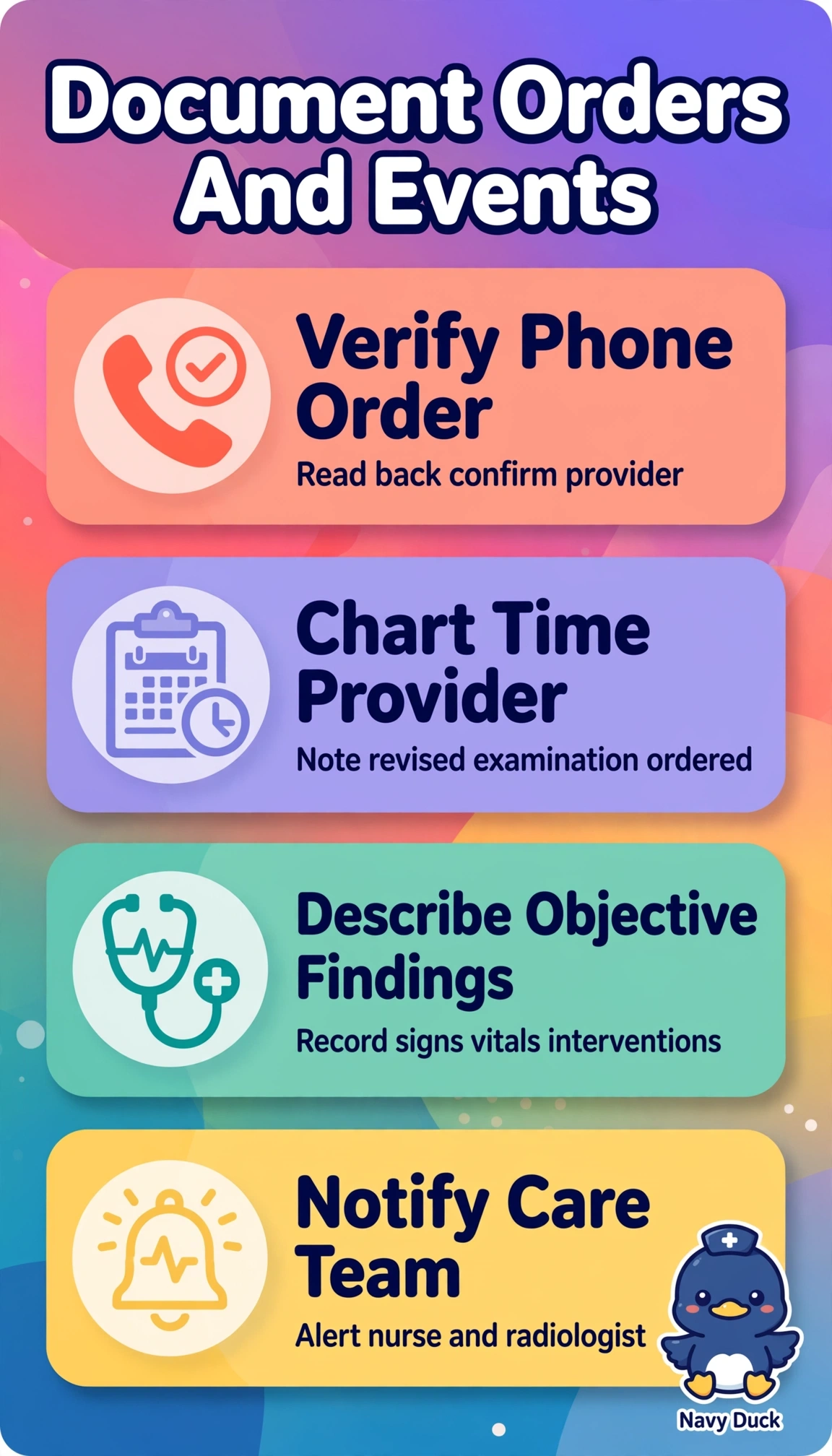
You protect continuity by recording the revised order and the event as it happened, including notifications. Your contemporaneous-charting gives the care team a clear, trustworthy record.
Full Explanation
When the radiologist changes the two-view acute abdomen series to one supine view because the patient is unstable, document the revised order with the time and provider; this creates an auditable history and explains why only one view was obtained. Because the patient vomits and briefly loses consciousness during transfer, also record objective incident details, including observed signs, duration, recovery, and vitals, and document notifications to the care team. Recording the revised order and time and describing vomiting objectively, but omitting notifications, leaves later caregivers unable to verify escalation and follow-up. Recording the revised order and notifications after the loss of consciousness, but omitting objective vomiting details, limits later evaluation because onset, character, and recovery cannot be reconstructed. Documenting the original two-view order as completed, even with vomiting, syncope, and notifications recorded, creates a mismatch among the order, images, and billing and obscures why the examination was reduced. The exam caveat is to distinguish complete charting from a thorough incident description or correct order entry alone: both are required. As a practical check, read back verbal changes, timestamp them, chart observed facts without assigning a cause, and confirm nurse and provider notification before completing the examination.