
A mobile radiographer prepares contrast for a bedside IV urogram using a multi-dose vial in a busy ED. The vial diaphragm is dusty, the previous puncture time is unlabeled, and sharps container is nearly full. Which safe injection and disposal sequence best meets Standard Precautions for IV supplies?
Select an answer to reveal the explanation.
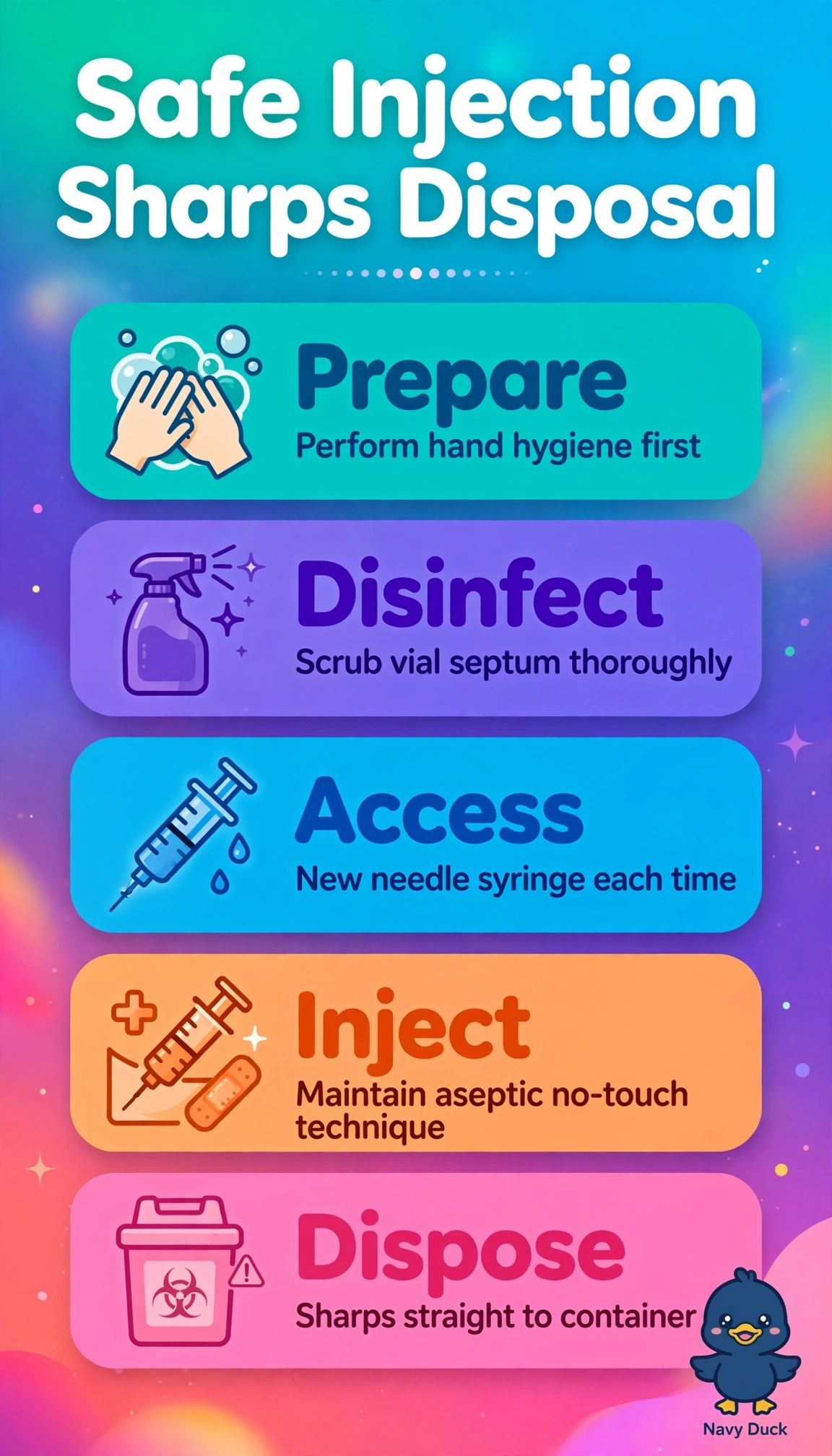
Short Explanation
You are the germ bouncer here, keeping needles one-way only. Fresh disinfection plus immediate disposal keeps that aseptic chain unbroken from vial to patient.
Full Explanation
The correct sequence reflects Standard Precautions for injectable medications and sharps because a dusty diaphragm requires disinfection with alcohol and adequate dry time to reduce bioburden before puncture, multi-dose vials require strict aseptic technique with a new sterile needle and syringe for each entry to prevent cross-contamination, and used sharps require immediate disposal in an approved puncture-resistant container to prevent needlestick injury. The choice that continues using the undated vial fails on medication stewardship by concept because once opening or first-puncture date and time are missing the beyond-use time cannot be verified and current guidance requires discarding the vial rather than assuming remaining sterility despite proper disinfection and single-use equipment. The choice that adds sharps to the nearly full box fails on sharps safety by concept because containers must be sealed and replaced at the fill line, typically about three-quarters full, and never overfilled or forced, so immediate disposal is unsafe without first obtaining a new container even when disinfection and single entry are correct. The choice that only wipes visible dust fails on asepsis by concept because physical cleaning does not equal chemical disinfection and the diaphragm still requires scrubbing with 70% alcohol with friction and drying before entry despite correct single-use technique and disposal. For examinations, remember that unlabeled or questionably stored multi-dose vials and full sharps containers are treated as unsafe and must be removed from service rather than worked around to save time in a busy setting. In practice, verify the vial label for opening time and 28-day or manufacturer limit, allow the alcohol to dry completely, check the fill line before the procedure, and replace the sharps container immediately if near capacity.