
An adult outpatient for PA chest has shallow breathing from rib pain, needs full inspiration with no motion, and the department uses a standing chest unit with a step stool nearby. Which respiration instruction with a positioning aid best achieves full lung expansion and stability for the PA chest?
Select an answer to reveal the explanation.
Short Explanation
You've got to fill those lungs like sails catching wind, and you're nailing it. Coaching a full-inspired hold with stable footing freezes motion and opens the lungs for sharp costophrenic angles.
Full Explanation
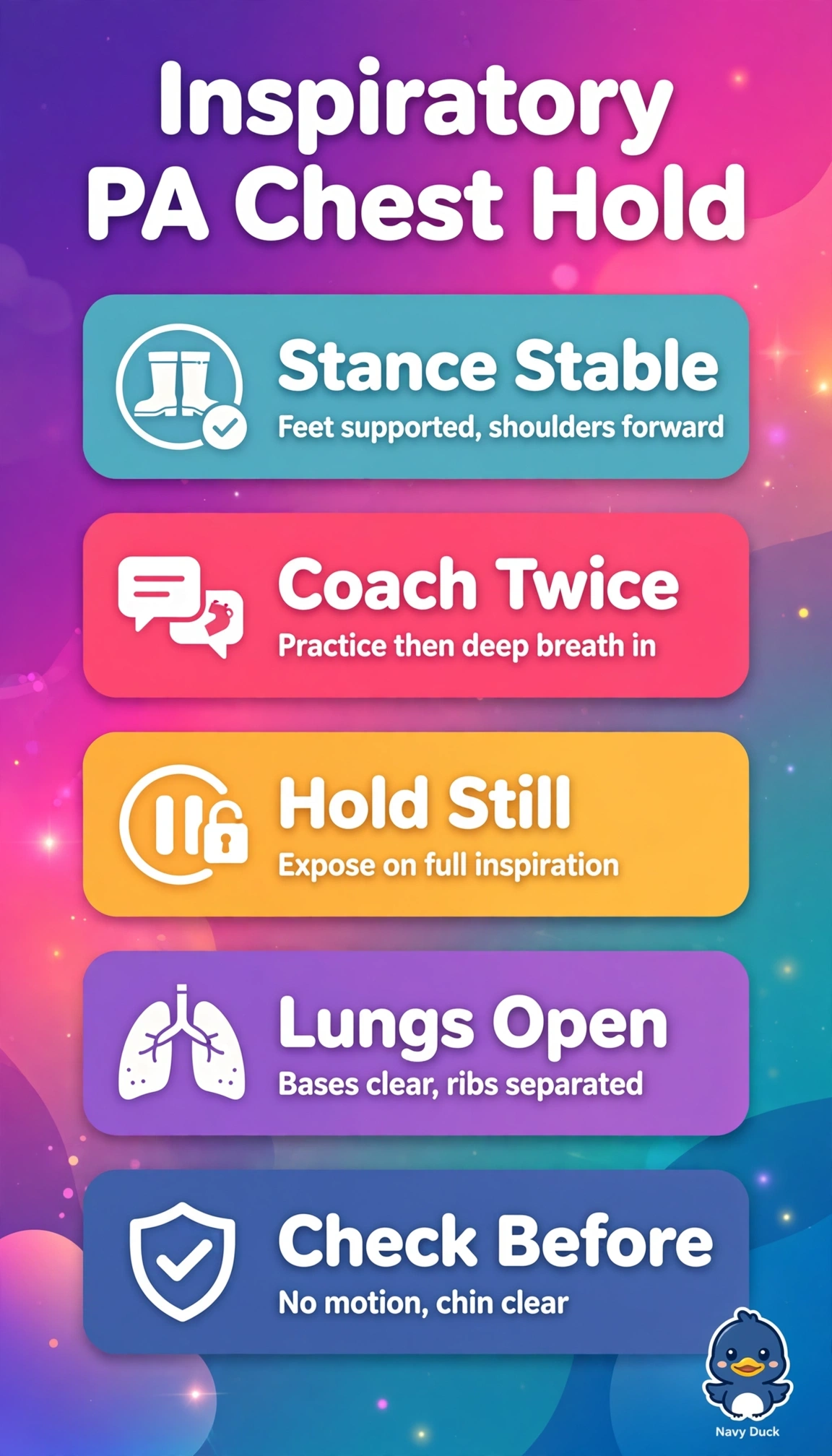
For an adult outpatient PA chest with rib pain the priority is maximal expansion without motion while stable upright, and the correct pairing succeeds because a low sponge under the feet only if needed levels and steadies the stance without climbing, while a coached second deep inspiration uses stacking to overcome splinting from pain, with exposure on the hold freezing the thorax at total lung capacity for sharp markings and full expansion. The sponge with first inspiration at peak variant fails on recruitment because one shallow painful breath rarely reaches full volume and peak timing without a sustained hold risks underinflation that mimics atelectasis. The leaning support with second inspiration during slow breathing variant fails on motion control because exposing while air continues to move blurs fine vascular and pleural detail despite good support and volume effort. The standing on the stool to center with second inspiration on the hold variant fails on support selection and safety because elevating a patient in pain narrows stability and adds fall risk, while floor standing with a sponge shim preserves balance. An exam caveat is that nearby equipment and familiar breathing phrases are deliberate traps, so distinguish stacking to a second-breath hold from a single breath to peak and distinguish a leveling aid from a climbing aid. A practical check is to rehearse coaching, confirm steady feet and chest contact, observe the hold, then verify ten posterior ribs above the diaphragm with sharp markings and no blur before releasing the patient.