
A radiographer must perform a portable chest on an isolation patient with MRSA, then assist with a fluoroscopic joint injection requiring a sterile tray. The unit has disinfectant wipes, sterile gloves, and wrapped instruments. Which infection-control sequence correctly applies medical versus sterile technique?
Select an answer to reveal the explanation.
Short Explanation
You’re juggling germs and sterility without mixing them up. Clean equipment stops spread between patients, while untouched sterile-field discipline protects the joint space.
Full Explanation
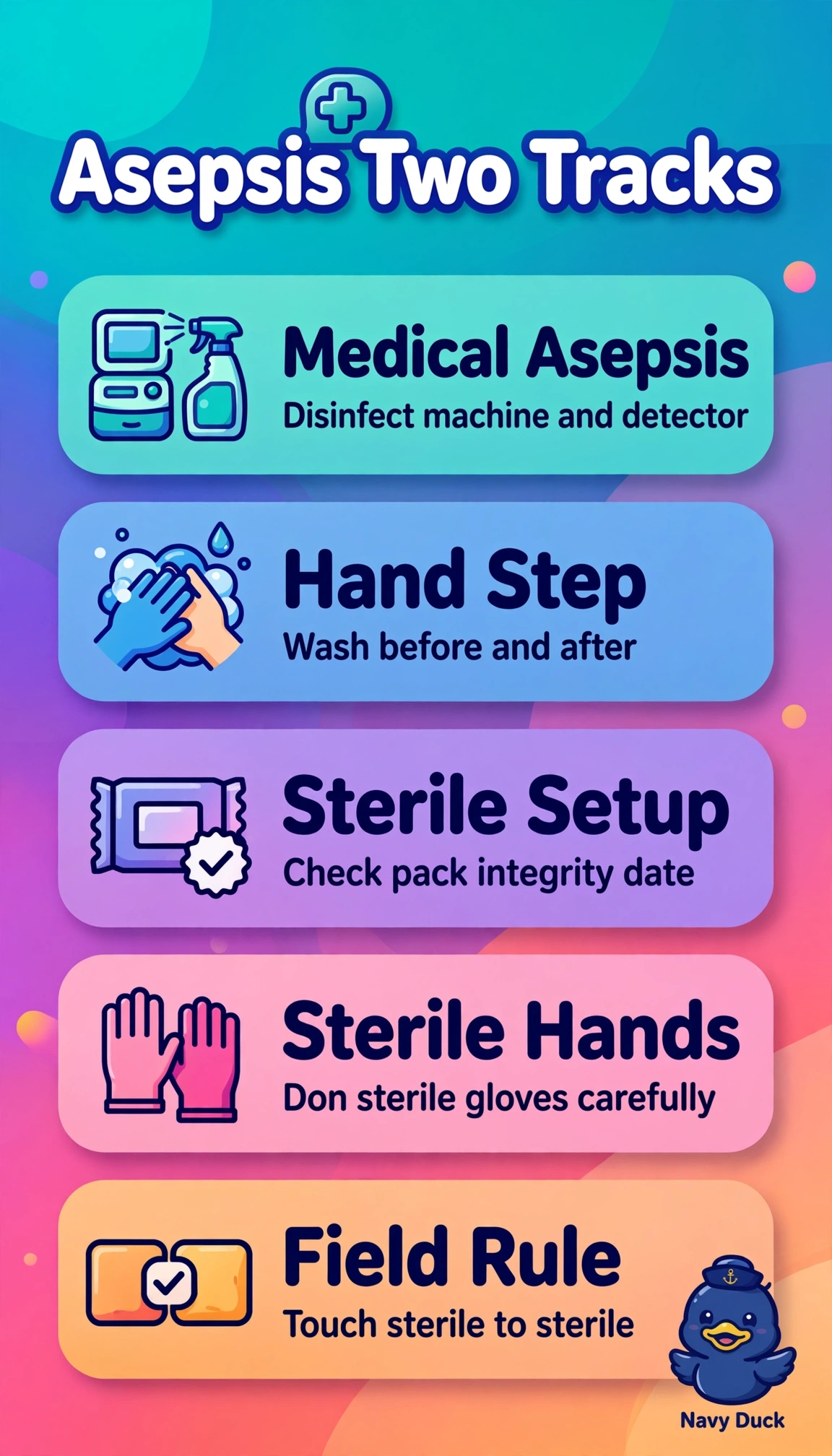
The correct sequence applies two different levels of asepsis to two different tasks, with medical asepsis for the MRSA portable requiring thorough post-procedure disinfection of all high-touch equipment including both the detector and machine to interrupt contact transmission, followed by hand hygiene and fresh sterile gloves with no-touch technique to establish surgical asepsis for the fluoroscopic joint injection tray of wrapped instruments. The fresh exam-gloves approach fails by glove-selection concept because although disinfection and glove renewal support infection control, nonsterile exam gloves cannot create or maintain a sterile field and contact with the tray renders the setup contaminated. The detector-only disinfection approach fails by completeness of medical asepsis because MRSA survives on environmental surfaces and handles, cables, and control panels remain reservoirs for cross-contamination even when sterile technique for the second procedure is perfect. The reposition-the-machine approach fails by maintenance of sterility because sterile gloves that touch any nonsterile surface such as the portable unit become contaminated immediately and cannot then open or arrange the tray without transferring organisms. A common exam caveat is that plausible stems pair correct cleaning with the wrong glove type or pair correct sterile gloves with incomplete cleaning or a subtle break in technique, so match glove sterility to invasiveness and match cleaning scope to all contacted equipment rather than the detector alone. A practical check is to observe the disinfectant dwell time, perform hand hygiene before donning and after doffing, inspect wrap integrity and chemical indicators, don sterile gloves last, and if any nonsterile contact is suspected discard the gloves and restart the sterile setup.