
A petite 48-kg adult needs a PA chest on an upright Bucky with AEC at a busy outpatient center. Prior images on the same unit were overexposed and lacked contrast despite correct chamber selection, and the service manual notes a relatively long minimum response time. Backup timer is set to 400% of expected mAs. Which AEC setup best prevents overexposure while maintaining diagnostic density?
Select an answer to reveal the explanation.
Short Explanation
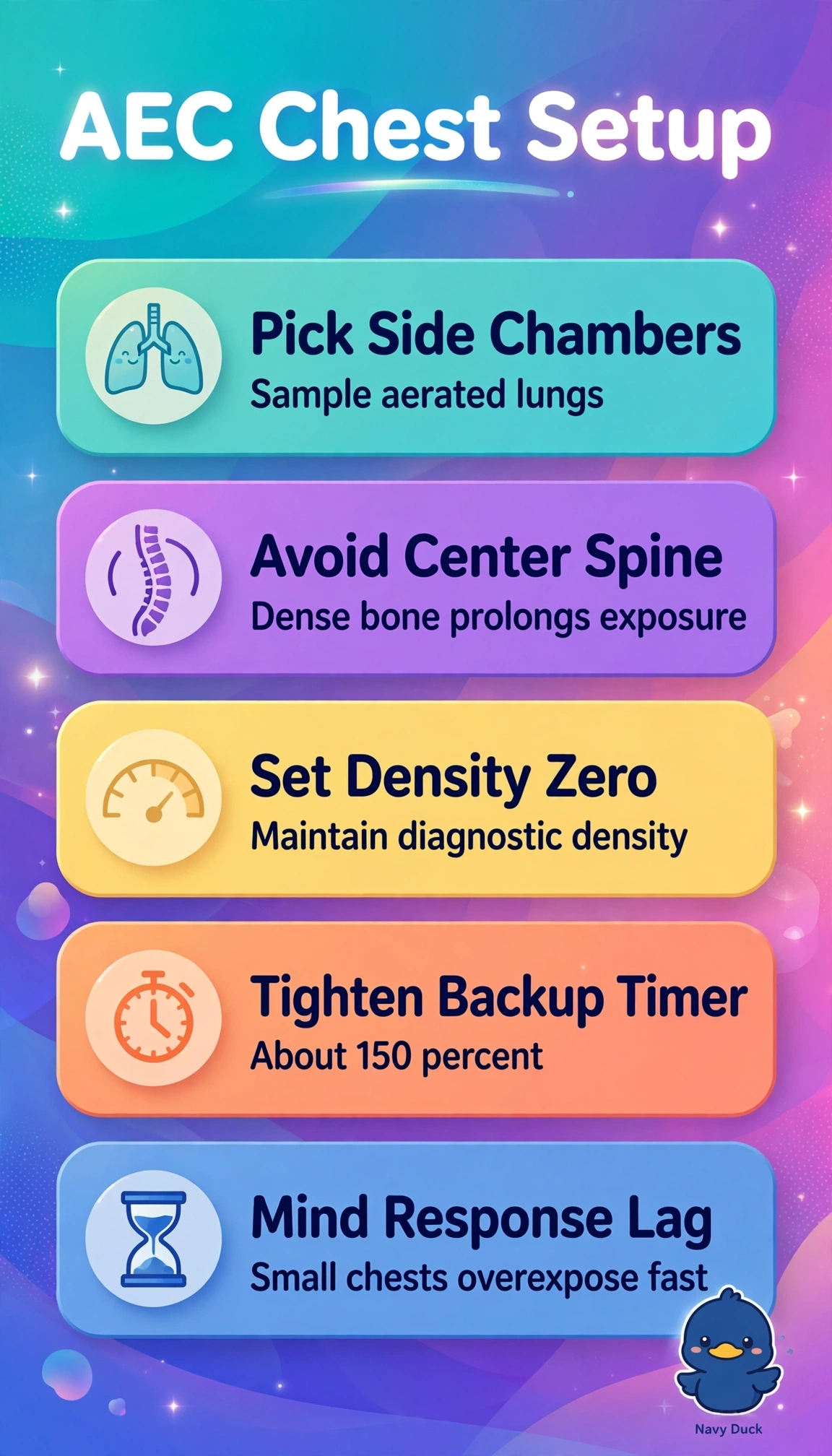
You outsmart a slow AEC by choosing the side chambers over the airy lungs and keeping the backup timer close to the expected mAs. That protects you from lag-related overexposure in a small chest while maintaining diagnostic density.
Full Explanation
Select the side AEC chambers positioned behind the aerated lungs, keep the density control near zero, and set the backup timer to about 150% of the anticipated manual mAs. This samples the lung fields and provides a limit if the AEC does not terminate as intended. With a relatively long minimum response time, the system cannot end very short exposures promptly; a thin patient reaches the required dose quickly, so exposure can continue too long and overexpose the image. Selecting all three chambers averages readings that include the dense spine and mediastinum, which can prolong exposure and reduce lung contrast. Selecting the center chamber over the spine deliberately samples dense anatomy, driving higher mAs and longer exposure time, so minimum-response lag can further overexpose the lungs. Choosing dense-plus biases the AEC toward more dose, while maximum backup time allows an exposure to continue far beyond the needed mAs, defeating the timer’s protective role. Exam caveat: minimum response time can overexpose small or low-attenuation parts, whereas choosing the wrong chamber can cause underexposure or noise. Practical check: confirm the active chambers using the console lights, center the lungs over the detectors, and test the backup mAs manually before using AEC.