
A 45-year-old outpatient with active influenza arrives coughing for a two-view chest in a small clinic with one radiographic room and no anteroom. The technologist must contain spread while completing the exam promptly. Which action best breaks the chain of infection at the mode of transmission for this respiratory case?
Select an answer to reveal the explanation.
Short Explanation
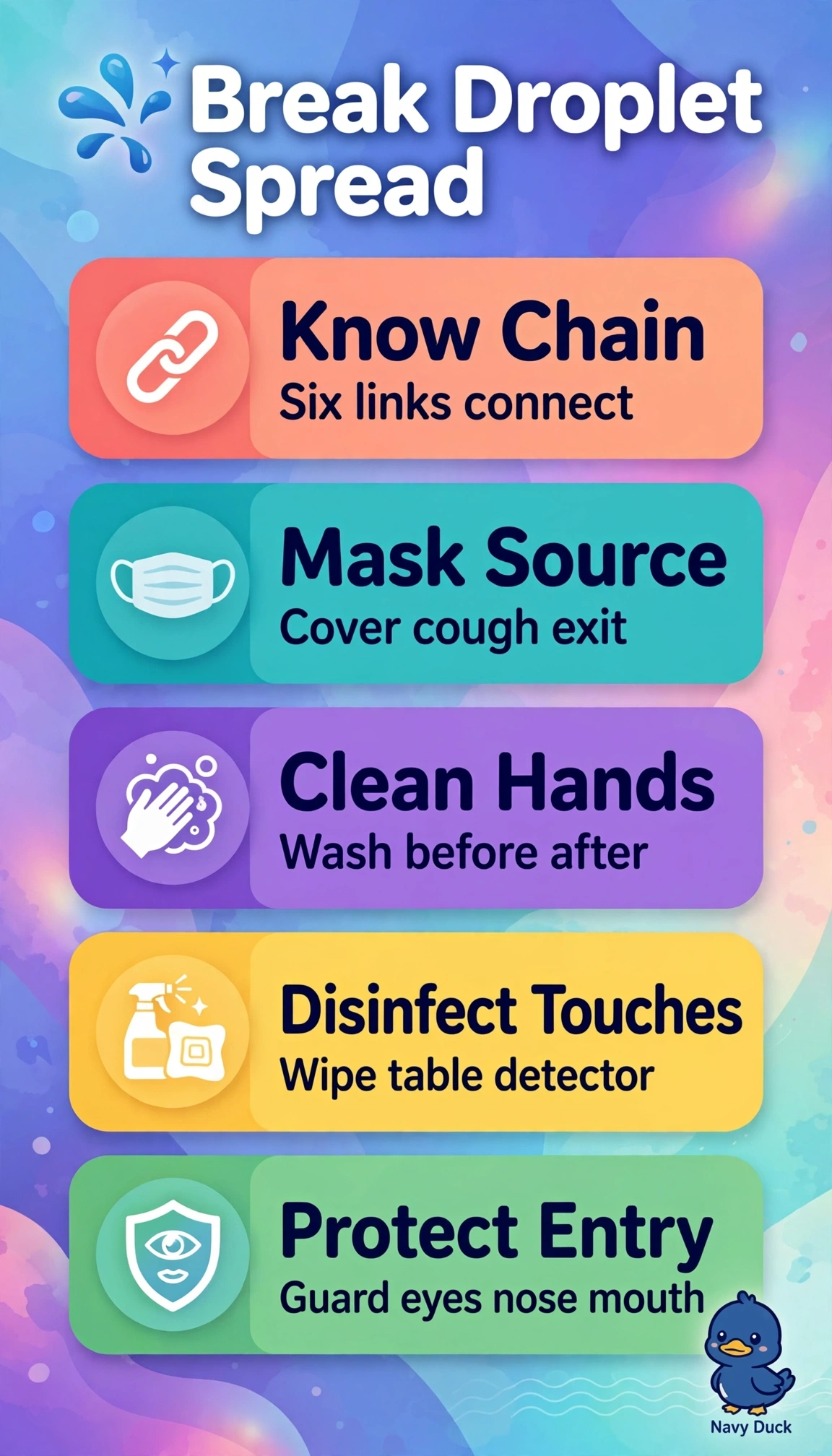
You've got a coughing patient in your small room, so you'll want to cap those germs like putting a lid on a spray can. Mask them up, clean your hands, and wipe high-touch spots to block droplets from reaching the next patient.
Full Explanation
Influenza spreads principally by large respiratory droplets expelled when coughing, so source control with a surgical mask on the patient plus hand hygiene and prompt disinfection of high-touch surfaces directly interrupts the mode of transmission while allowing the two-view chest to proceed without delay in a single-room clinic without an anteroom. Fitting the technologist with an N95 and holding the room empty for extended air exchanges describes airborne precautions appropriate for tuberculosis or measles, not droplet influenza, and it violates the stated need to complete the exam promptly with rapid room turnover. Donning gown and gloves with secure linen bagging addresses contact and fomite transfer and includes hand hygiene, which is sound routine practice, but it omits source droplet containment during coughing and therefore does not break the respiratory mode at its source. Scheduling the patient at day's end with expedited positioning and post-exam detector disinfection is efficient workflow and terminal cleaning, yet without masking the coughing patient it leaves droplet emission uncontrolled during positioning and exposure. Exam caveat: do not confuse droplet with airborne simply because the patient is coughing; test stems signal airborne by specifying tuberculosis, measles, varicella, prolonged air clearance, or negative-pressure rooms. Practical check: mask the patient on arrival, keep the encounter brief and distanced except for positioning, perform hand hygiene before and after contact, and wipe the table, detector, handles, and positioning aids before the next patient enters.