
An outpatient with an IV for iodinated contrast reports itching and hives during injection, then develops swelling at the IV site with tightness, wheeze, and falling blood pressure. The nurse calls for emergency help while the technologist stays with the patient. Which contrast complication response should the technologist initiate for extravasation with mild to severe reactions and documentation?
Select an answer to reveal the explanation.
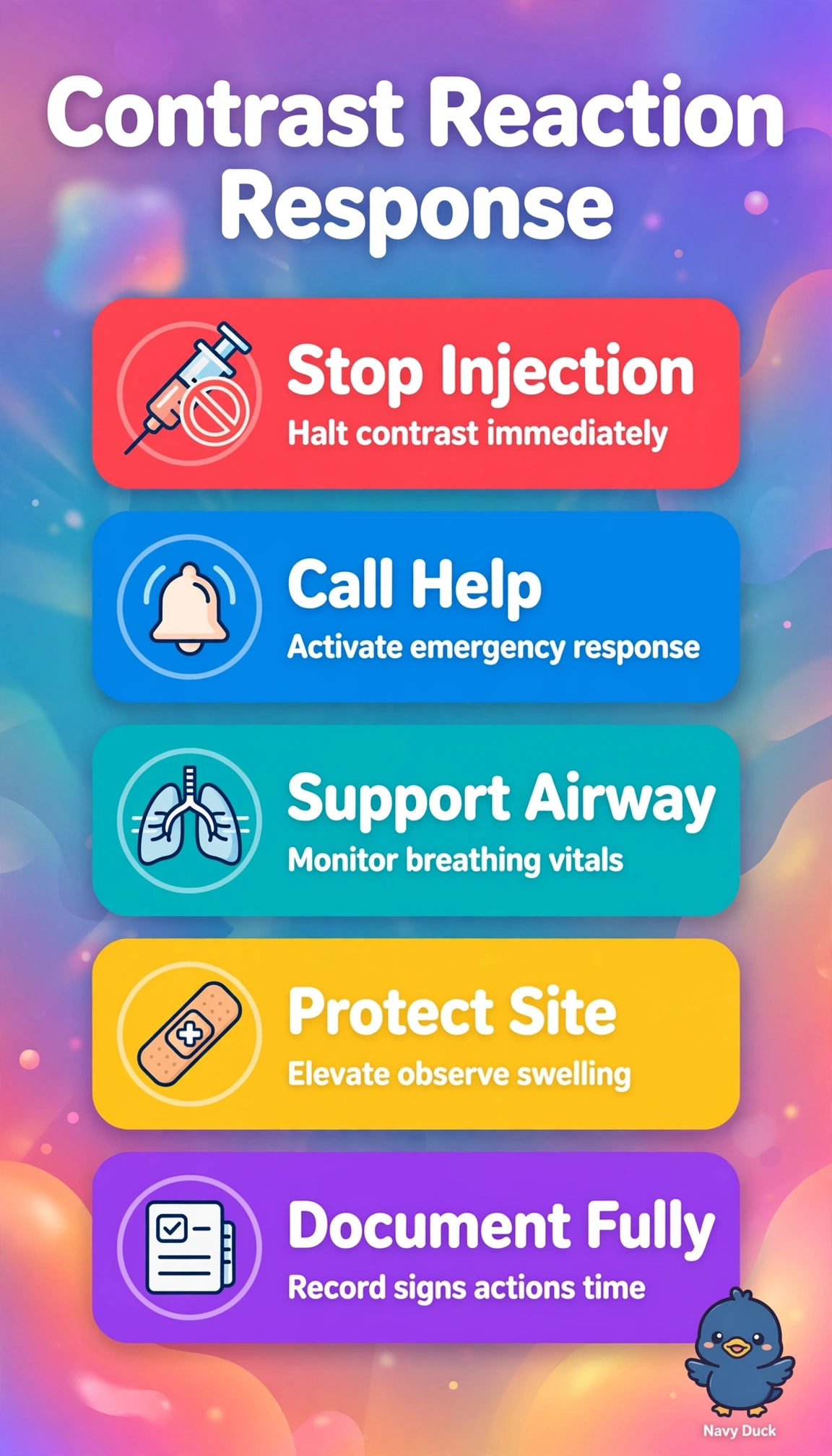
Short Explanation
You are watching a small leak turn into a breathing emergency in real time. Stopping the flow and calling for help protects the airway first, and thorough documentation closes the safety loop.
Full Explanation
Correct care is mandated because itching and hives progressing to tightness, wheeze and falling pressure signals evolving anaphylaxis concurrent with swelling indicating extravasation, so stopping injection limits further allergen and tissue load, activating emergency response secures timely medications and airway expertise, continuous airway monitoring detects deterioration, remaining with patient prevents unattended collapse, and documenting signs and actions ensures continuity and accountability. The elevated-arm cold-compress approach fails by treating only local extravasation physiology and omitting systemic resuscitation for bronchospasm and hypotension, which is unsafe when airway and circulation are compromised. The stop-activate-monitor-reassure approach fails through omission of required documentation, as reassurance cannot substitute for timed recording of symptoms, vitals, interventions and notifications needed for subsequent care and review. The leave-to-summon-help approach fails by breaching assigned team roles and continuous observation, since the nurse already activates help while the technologist must maintain bedside monitoring and leaving risks missed arrest. Exam caveat is that when mild and severe features coexist, always prioritize the highest severity systemic response rather than selecting isolated mild-reaction or isolated extravasation care. Practical check is to verify injection stopped, emergency team notified, airway, breathing, pressure and saturation monitored, times and actions documented, and radiologist handoff completed.