
The weekly output check on the treatment machine falls outside tolerance, and a repeat measurement confirms the deviation while the light field, MLC leaf positions, and isocenter lasers all pass. Which response to the failed output check must come before the first patient is treated?
Select an answer to reveal the explanation.
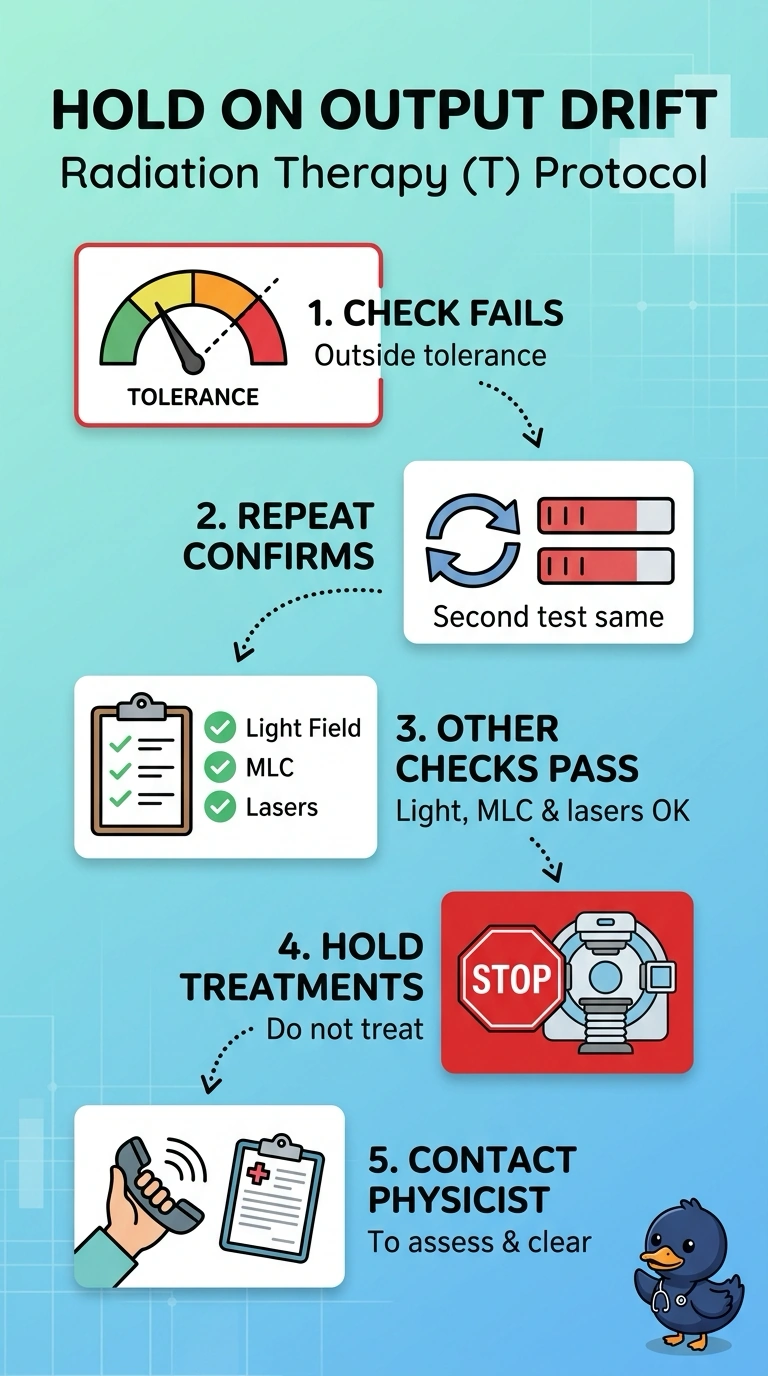
Short Explanation
You must hold treatments and contact the medical physicist to assess and clear the confirmed output deviation before clinical use. Passing the other checks is like having working brakes but a warning light still on—you can’t treat until the output issue is resolved.
Full Explanation
The confirmed output deviation is a direct concern about the dose delivered to patients, so treatment must remain on hold until the medical physicist evaluates the result and explicitly clears the machine for clinical use. Passing alignment, MLC, and laser checks does not establish that output is correct; those tests assess different aspects of machine performance. Repeating the reading with an independent calibrated dosimeter is a sensible verification step, but it cannot substitute for the required physicist assessment and clearance before treatment. Reviewing trends and setup conditions can identify measurement or setup problems, yet a repeat check after that review still does not authorize clinical use when the confirmed deviation has not been assessed by the physicist. Likewise, a post-warm-up reference-condition measurement and routine QC release criteria may be part of troubleshooting, but routine release is not a substitute for physicist clearance of this confirmed failure. Exam caveat: distinguish a test that helps investigate a fault from the authorization required to resume treatment; passing unrelated checks does not resolve an output failure. Practical check: document the repeat result and measurement conditions, keep the unit unavailable for patients, and contact the medical physicist for disposition and recorded clearance.