
During a new-patient evaluation, a woman tells you that her mother and maternal aunt were both diagnosed with breast cancer in their forties, and she asks what that means for her. She reports feeling well today. Which statement about her family history and screening plan belongs in the evaluation record?
Select an answer to reveal the explanation.
Short Explanation
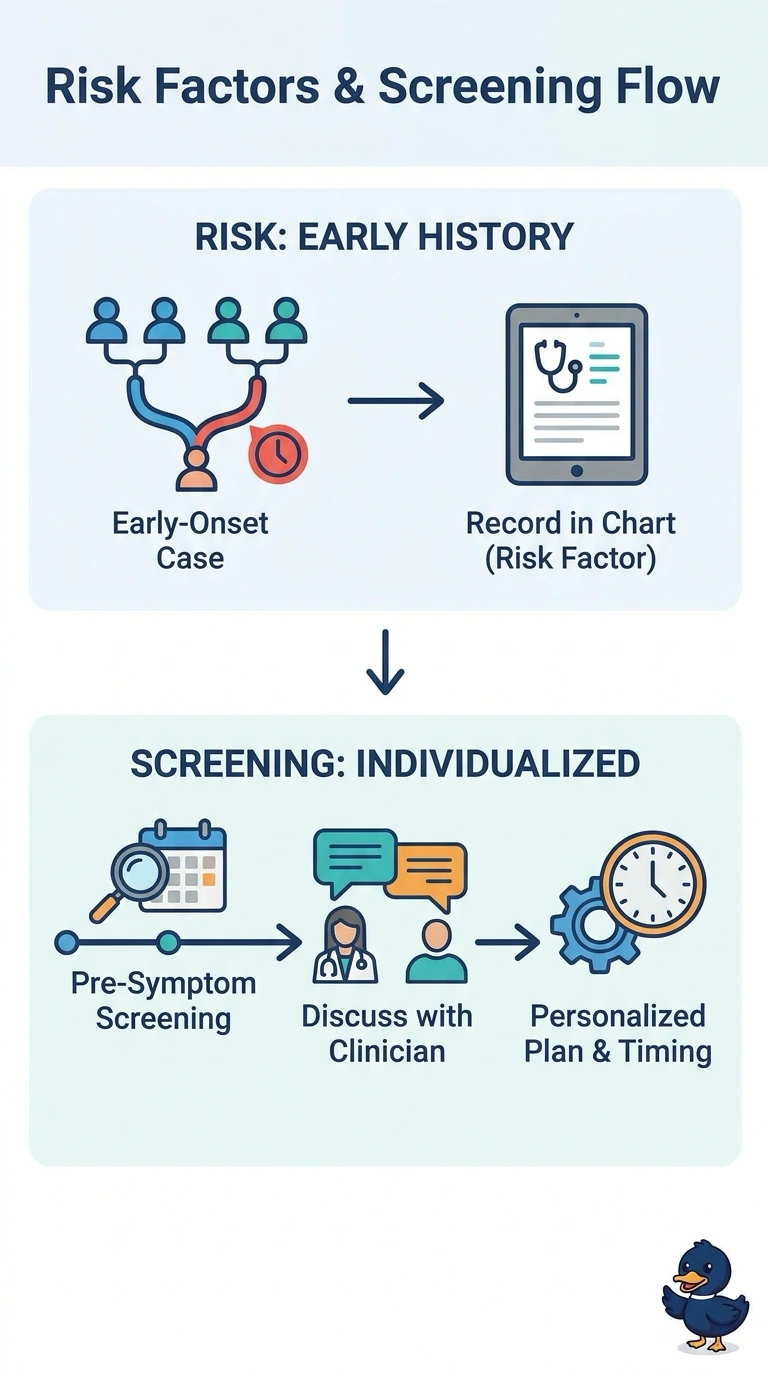
Nice catch—you’ve identified a family pattern that matters in the evaluation. Record it as a risk factor and note that screening should be individualized; a normal examination today does not erase inherited risk or the need to assess it.
Full Explanation
The correct statement captures both essential points for the evaluation record: breast cancer in two close maternal relatives at young ages is relevant family history, and her screening plan should be tailored to her risk. Her lack of symptoms does not remove the need to assess risk; screening is preventive and should not depend on a normal examination. Recording the early diagnoses but using the routine population schedule without adjusting for risk acknowledges the history yet may overlook the need for a different starting age, interval, or additional assessment. Recognizing the family history and arranging genetic counseling are appropriate, but postponing an individualized screening plan until testing is complete can leave current risk unaddressed; assessment and interim planning can proceed while referral is arranged. Recommending annual mammography beginning at age forty as a fixed plan for everyone with this history recognizes familial risk but fails to individualize screening. Risk estimates, ages at diagnosis, additional family history, prior testing, and applicable guidelines may affect recommendations. Exam caveat: a suggestive pedigree supports risk assessment and possible referral, but does not by itself establish a pathogenic variant or dictate one universal imaging protocol. Practical check: record which relatives were affected and their ages at diagnosis, then document the risk-assessment or referral step and the resulting screening plan.