
A patient with metastatic lung cancer returns for planned palliative treatment of a painful vertebral metastasis and reports that back pain like last month's has returned, but this time with new leg weakness and difficulty passing urine over the past day. Which approach correctly matches treatment urgency to this presentation?
Select an answer to reveal the explanation.
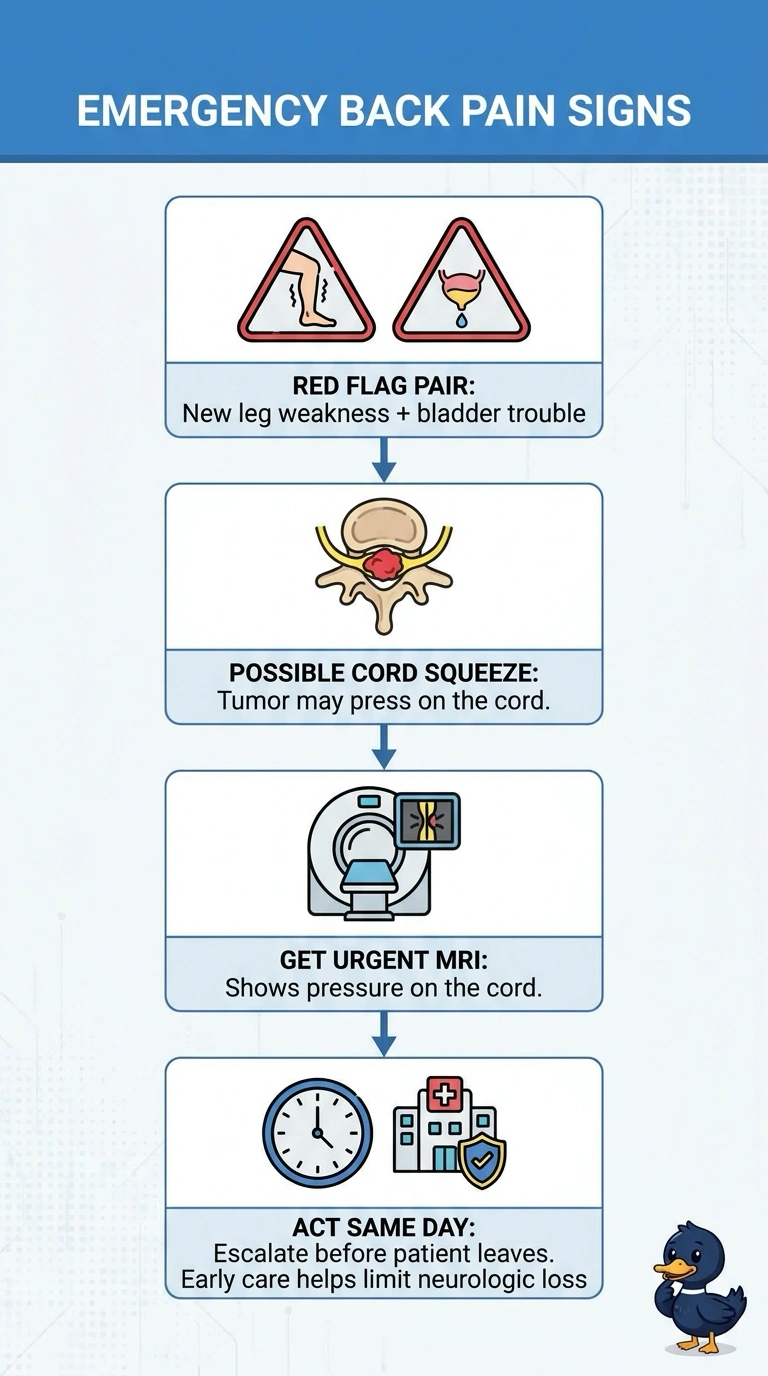
Short Explanation
New leg weakness plus bladder symptoms in your patient with bone metastases point to spinal cord compression, which is a same-day problem rather than a next-week one. Waiting on routine imaging or physiotherapy lets nerve injury build while you confirm what the exam already suggests. It's like a fire alarm: you wouldn't book the inspection for tomorrow.
Full Explanation
Metastatic epidural spinal cord compression is handled as an oncologic emergency because neurologic outcomes depend on how quickly compression is assessed and treated. New weakness and bladder dysfunction appearing within a day suggest active compression, and the ability to walk when treatment starts is an important predictor of whether the patient will walk afterward. This is why same-day escalation and urgent magnetic resonance imaging precede any scheduling decision. The routine palliative scheduling approach fails the time-critical requirement, since a course booked for next week treats the same bone lesion while neurologic injury may progress. Confirming the site first with a bone scan fails because confirmation does not answer the urgent question, which is whether epidural tumor is compressing the cord; magnetic resonance imaging is the appropriate study to assess this. The analgesia and physiotherapy pathway fails because it manages mechanical back pain, while the new deficits are neurologic, and improvement in an earlier pain episode does not transfer to this presentation. Exam caveat: time windows vary by center, so the tested concept is urgent escalation rather than a specific number of hours. Practical check: in any patient with spinal metastases, treat new weakness, gait change or bladder change as an emergency and escalate before the visit ends.