
A patient with pelvic disease is receiving concurrent radiosensitizing chemotherapy, has image-guidance scans before every fraction, had a planning CT at simulation, and completed a brachytherapy boost earlier in the course. The skin reaction in the treatment area is stronger than expected. Which factors should you review when judging the response?
Select an answer to reveal the explanation.
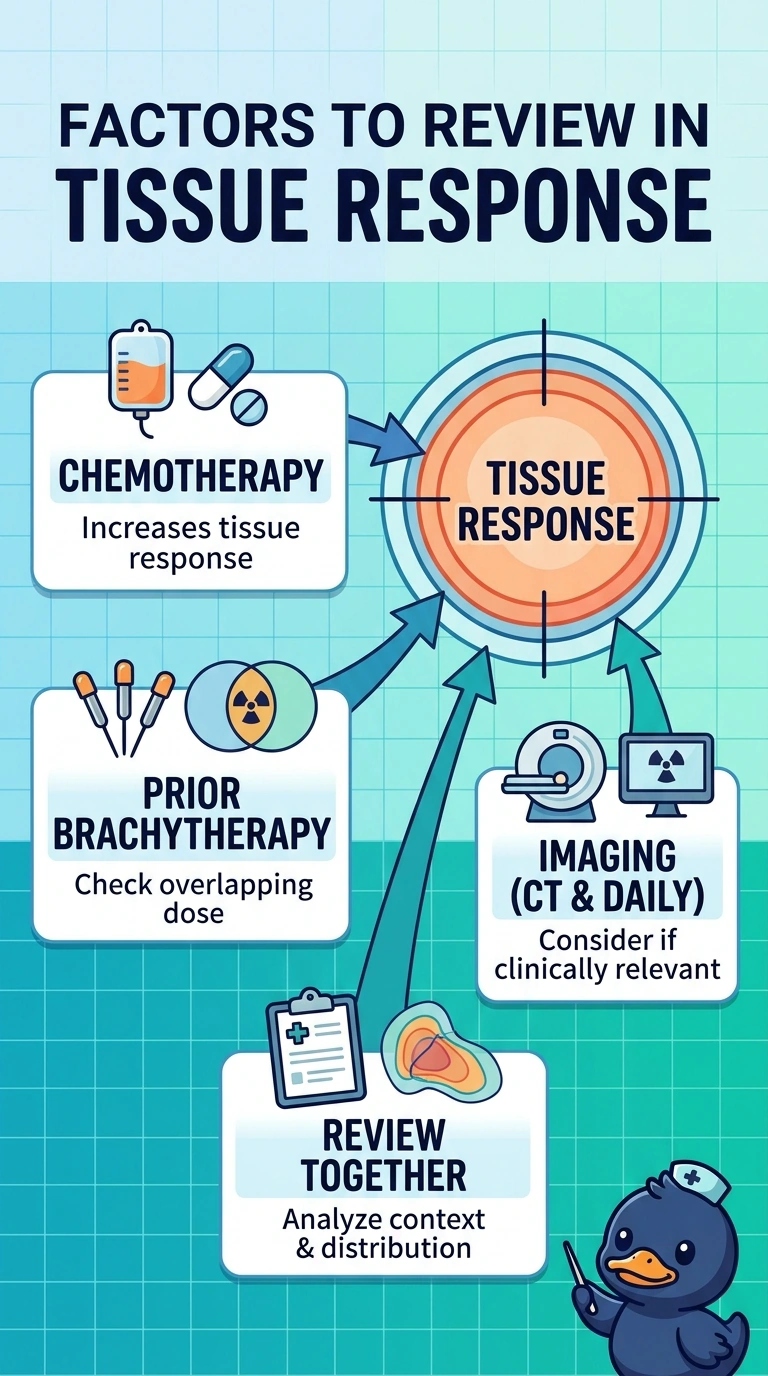
Short Explanation
When you review the skin reaction, check the effect of radiosensitizing chemotherapy and any overlapping dose from brachytherapy—like layers landing on the same spot. You can consider imaging dose if it’s clinically relevant, but scans usually deliver much less radiation. The reaction alone doesn’t tell you what caused it.
Full Explanation
The correct approach considers treatment-related biology and cumulative exposure. Radiosensitizing chemotherapy can intensify normal-tissue reactions without adding radiation dose, and an earlier brachytherapy boost may have treated tissue overlapping the current area. Imaging dose may contribute, but its relevance depends on the modality, settings, frequency, and dose relative to therapeutic exposure; it should not automatically be treated as a major cause. Routinely counting planning-CT and daily image-guidance exposure as clinically meaningful assumes their contribution is important in every case, although imaging dose is generally much lower than treatment dose and should be judged rather than presumed. Reviewing chemotherapy and imaging while limiting brachytherapy assessment to treatment delivered in the same fraction overlooks that earlier dose can still matter when fields or tissues overlap. Reviewing brachytherapy and imaging but omitting concurrent radiosensitizing chemotherapy misses a factor that can change the skin response without adding dose. Exam caveat: distinguish a factor that may modify toxicity from a source of radiation dose, and do not infer causation from timing alone. Practical check: compare the reaction site with external-beam and brachytherapy dose distributions, review chemotherapy timing, and verify imaging protocols and cumulative exposure when imaging dose could plausibly matter.