
A patient treated for an upper abdominal tumor shows more day-to-day shift in the anterior-posterior direction than expected even though the skin marks match the lasers. The department has indexed couch positions, surface-guided cameras, respiratory gating and an abdominal compressor. Which setup aid should you standardize and document first to reduce this variation?
Select an answer to reveal the explanation.
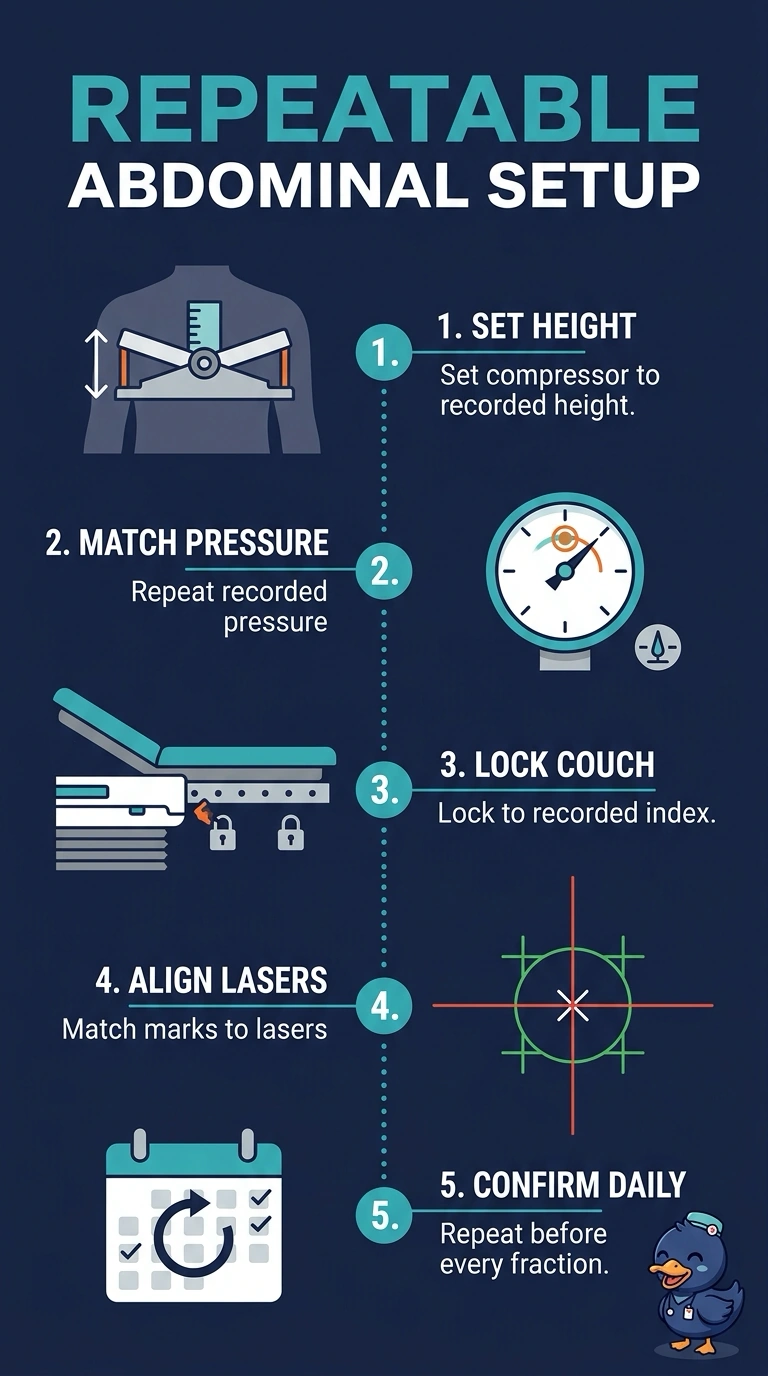
Short Explanation
To reduce day-to-day AP shifts, set the abdominal compressor to your recorded height and pressure, then confirm the indexed couch position and laser match before each fraction. Like a seatbelt, compression works best when you apply it the same way every time, and documenting the compressor settings helps you repeat the setup.
Full Explanation
Abdominal compression can limit motion and alter the external abdominal shape, so reproducing the recorded plate height and pressure can help make the setup more consistent. It does not guarantee that internal anatomy will match the simulation, so verify the target position using the department's imaging protocol. Surface guidance monitors the external surface but cannot by itself establish internal organ position. Laser-to-mark matching aligns skin marks with the room lasers but does not ensure that internal anatomy or abdominal shape is unchanged. Gating selects part of the breathing cycle; it does not correct a setup shift or a change in how the patient rests on the table. Compression tolerance varies by patient, so use a setting the patient can tolerate. Before treatment, check the compressor setting and indexed couch position against the simulation record.