
While casting a block, a small splash of molten Cerrobend hardens on the workbench; nobody is burned, but the pot's label is scorched and unreadable. Which document should guide the cleanup and the protective clothing used before the residue is removed?
Select an answer to reveal the explanation.
Short Explanation
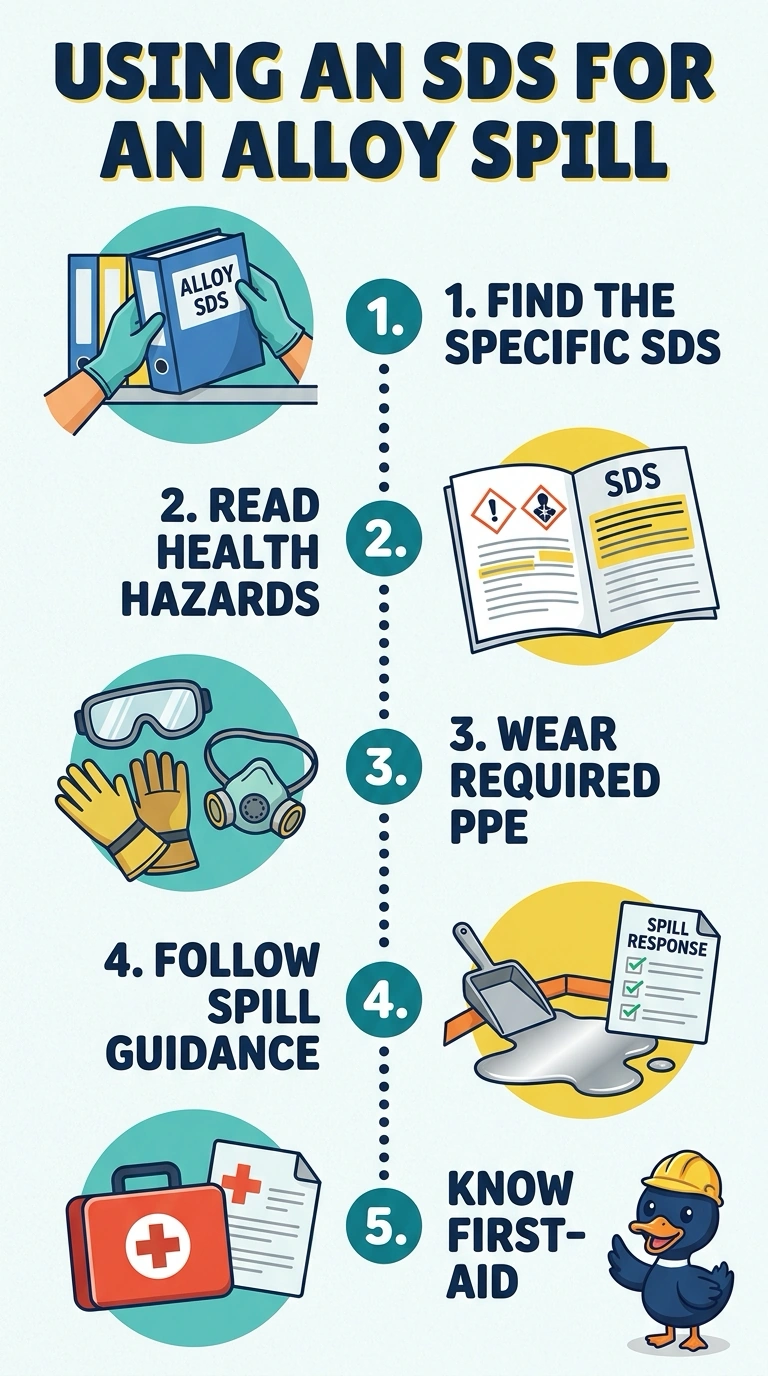
Your alloy’s safety data sheet (SDS) is like a cleanup playbook, with its hazards, protective clothing, and spill-response steps. Since the label’s unreadable, identify the alloy and find its SDS before you handle the hardened residue.
Full Explanation
The correct approach is to consult the safety data sheet (SDS) for the specific Cerrobend alloy before removing the hardened splash. An SDS describes the material’s hazards and provides alloy-specific recommendations for protective equipment, first aid, and accidental-release response, so it guides both cleanup and clothing. The block-making checklist is a routine-work-practice approach: its apron and heavy-glove guidance for melting at the pot does not necessarily address an accidental release or the residue’s specific hazards. The casting-pot instructions are an equipment-use approach, covering matters such as melting temperature and capacity rather than the alloy’s health hazards or spill response. The general hazardous-waste policy is a disposal approach; it may govern discarded block-making materials but does not replace a product-specific hazard assessment before cleanup. Exam caveat: do not infer the alloy’s composition or rely on a generic SDS just because the pot label is unreadable; the document must match the specific alloy. Practical check: confirm the alloy’s identity from an appropriate product or inventory record and obtain its SDS before handling the residue.