
A radiation therapist remains in the room during fluoroscopic imaging while wearing a wrap-around protective apron. The radiation safety officer issues one dosimeter to monitor exposure to the body parts outside the apron. Where should it be worn?
Select an answer to reveal the explanation.
Short Explanation
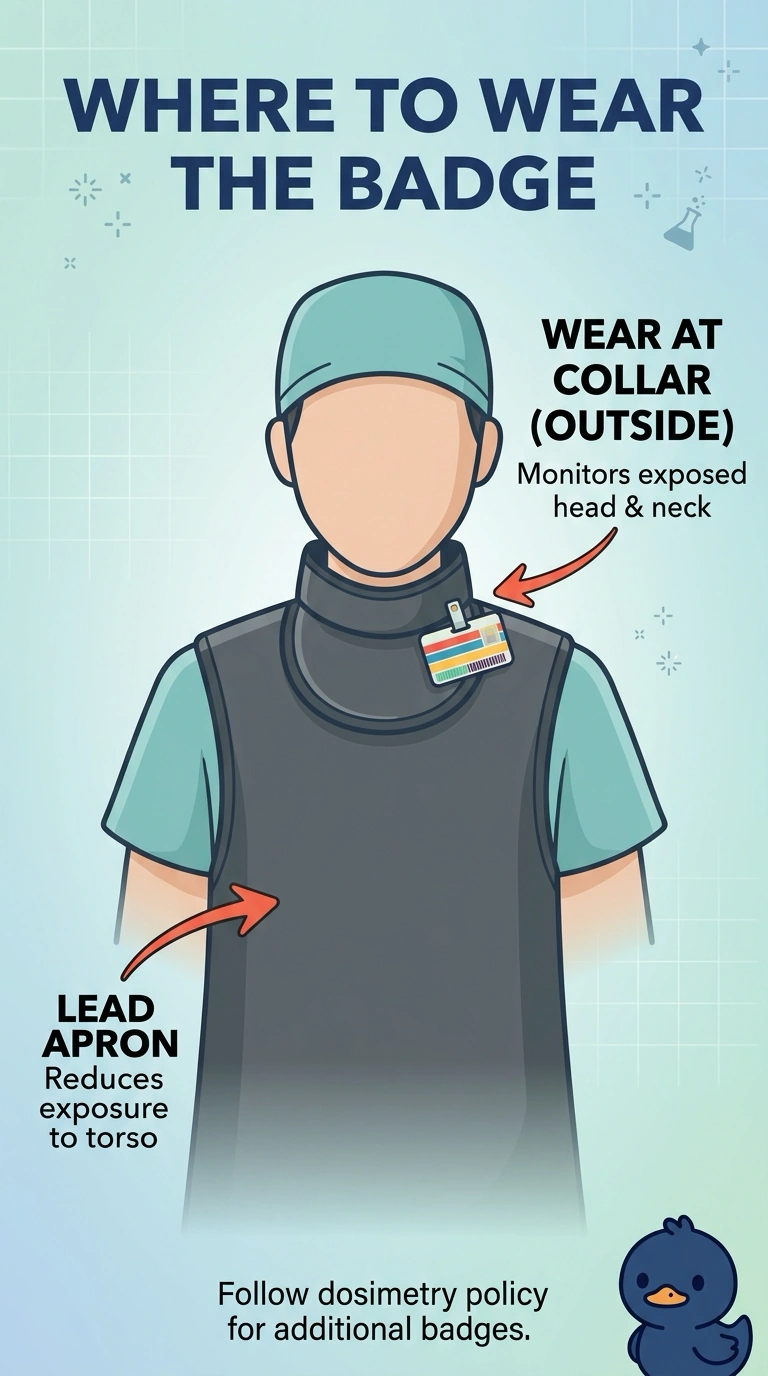
A collar-level dosimeter worn outside the apron monitors exposure to the unshielded head and neck. Follow your facility’s dosimetry policy for any additional monitoring needed.
Full Explanation
When a dosimeter is assigned to monitor body parts outside a wrap-around protective apron, it should be worn at collar level outside the apron. This position monitors exposure to the unshielded head and neck, which are not protected by the apron; it does not directly measure the dose to every unshielded tissue or necessarily represent whole-body effective dose. The under-apron chest placement uses torso monitoring behind the shielding, so it measures exposure at a protected location rather than the outside-apron exposure of interest. The waist-inside-apron approach similarly monitors the shielded lower trunk, not the unshielded head and neck. A ring dosimeter uses extremity monitoring: it estimates dose to the hand, but cannot substitute for a dosimeter intended to monitor exposure to body parts outside the apron or whole-body dose. Exam caveat: collar-level placement is the standard for the stated monitoring purpose, but dosimeter placement and any need for additional dosimeters follow the facility’s protocol and the radiation safety officer’s instructions. Practical check: confirm that the badge is clipped outside the apron at collar level and verify whether local policy requires a second badge or an extremity dosimeter.