
A patient with a dental implant and a fear of tight spaces arrives for a head-and-neck CT simulation with a thermoplastic mask. The patient asks whether the scanner's magnet could disturb the implant and whether the scan itself is the day treatment begins. Which explanation best prepares this patient for the simulation?
Select an answer to reveal the explanation.
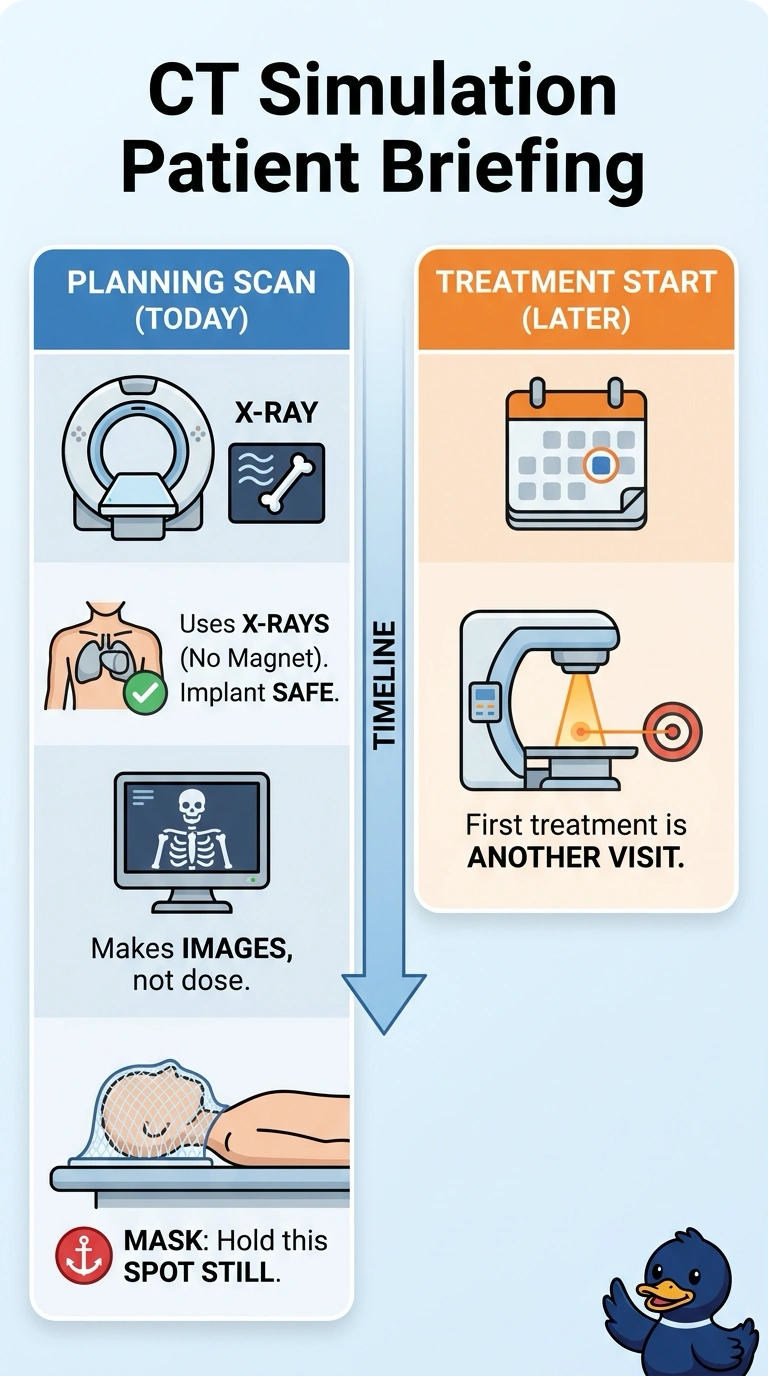
Short Explanation
Your patient is mixing up a CT scanner with an MRI, so say x-rays and no magnet out loud. The scan only makes planning pictures, which means treatment still starts on a later visit. Keep the simulation compliance message short: mask on, hold still, and you'll speak up if anything feels off.
Full Explanation
A CT simulator is an x-ray machine rather than a magnet, so an implant is never moved or activated by the scan, and the only imaging issue metal creates is streak that can blur borders, which the technologist handles with positioning and scan settings. The scan also delivers no therapeutic dose, because planning images are collected before any treatment fraction, and the whole purpose of the visit is an accurate, reproducible setup that the patient can repeat. Explaining that the scanner's magnet must be checked first treats the device like an MRI environment and teaches your patient a false safety rule. Calling the simulation the first treatment day teaches the patient that a planning visit already fought the tumor, which distorts how they understand every visit after it. Allowing movement whenever discomfort rises treats comfort as a reason to skip immobilization, since motion during the scan shifts the contours the plan is built on. Exam caveat: some implants do need clearance or altered imaging, but that is an MRI and contrast question, not a CT magnet question. Practical check: before you start, have the patient repeat back in their own words that the scan is pictures only and that they must keep still.