
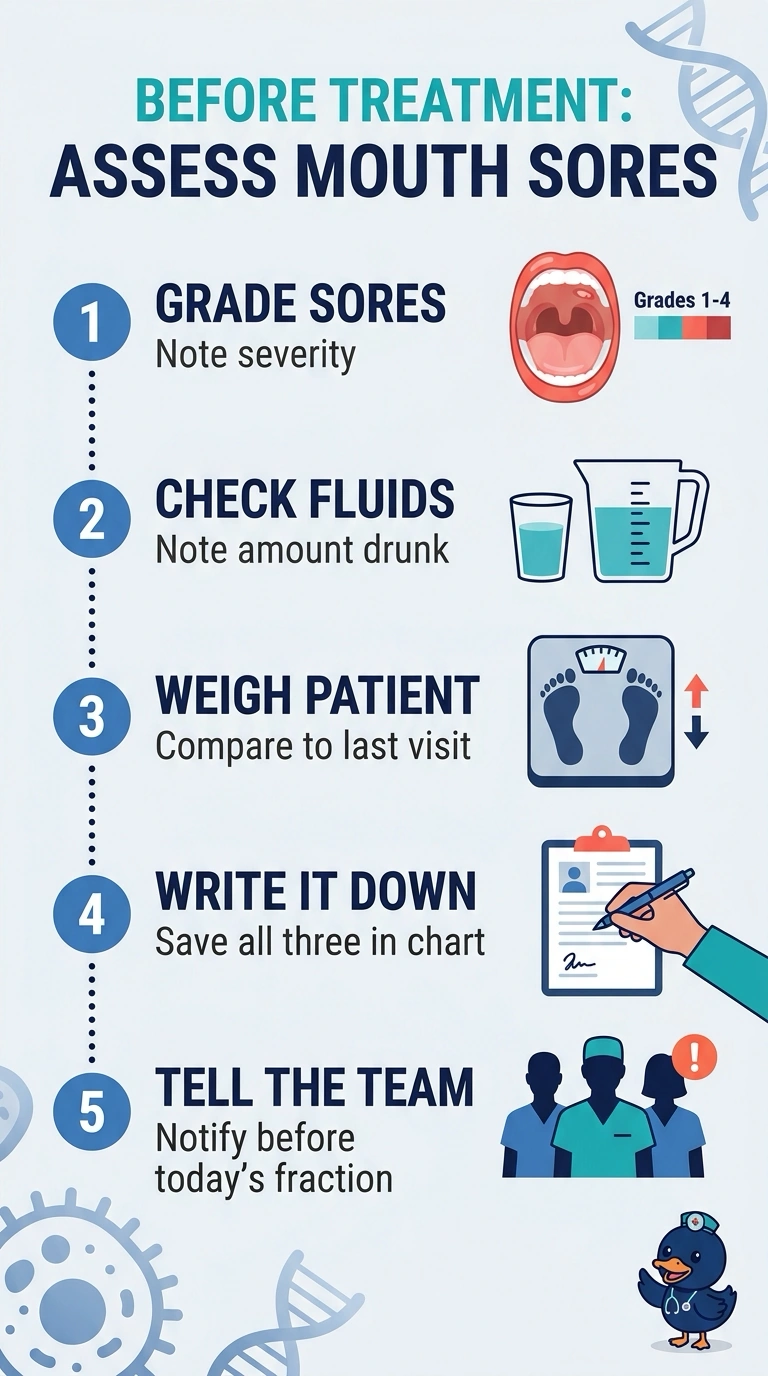
A patient being treated for a head and neck tumour reports painful mouth sores at today's review, is drinking less than usual, and has lost weight since the last visit. Which action completes the on-treatment assessment before today's fraction?
Select an answer to reveal the explanation.
Short Explanation
Nice work treating all three clues as one assessment; you'll want the sore mouth, the dropping intake and the shrinking weight each entered in the note. The on-treatment review should reach the team before today's fraction is delivered. Documenting and reporting together is what turns a patient's comment into action.
Full Explanation
A complete on-treatment assessment connects what the patient reports with a severity grade and a measurable trend, because each clue can inform the care plan. Grading the mucositis gives the team a severity they can follow over time, recording fluid intake and weight change reveals whether hydration and nutrition may be slipping, and notifying the team before the fraction gives them an opportunity to assess the situation and advise on care. Omitting intake and weight leaves the nutrition risk unrecorded, even though the pain is documented and the team is told. Reporting without grading leaves the symptom ungraded, making it harder to track changes between visits. Deferring the report until tomorrow delays communication about the symptoms. The exam favors the answer that satisfies every stated requirement in the right order, so read the stem for each listed fact. Confirm that the nurse or oncologist has been informed before treatment starts.