
A patient in week three of treatment to a regional site reports pink, dry, itchy skin limited to the marked treatment area, with no blisters or open areas. The therapist documents the skin assessment before today's fraction, and the physician has directed that treatment continue. Which assessment finding and management note should be recorded?
Select an answer to reveal the explanation.
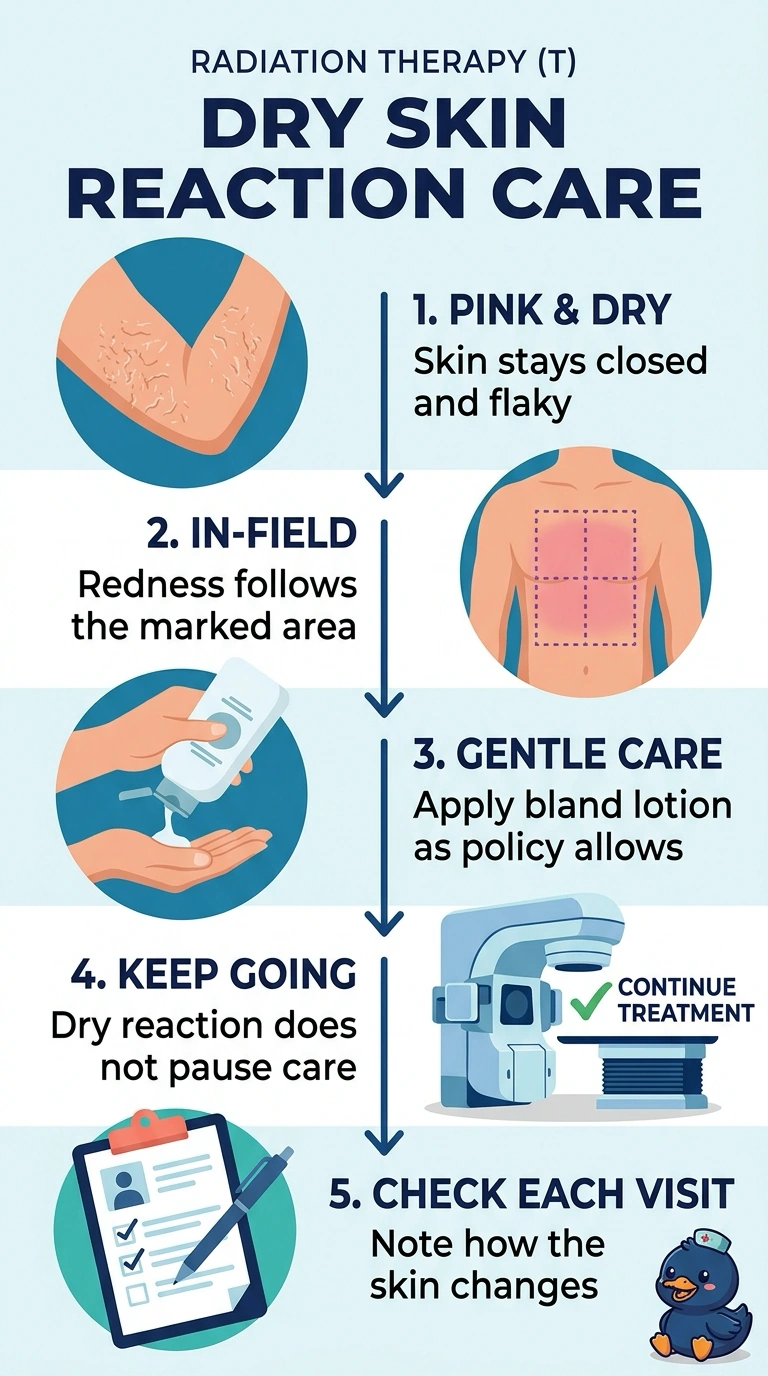
Short Explanation
Record in-field erythema with dry, intact skin, and note bland skin care while treatment continues as directed. Gentle moisturizing is like a soft shield for your skin barrier.
Full Explanation
The findings fit an acute, mild radiation skin reaction: erythema and itching confined to the treatment field, with dry, intact skin and no moist desquamation. Recording the location and intact status before the fraction accurately documents the assessment; bland skin care is appropriate, and the physician’s direction is to continue treatment. A low-potency topical corticosteroid can be used in some protocols for radiation-related itching, but it is not a substitute for documenting the requested bland skin-care plan in this scenario. Deferring the fraction for reassessment disregards the explicit direction to proceed; treatment interruption is generally reserved for more significant reactions or a specific clinical order, not these findings alone. Calling the erythema out-of-field contradicts the stated distribution and changes a key feature used to assess whether the reaction is related to the treatment field. Exam caveat: terminology and grading systems vary, and local protocol or clinician orders take precedence; do not infer a need to hold treatment from mild erythema alone. Practical check: inspect and document the full marked field, skin integrity, symptoms, and any change from the prior assessment before applying products or proceeding.