
On the treatment table, a confused patient with brain metastases repeatedly pushes at the headrest and tries to sit up. The physician has ordered padded wrist restraints for the treatment sessions, and the thermoplastic mask is already in place for positioning. Which statement correctly distinguishes the restraint from the immobilization device?
Select an answer to reveal the explanation.
Short Explanation
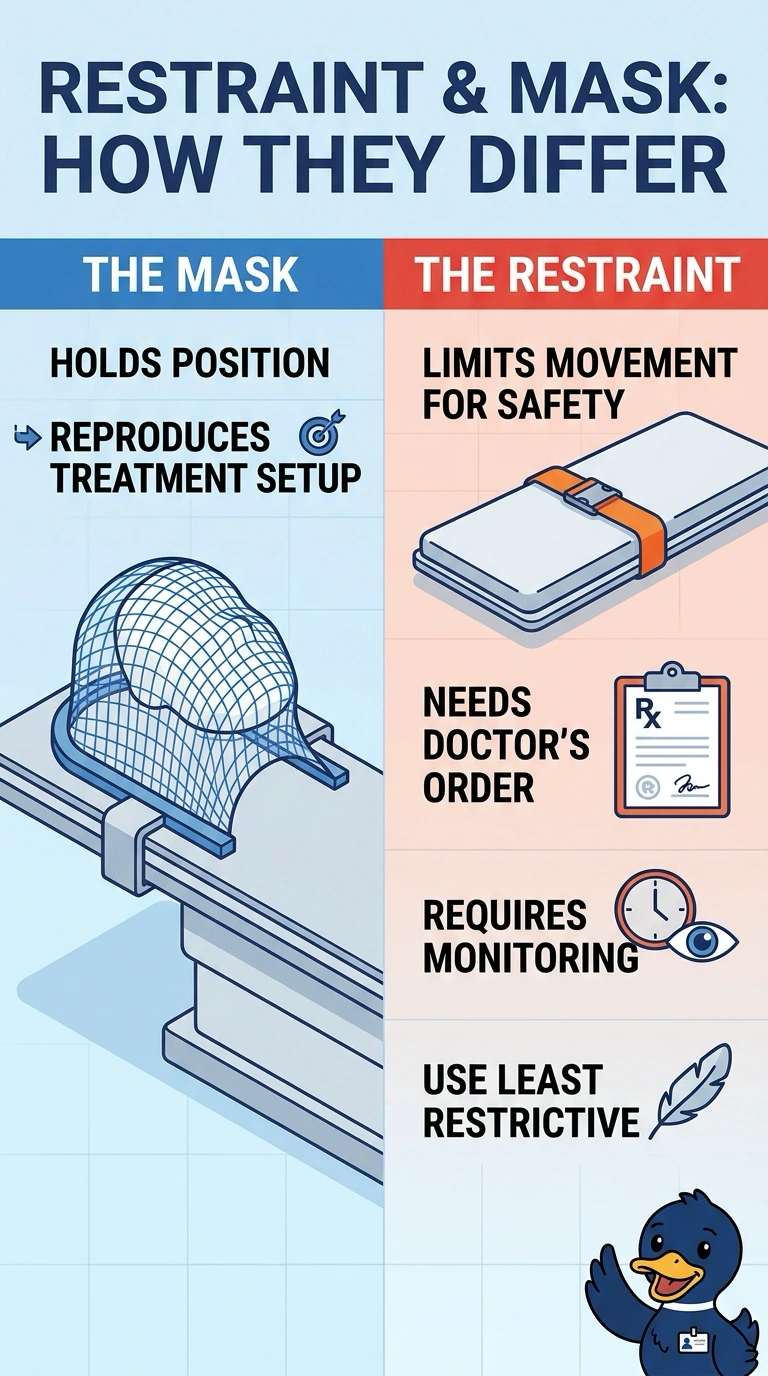
You are looking at two different jobs: the restraint restricts freedom of movement for safety, while the mask only repeats a treatment position. Same instinct, different paperwork, and the written order plus monitoring is what keeps the restraint on the right side of the line.
Full Explanation
A restraint is a device or hold that limits a patient's freedom of movement for safety reasons, so it requires a physician's order, use of the least restrictive option, and ongoing observation documented during each session. An immobilization device does something entirely different: it reproduces a treatment position so the fields land on the same anatomy every day, and it needs no order because it does not restrict the patient's right to move. The mask-as-restraint approach calls the thermoplastic mask the restraining device and then handles everything as a positioning aid, which strips the order and monitoring away from the wrist bands. The both-restraints approach over-classifies the mask, so the chart carries restraint requirements that a positioning device never triggered. The start-only check approach treats restraint monitoring like a one-time setup verification, but restraint rules require continued observation and documentation through the session. Exam caveat: hospitals define restraint categories and review intervals in policy, so the local document governs the details. Practical check: verify a current written order, confirm the least restrictive choice, and record the monitoring during each treatment.