
A patient begins chest wall treatment with a field reaching toward the axilla. Both arms must be raised out of the beam and placed the same way each day, and tight hamstrings keep the patient from lying with straight legs. Which combination of positioning aids best satisfies these requirements?
Select an answer to reveal the explanation.
Short Explanation
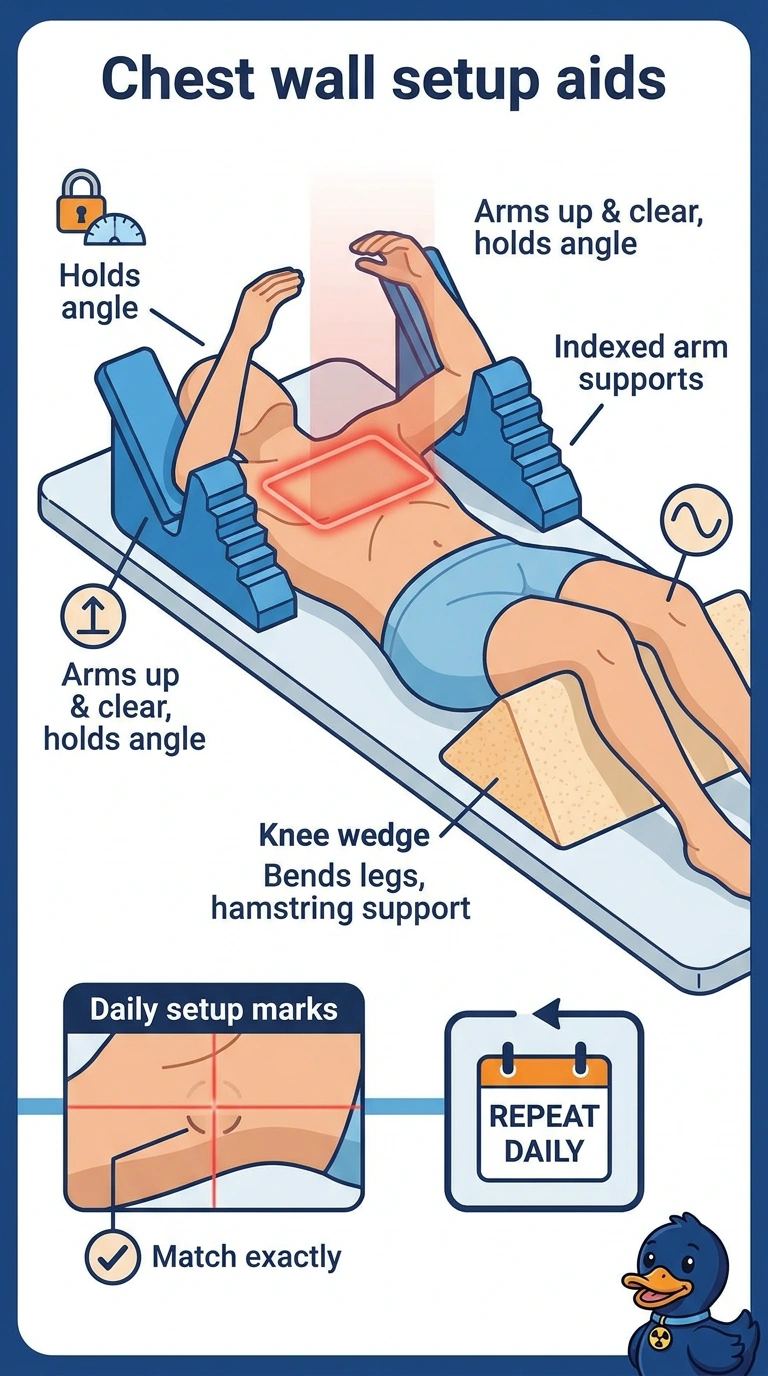
Reproducibility is the whole point here, so indexed arm supports are what let tomorrow's setup match today's. A knee wedge takes the strain off tight hamstrings. Each other setup covers two of your facts but drops one.
Full Explanation
Indexed arm supports and a knee wedge address both positioning needs: the arm supports keep the arms raised clear of the beam and allow the setup to be reproduced through indexing, while the wedge accommodates limited hamstring flexibility by supporting bent legs. Unindexed overhead handles are a familiar way to support raised arms, and the knee wedge accommodates the legs, but without indexing or another reliable reproducibility method the arm position may vary between treatments. Indexed arm boards can provide a repeatable arm setup, and the knee wedge supports the legs, but keeping the arms alongside the torso does not meet the requirement to raise them out of the beam, particularly for a field extending toward the axilla. An ankle rest can support patients whose legs are extended, and indexed overhead supports meet the arm requirements; however, straight legs do not accommodate this patient's tight hamstrings and may prevent a comfortable, reproducible setup. Exam caveat: a device name alone does not establish that the arms are clear of the beam or that the position is reproducible; verify the actual geometry and indexing. Practical check: rehearse the full setup, confirm arm clearance at the axillary field edge, and ensure the patient can maintain the supported knee bend without strain.