
A patient receiving radiation for lung cancer with known bone metastases starts to rise from a waiting-room chair and says the room feels unsteady. The slot is running late, and the patient walks with a cane. What should the therapist do before the patient walks to the couch?
Select an answer to reveal the explanation.
Short Explanation
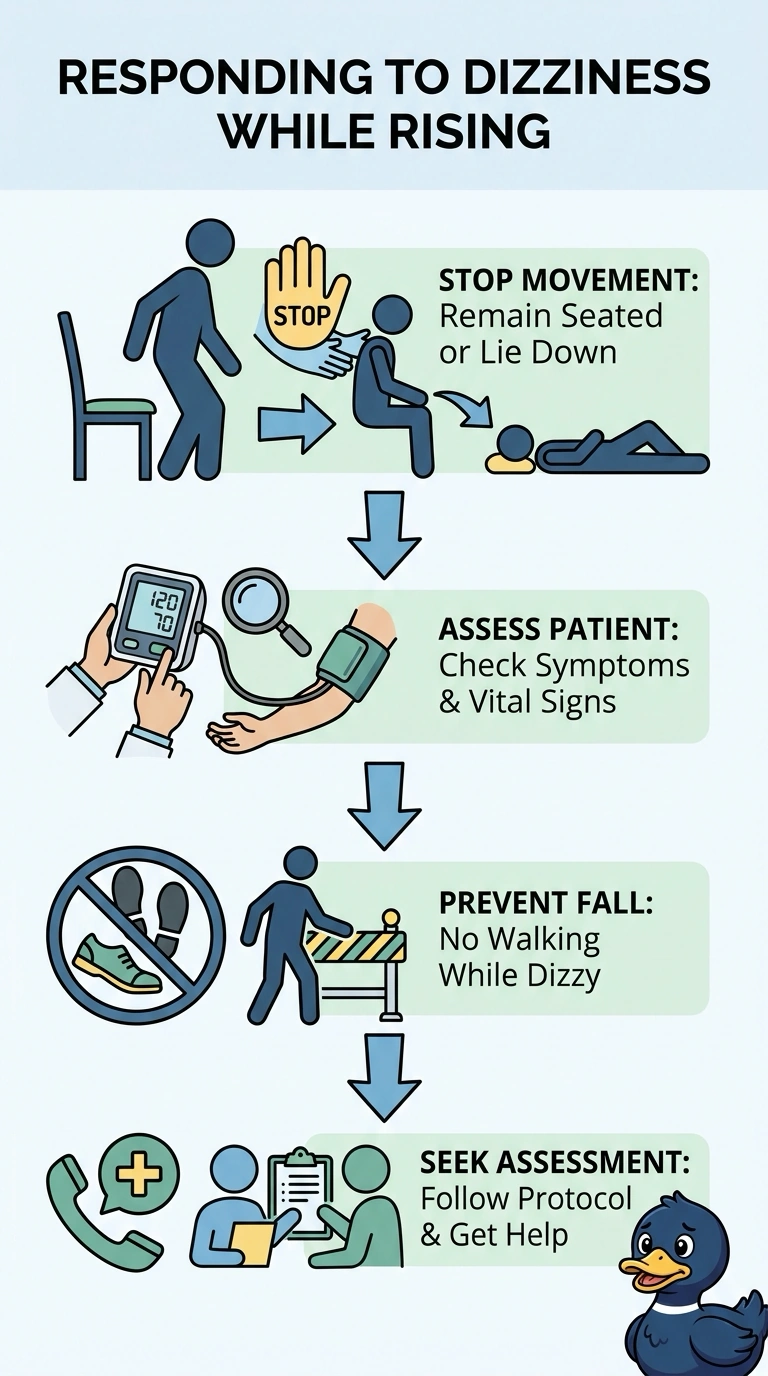
When you feel dizzy while rising, your balance can be like a shaky bridge, and bone metastases can make a fall especially serious. Keep the patient seated or help them lie down, assess their symptoms and vital signs, and don’t have them stand or walk until the dizziness has been assessed.
Full Explanation
Keeping the patient seated or helping them lie down, assessing symptoms and vital signs, and avoiding standing or walking until the dizziness has been assessed prevents an immediate fall while allowing the therapist to evaluate the symptom. This is especially important with known bone metastases, because a fall could cause serious injury; a late appointment does not justify bypassing safety checks. Keeping the patient seated, asking when the dizziness began and whether it is improving, and waiting for it to settle addresses the symptom, but omitting vital signs misses information that may reveal clinically important changes or help determine whether further care is needed. Checking seated blood pressure, pulse, and oxygen saturation and using a wheelchair limits walking, but moving the patient before asking about the dizziness in detail still proceeds without assessing the presenting symptom; safe transport does not replace assessment. Asking about the dizziness and checking vital signs while seated gathers useful information, but then standing and walking as soon as readings are near baseline creates an avoidable fall risk if dizziness has not been adequately assessed. Exam caveat: a single normal set of vital signs does not by itself establish that mobilization is safe; symptoms and clinical context matter. Practical check: before any transfer, confirm the patient is stable and review both the measured values and symptom history.