
A patient being treated for lymphoma reports new mid-back pain that began over two days, weakness in both legs, and difficulty starting urination. The physician is called to the department, and the team must identify what this finding represents. Which clinical urgency and next step match this presentation?
Select an answer to reveal the explanation.
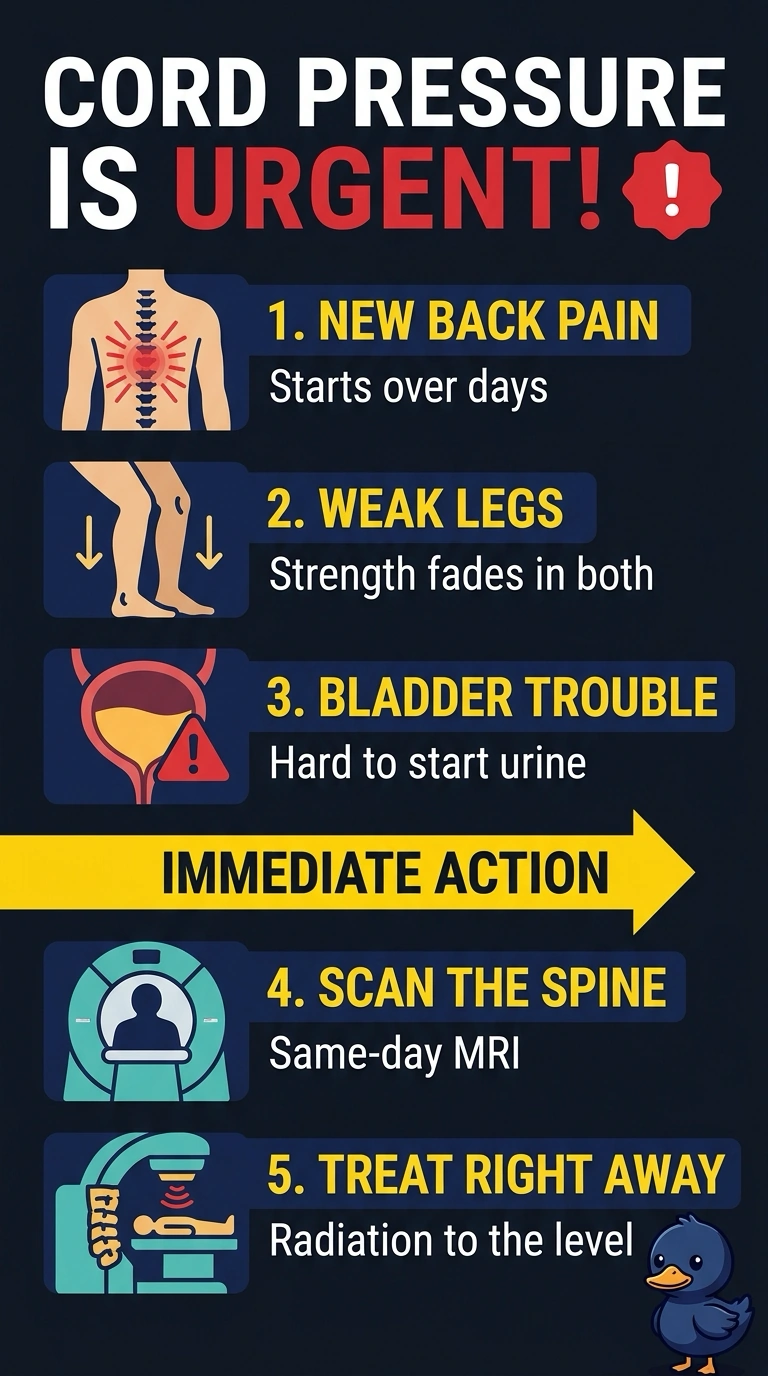
Short Explanation
New back pain with leg weakness and bladder trouble is the picture you cannot sit on, because neurologic recovery depends on how fast pressure comes off the cord. A stable painful vertebra, a vein problem, or a slow bone survey would all let you schedule the visit instead of rushing it.
Full Explanation
Tumor compressing the spinal cord is a true radiation emergency because the cord tolerates pressure for only a window of hours to days, and the longer the compression lasts the less motor strength, sensation and bladder control returns. Back pain that began over two days, progressive weakness in both legs and new difficulty starting urination together point to cord compromise at that level, so the answer is same-day imaging to locate the compression followed by prompt radiation to the involved vertebra, usually with steroids started by the physician. The fracture-risk approach addresses a vertebra that may collapse under load, but it assumes neurologic function is intact and lets you schedule over days. The vein-obstruction approach targets the mediastinum for facial swelling and breathing difficulty, which is different anatomy than leg and bladder findings. The staging-survey approach orders a whole-skeleton bone scan before committing to treatment, yet a survey maps disease burden instead of proving cord pressure and costs the hours that cord function cannot spare. Exam caveat: back pain alone is rarely an emergency, so imaging confirms the level before planning begins. Practical check: any new weakness or bladder change in a patient with cancer goes to the physician immediately.