
A patient who needs help standing is being moved from a wheelchair to the treatment couch while wearing a nasal cannula and connected to an infusion pump, and both the pump and the oxygen unit sit on separate rolling poles. The patient can push up with both arms, and a second staff member is available. Which transfer technique keeps the patient and both lines safe during the move to the couch?
Select an answer to reveal the explanation.
Short Explanation
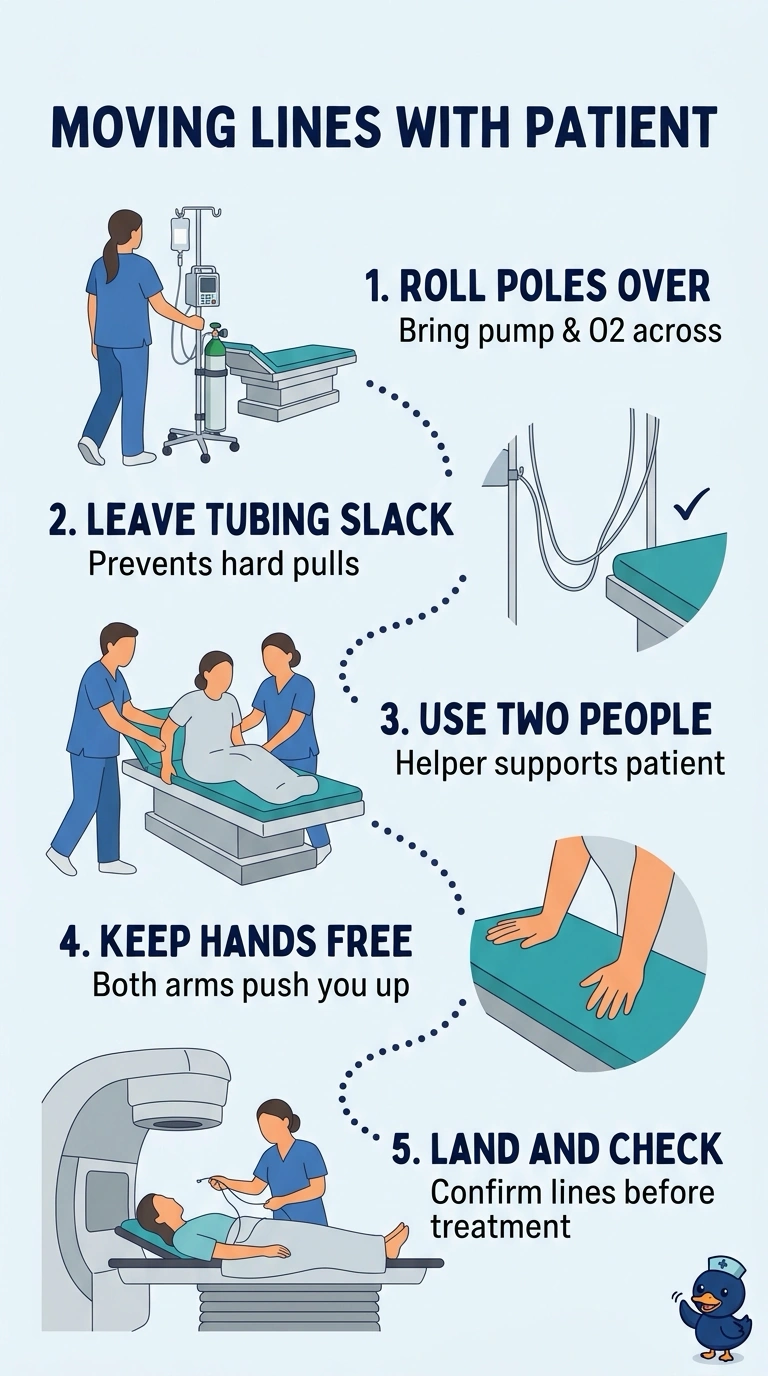
Before you help your patient stand, plan the equipment path like you’d route a garden hose before washing the car. Move both poles with your patient, leave tubing slack, and have your coworker assist so the lines don’t get tugged or pinched.
Full Explanation
The safe technique coordinates the patient, both rolling poles, and the tubing: moving both poles with the patient avoids pulling either connected line, slack accommodates the change in position, and a second staff member can assist during the transfer. Moving both poles and preserving slack while the second staff member only observes leaves the patient without available hands-on help, which is important when the patient needs help standing. Keeping the oxygen unit beside the wheelchair while the patient and infusion pump move risks stretching or pulling the nasal-cannula tubing. Moving both poles with a second staff member but routing the tubing at its existing length may leave a line taut as the patient rises or pivots, transmitting force to the cannula or infusion connection. Exam caveat: being able to push up with both arms does not establish that the patient can stand or pivot independently; follow the assessed assistance level and local transfer protocol. Practical check: before moving, confirm the wheelchair and couch are positioned and secured, both poles can travel safely, and each line has enough slack to reach the couch without snagging or pulling.