
Before an afternoon fraction you notice the record shows a plan for the left chest while the skin marks and the immobilization tray match the right chest. Which verification step must happen before the beam is delivered?
Select an answer to reveal the explanation.
Short Explanation
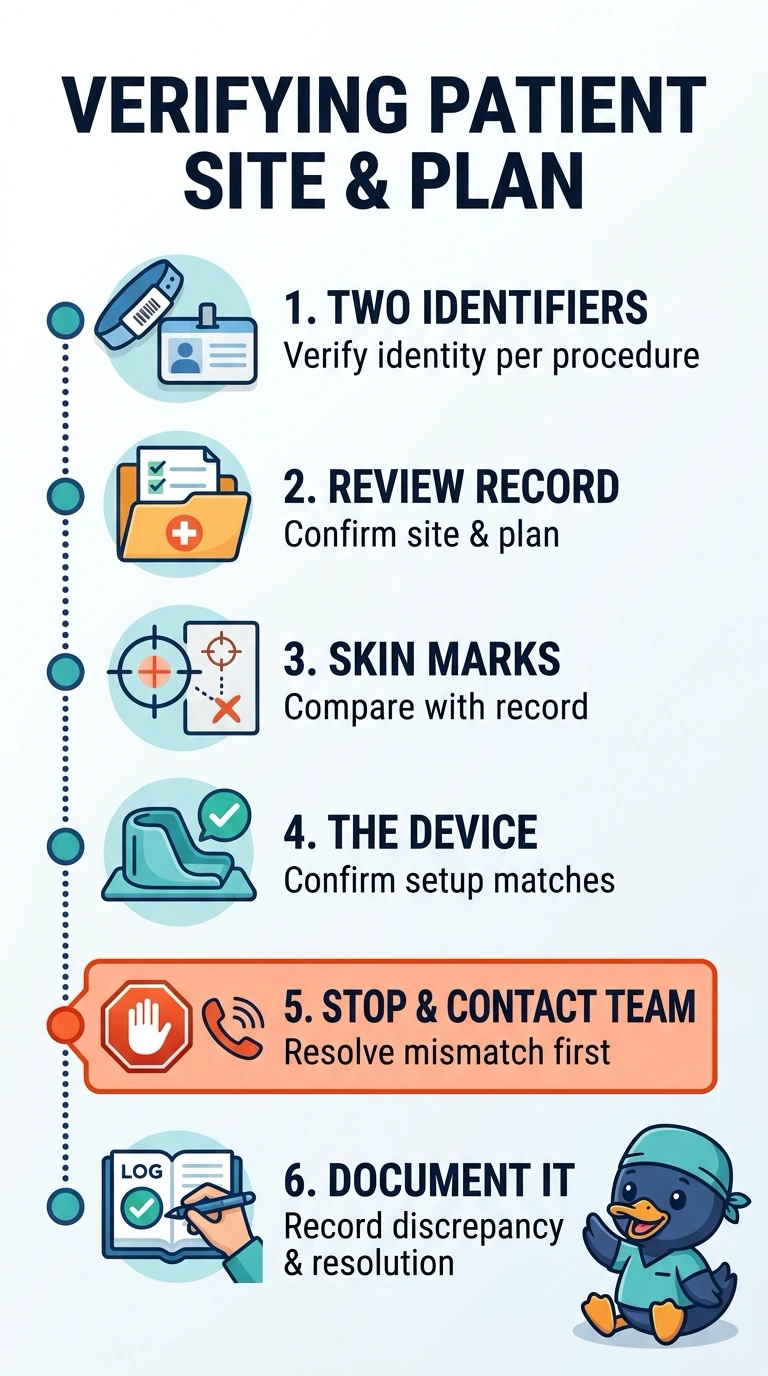
When your record, marks, and immobilization device don’t match, hold treatment and contact the physician or another authorized team member to reconcile them before beam-on. It’s like checking a map before taking the wrong turn: verification must come first.
Full Explanation
The correct step is to hold the fraction and have the physician or another authorized team member reconcile the conflicting treatment record, skin marks and immobilization device before delivery. These are independent indicators of site, and the disagreement cannot be resolved safely by choosing whichever one seems most persuasive. Reviewing the prescription and simulation record with a second therapist is a familiar chart-review safeguard, but it does not reconcile those records with the right-sided marks and tray; proceeding on that basis leaves the physical setup conflict unresolved. Image guidance is also a standard verification tool, yet matching anatomy on images does not by itself establish that the record and setup are consistent or authorize treatment while the discrepancy remains. A patient-and-consent time-out is an important identity and site check, but agreement between those sources and the prescription still cannot substitute for reconciling the conflicting marks and immobilization device. Exam caveat: image guidance and time-outs supplement, rather than replace, resolution of a site discrepancy. Practical check: before resuming, confirm that the authorized team member has clarified the intended side and that the record, marks and device all reflect that decision.