
A patient with metastatic lung cancer is admitted with worsening leg weakness, and MRI confirms cord compression at an untreated thoracic vertebra. Steroids have been started, and the radiation oncologist wants the first fraction delivered today while the spine team decides on stabilization. Which treatment course should the department plan for this cord compression emergency?
Select an answer to reveal the explanation.
Short Explanation
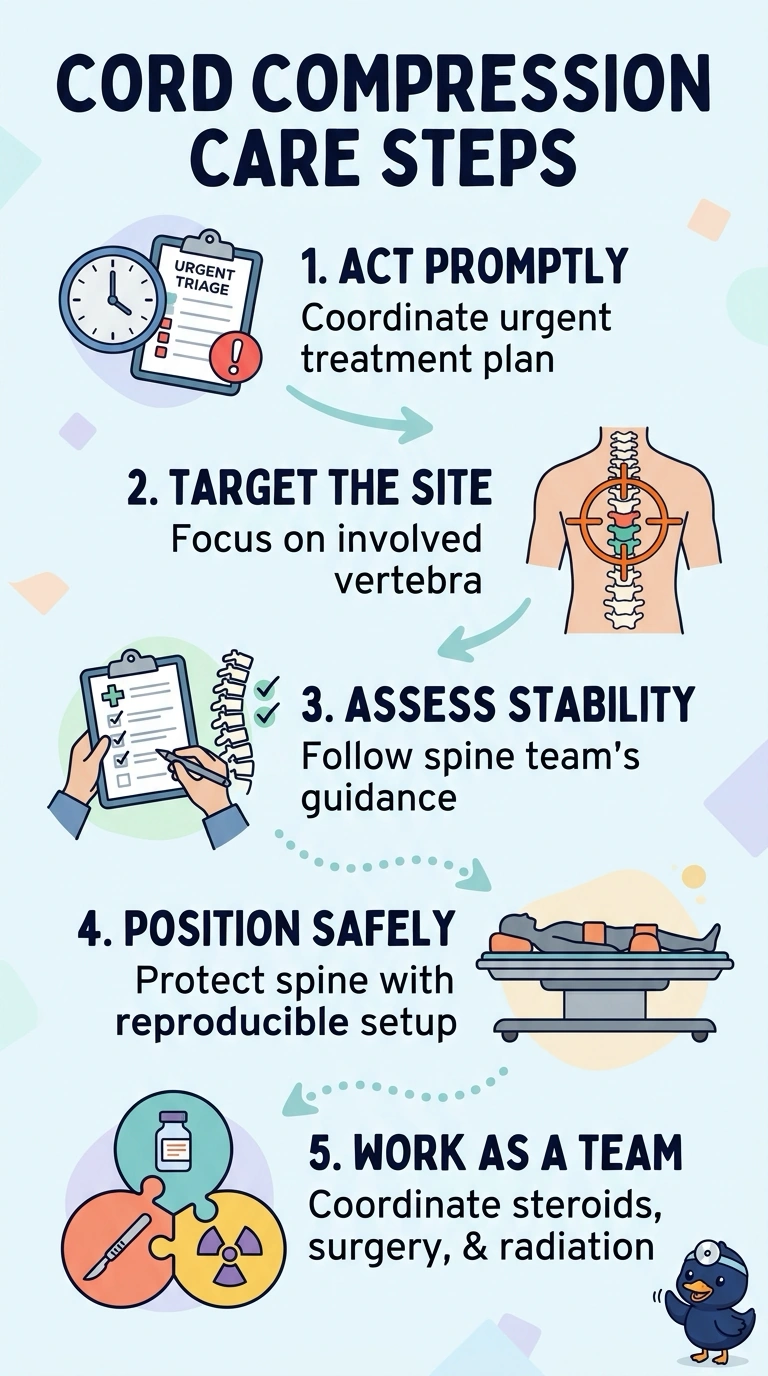
With worsening weakness and MRI-confirmed cord compression, you’ll plan urgent palliative radiation to the involved vertebra today while coordinating with the spine team. Use positioning that’s safe for the spine, and let the team’s stability assessment guide whether surgery comes first.
Full Explanation
Plan urgent palliative radiation today to the vertebra causing cord compression, coordinating with the spine team and using positioning that avoids worsening spinal instability or neurologic injury. Steroids have been started, but they do not replace definitive local treatment. Radiation should not be held until the stabilization decision is made; the spine team needs to be involved from the start because its assessment may affect treatment sequencing and safe setup. Waiting until the course is finished to inform the team is not coordination and could delay needed stabilization or compromise safety. A stereotactic ablative regimen is not an interchangeable default for symptomatic cord compression: although it may suit selected spinal metastases, it requires careful selection, planning, and attention to epidural disease and spinal cord constraints. Treating adjacent thoracic vertebrae without evidence that they are involved adds coverage without a demonstrated target and can increase normal-tissue exposure; target treatment to imaging and clinical findings. Exam caveat: no dose or fractionation is specified, so do not infer that one conventional palliative schedule is mandatory; the key decisions are urgency, coordination, and safe positioning. Practical check: before treatment, confirm the target and intended sequence with the spine team, and verify that transfer and immobilization preserve spinal precautions.