
A patient with widely metastatic disease is nearing the end of life and wants to remain at home. The family needs access to symptom control around the clock, help with personal care, regular nursing visits, and counseling that continues after the death. Which support resource best matches every one of those needs?
Select an answer to reveal the explanation.
Short Explanation
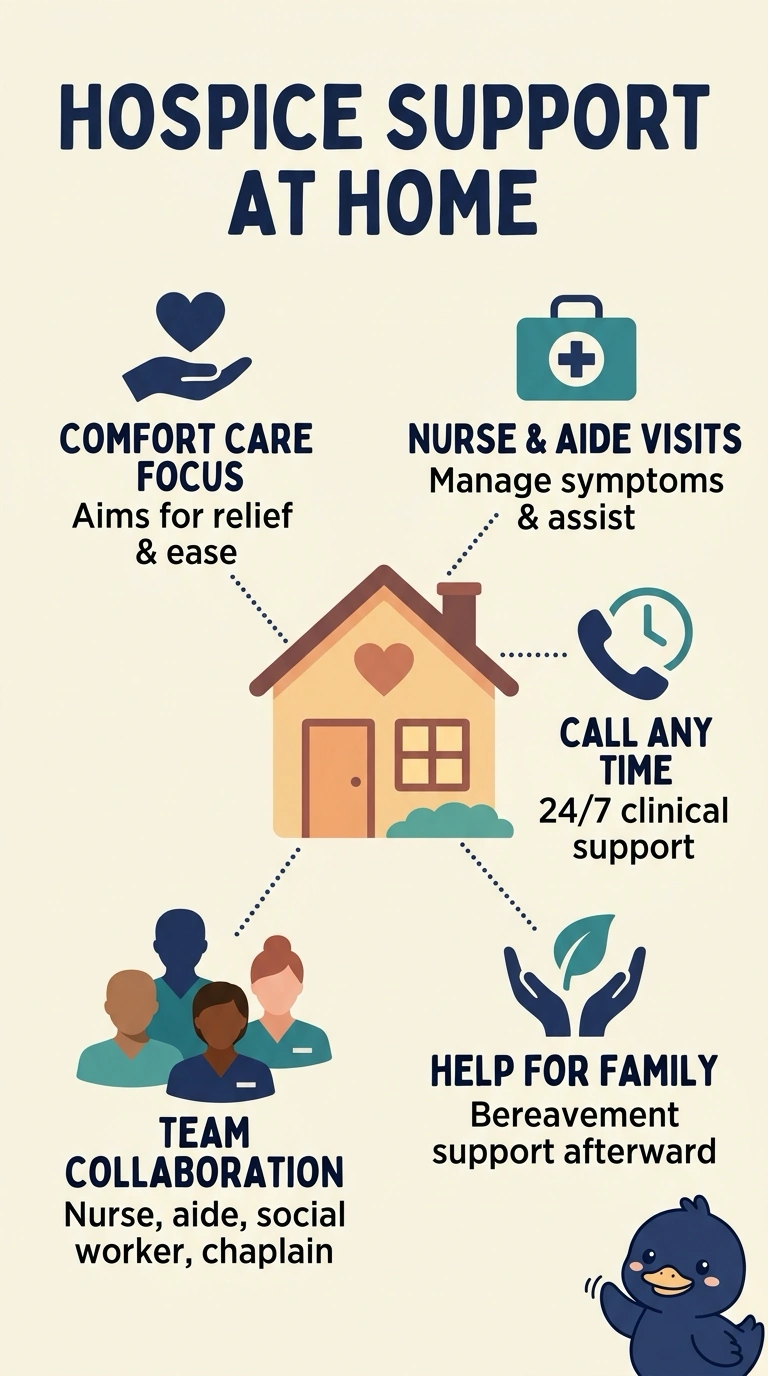
Hospice brings comfort-focused care to your home, coordinating around-the-clock symptom support, personal care, and regular nursing visits. You and your family can also receive bereavement counseling after the death; the other listed services miss either this continuing support, the home setting, or help with personal care.
Full Explanation
Hospice best matches the patient’s wishes because its interdisciplinary team provides comfort-focused care at home, including symptom management, help with personal care, regular nursing visits, and bereavement support for the family after the death. The home-based palliative care program offers symptom advice, aide assistance, and nursing, but its counseling ends at death, so it does not meet the need for continued bereavement support. An inpatient hospice unit can provide symptom management, personal care, nursing, and bereavement counseling, but its residential setting conflicts with the patient’s wish to remain at home. The home palliative team provides symptom support, scheduled nursing, and bereavement counseling, but leaves personal care to the family, so it does not provide every requested service. Exam caveat: Palliative care and hospice overlap in symptom relief, and services vary by program; distinguish options by the complete care package and setting, not by the term “palliative” alone. In practice, confirm local availability, who provides hands-on personal care, how to reach a clinician after hours, visit frequency, and the scope and duration of bereavement services.