
A patient with widely metastatic cancer stops all disease-directed treatment after a goals-of-care discussion, wants to remain at home, and has pain and breathing comfort needs that could worsen at any hour. The family asks the therapist which service will send a coordinated team to the house for end-of-life comfort care. Which support professional should the therapist name to this family?
Select an answer to reveal the explanation.
Short Explanation
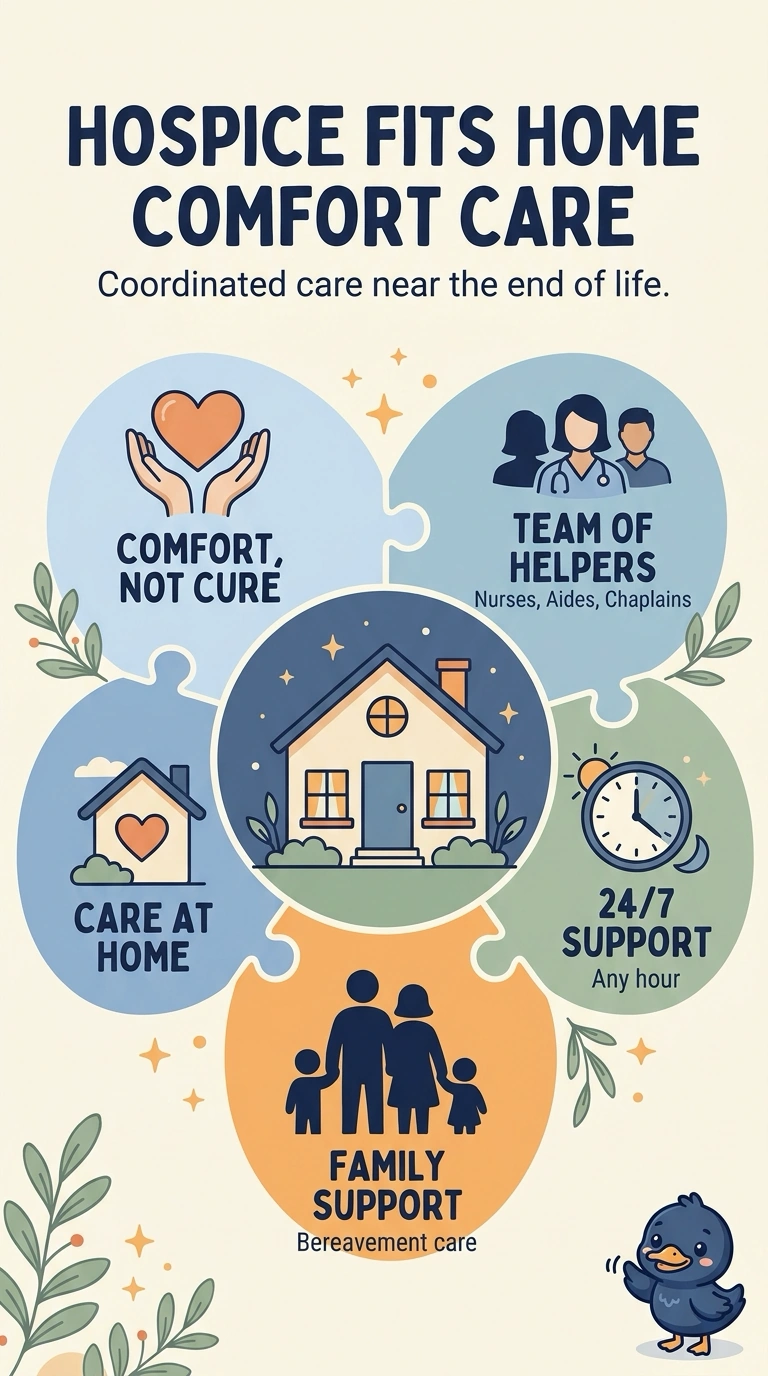
Hospice brings a coordinated team to your home for comfort-focused care near the end of life, with support available around the clock—like a safety net when symptoms can change quickly. Palliative care can ease symptoms at any stage, while a social worker helps with resources and home health provides skilled nursing visits.
Full Explanation
Hospice is an interdisciplinary service focused on comfort for people nearing the end of life. It can provide care at home through a team that may include nurses, aides, social workers, chaplains, and physicians, with support available around the clock. Palliative care also treats symptoms and can be provided at any stage of illness, including while disease-directed treatment continues, so stopping treatment alone does not distinguish it from hospice. A medical social worker can help the family access resources, insurance information, and transportation. Home health provides skilled nursing visits and is not the same as a hospice interdisciplinary team. The question asks for coordinated, home-based end-of-life comfort care, making hospice the best answer.