
A patient midway through a pelvic course reports looser stools and cramping at every visit and has been drinking less water because of the urgency. The symptoms have intensified over the past few days, and the radiation oncologist reviews the chart after the day's treatments are finished. How should this worsening bowel side effect be managed and recorded?
Select an answer to reveal the explanation.
Short Explanation
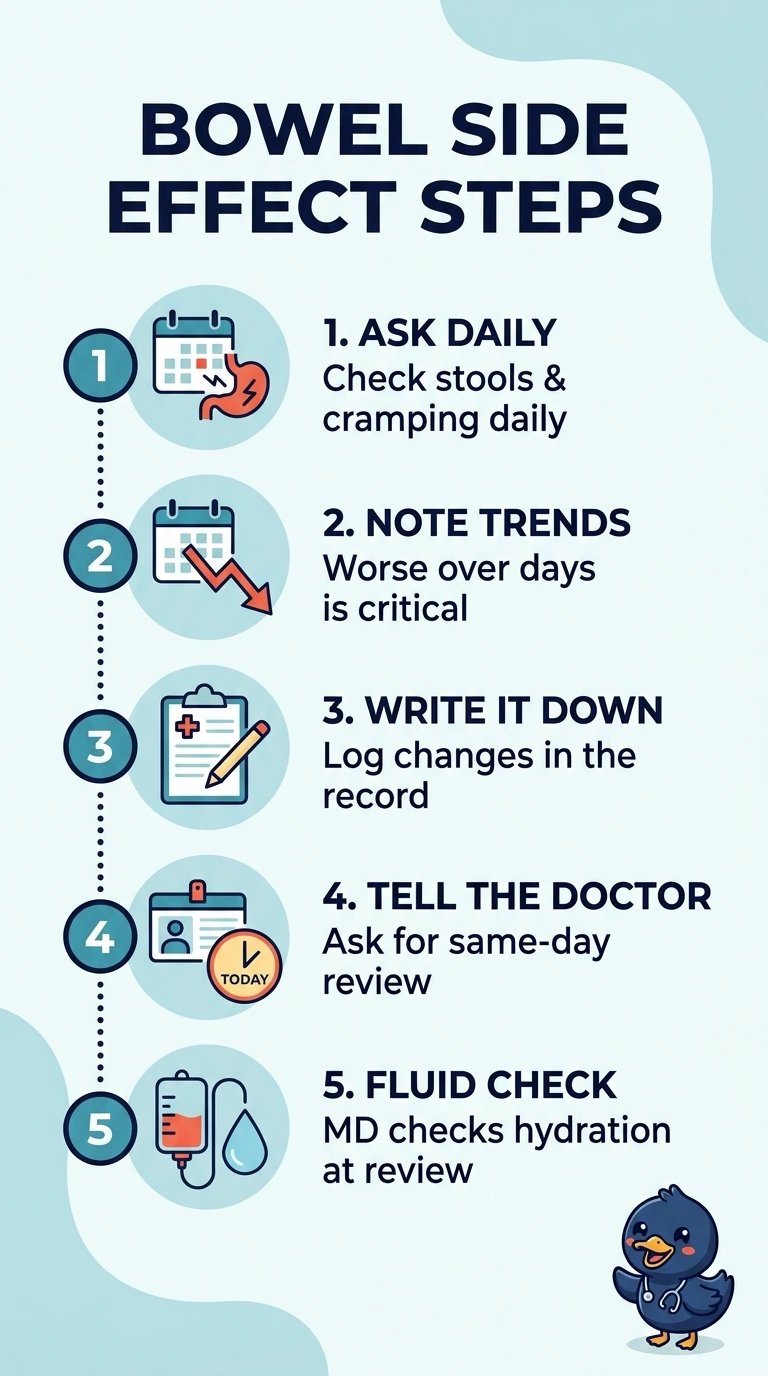
Worsening loose stools in a pelvic course are a textbook gastrointestinal side effect, and a trend like this needs same-day attention. Diet advice doesn't cover the evaluation, and a barrier cream treats it as skin trouble. The daily record should also show what you observed before the next fraction.
Full Explanation
Loose stools with cramping during pelvic irradiation reflect injury to the fast-turning-over lining of the bowel, and the trend across several days is what matters clinically rather than any single report. Recording the change in the daily treatment note keeps the toxicity visible to the whole team, and asking the radiation oncologist to review the patient the same day allows assessment of hydration, cramping and possible infection before another fraction is given. The dietary counseling approach soothes discomfort but defers evaluation to a later visit, so an escalating problem is never escalated in time. The barrier cream approach misattributes a gastrointestinal toxicity to the skin, so the bowel problem is never recognized or tracked. The physician-note-only approach leaves the therapist's daily record unchanged, even though it should reflect fraction-by-fraction status. The exam often rewards knowing that side effects are assessed and recorded at every visit, not only at weekly review. A practical check: read the symptom back, note onset and trend, then confirm the physician was notified before the next fraction.