
After an oral I-131 therapy dose this morning, a 26-year-old patient of childbearing potential meets release criteria and plans a 45-minute crowded train ride home to an apartment shared with one housemate and a single bathroom. Which complete set of release precautions fits this patient's situation?
Select an answer to reveal the explanation.
Short Explanation
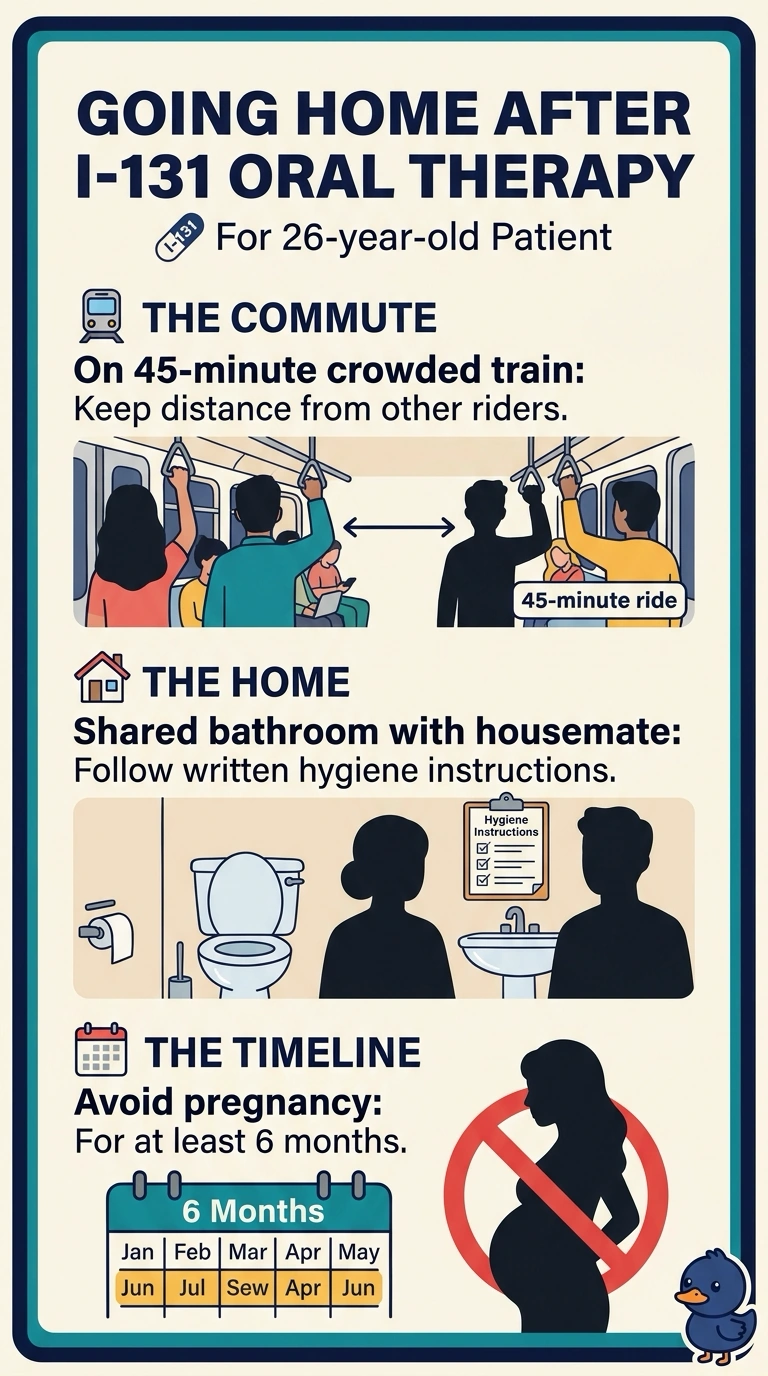
Your release plan is a three-part checklist: keep your distance from other riders, follow the written hygiene instructions for your shared bathroom, and avoid pregnancy for at least 6 months after I-131 therapy. These precautions help protect others and you.
Full Explanation
The complete set is correct because it addresses three distinct risks after I-131 therapy. I-131 emits radiation that can expose people nearby, so keeping distance from other riders during the crowded train journey reduces their exposure. I-131 is eliminated mainly in urine; following the treating facility’s written shared-bathroom hygiene instructions helps limit contamination of surfaces used by the housemate. Avoiding pregnancy for at least 6 months is also recommended after therapy, with patient-specific advice from the treating team. The handwashing distractor uses a sound general hygiene approach, but washing hands before meals does not replace distancing to reduce radiation exposure to fellow riders. The distance-and-pregnancy distractor uses exposure reduction and reproductive precautions but omits hygiene for the shared bathroom. The distance-and-hygiene distractor addresses travel and household contact but omits pregnancy avoidance. Exam caveat: release precautions are individualized and must follow the treating facility’s written guidance; do not assume that every fixture needs rinsing after every use. Practical check: before leaving, confirm the written instructions cover both the crowded ride and the single shared bathroom, and verify the pregnancy-avoidance interval with the treating team.