
After receiving radioactive iodine therapy for an overactive thyroid, a patient is cleared to go home and will ride in a small car with a spouse and a toddler in the back seat. At home there is one bathroom and a shared bedroom. Which release instructions should be documented and given before this patient goes home?
Select an answer to reveal the explanation.
Short Explanation
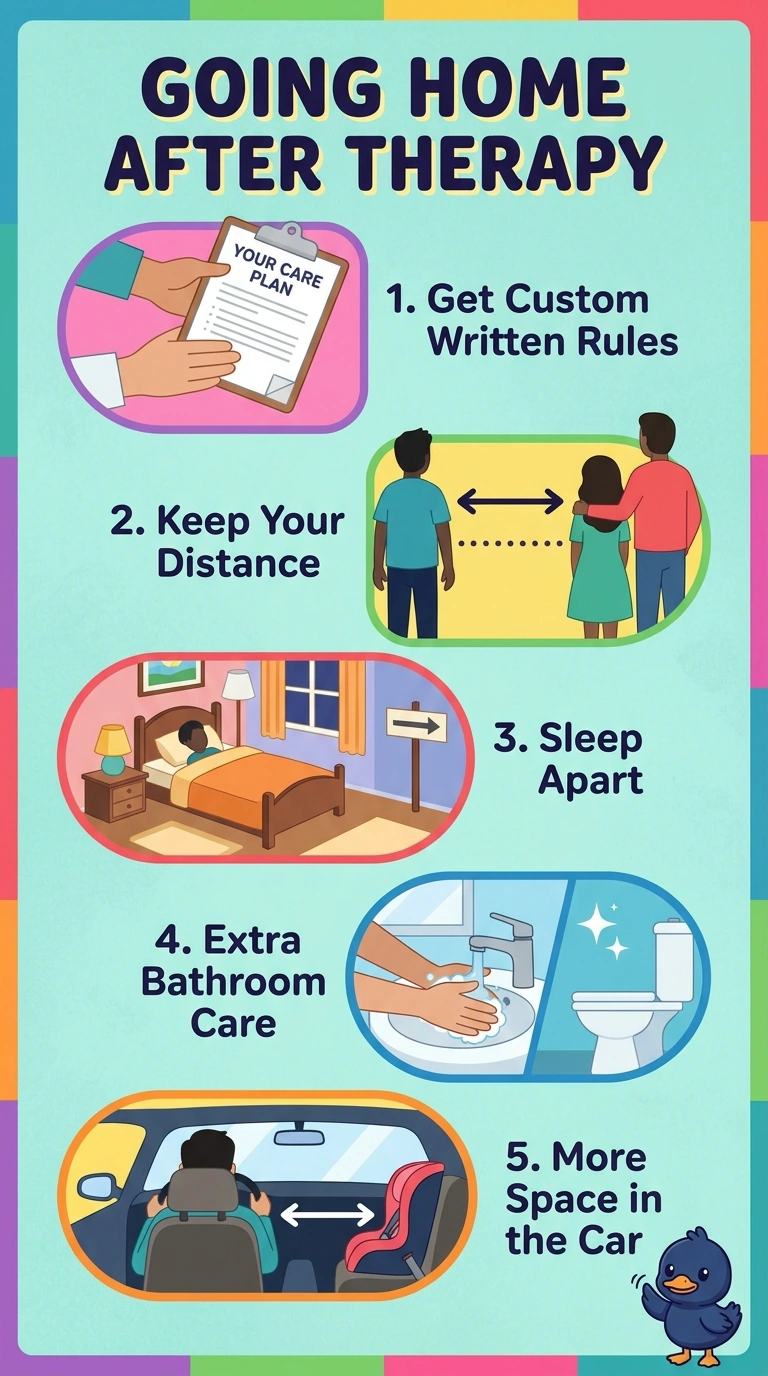
Your written, individualized precautions should cover time and distance during the car ride and at home, sleeping separately, keeping your distance from the toddler, and shared-bathroom hygiene. They’re your practical road map for staying safe after you get home, so be sure you receive them before leaving.
Full Explanation
The appropriate instructions are written and individualized, covering time and distance during the confined car ride and at home, separate sleeping, distance from the toddler, and hygiene in the shared bathroom. Radioiodine precautions depend on your treatment and circumstances, so clear guidance helps your household reduce avoidable exposure after discharge. Guidance that covers travel, separate sleeping, and distance from the toddler but omits shared-bathroom hygiene leaves out an important practical issue when facilities are shared. Guidance that covers travel, toddler distance, and bathroom hygiene but allows you to share a bedroom fails to address the need to sleep separately. Guidance that covers home time and distance, separate sleeping, toddler distance, and bathroom hygiene but omits the car ride misses a setting where close, prolonged proximity in a small car may require specific limits. Exam caveat: exact restriction periods and distances vary with the administered activity and local radiation-safety guidance, so do not substitute a universal schedule for individualized instructions. Practical check: before discharge, confirm that your written guidance explicitly covers the planned ride and each relevant household arrangement, and make sure you can explain how to follow it.