
A patient with Graves' hyperthyroidism and a large goiter is booked for iodine-131 therapy. The endocrinologist notes that iodinated contrast was given a few weeks ago and may still be suppressing uptake, the patient takes methimazole every day, and gland size varies a great deal between patients. Which iodine-131 therapy plan best matches these findings?
Select an answer to reveal the explanation.
Short Explanation
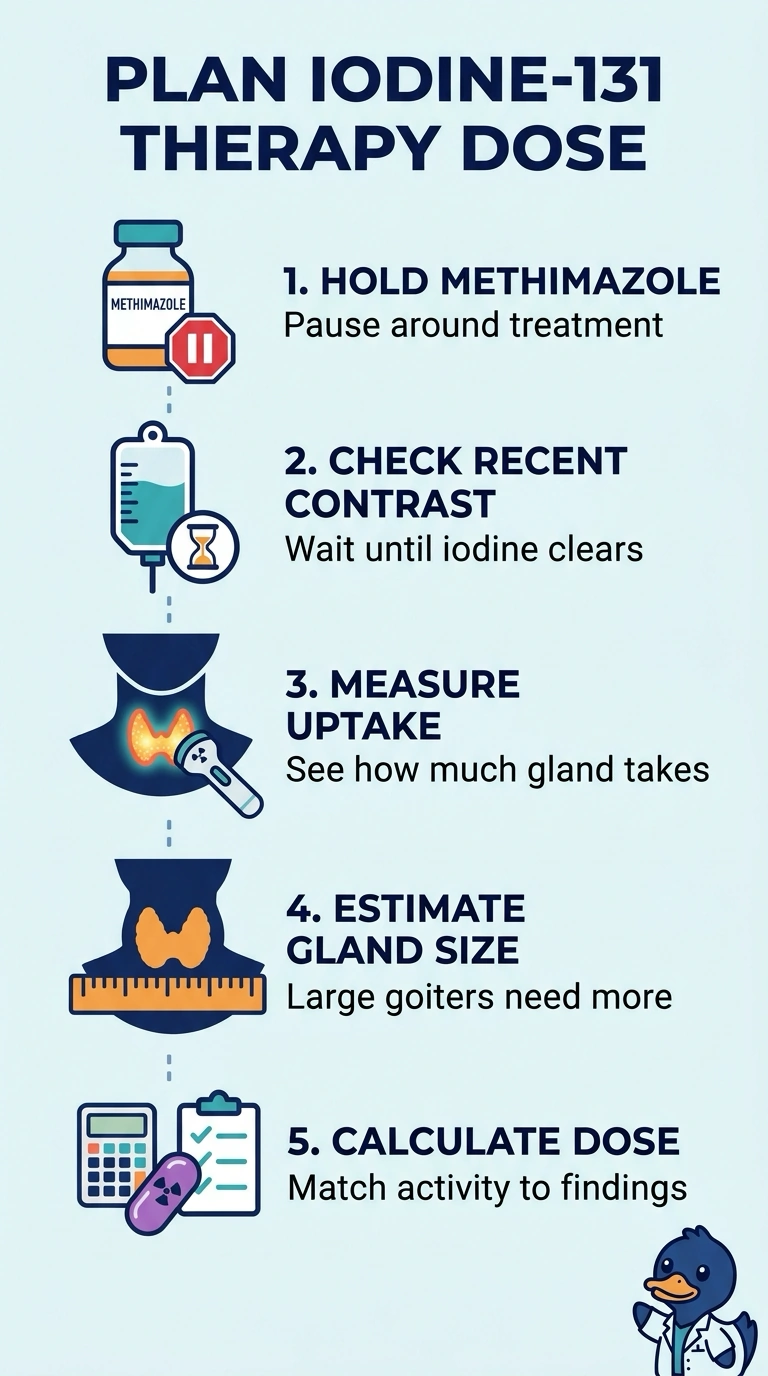
You lined up all three issues, and that is what makes individualized dosimetry the right call here. It's like tailoring a suit to three measurements instead of handing everyone the same size.
Full Explanation
Individualized dosimetry ties the administered iodine-131 activity to what that particular gland will retain, and each stated condition must be handled. Methimazole inhibits thyroid peroxidase, including organification, and can reduce the effectiveness of iodine-131 therapy; it is typically withheld around treatment according to protocol. Recent iodinated contrast delivers a large stable iodine load that can suppress uptake for weeks, so treatment should wait until the excess iodine has cleared. Measuring uptake and estimating gland mass allows activity to be calculated for a target absorbed dose, accounting for variation in gland size. A single fixed activity for every adult does not account for differences in uptake and gland size. Continuing methimazole through therapy can reduce treatment effectiveness. Starting before the contrast iodine clears risks reduced uptake even when the activity is otherwise well calculated. The exact timing for withholding methimazole and waiting after contrast varies by protocol, so follow local guidance. Before treatment, confirm that uptake and gland size have been assessed and interfering iodine has been addressed.