
A worker with a substantial whole-body dose feels nausea about two hours after the exposure, then feels well during a quiet interval. About two weeks later the blood counts fall, and the worker develops fever and bruising. Which acute radiation syndrome pattern best explains this sequence?
Select an answer to reveal the explanation.
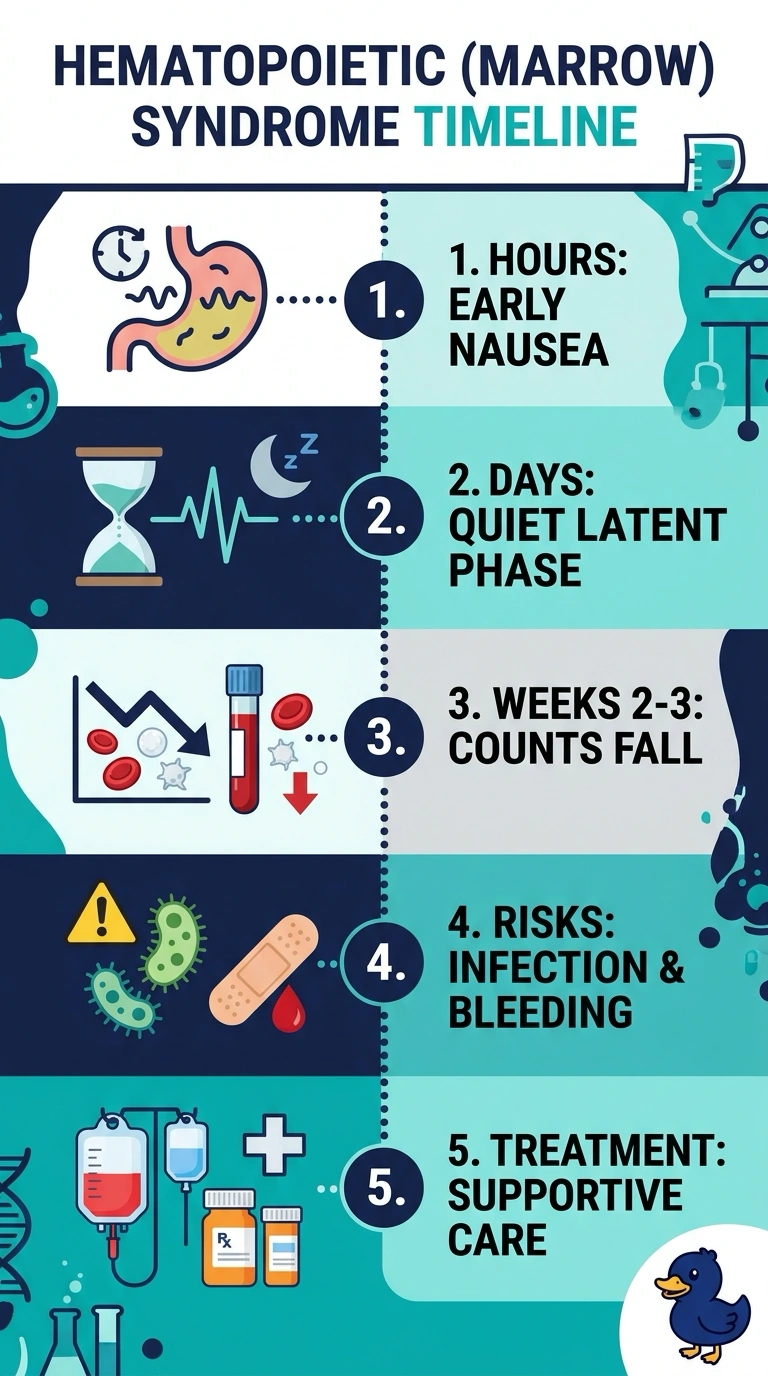
Short Explanation
Your early nausea, quiet interval, and later drop in blood counts point to hematopoietic syndrome. Like a factory running low on supplies, injured marrow takes time to falter, leaving you vulnerable to infection and bleeding.
Full Explanation
The hematopoietic syndrome best fits the sequence: early nausea can occur during the prodromal phase, a relatively well latent interval may follow, and injury to marrow progenitor cells then produces falling blood counts over days to weeks. Fever and bruising are consistent with clinically important neutropenia and thrombocytopenia, respectively. The gastrointestinal syndrome can include early nausea and a short latent period, but its defining severe course is persistent vomiting and diarrhea with fluid loss; that does not account for the stated delayed blood-count decline and bleeding/infection pattern. The neurovascular syndrome is associated with an exceptionally large dose and typically brings early neurologic or cardiovascular deterioration, not a quiet interval followed by a marrow nadir around two weeks later. Localized cutaneous radiation injury can have delayed skin findings after an initially inconspicuous period, but it is a tissue-localized pattern and cannot explain the systemic cytopenias, fever, and bruising described here. Exam caveat: prodromal symptoms and latent periods overlap across dose ranges, so nausea alone does not identify the syndrome; the later organ-specific findings are more discriminating. In practice, confirm the pattern with serial complete blood counts, especially the absolute lymphocyte count and platelet trend, alongside exposure reconstruction and clinical assessment.